


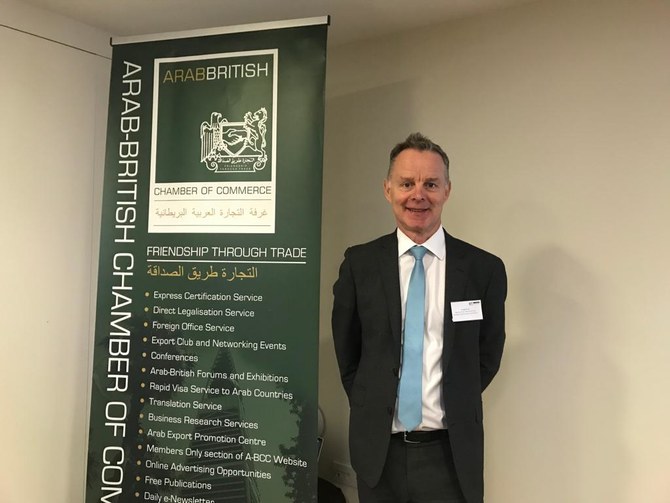

LONDON: Saudi Arabia must develop its infrastructure for tourists and offer a variety of activities for them to undertake as the Kingdom seeks to become a leading global travel destination, a travel and tourism expert said Wednesday.
The Kingdom has made huge strides in diversifying its economy by launching tourist visas that allow residents of 49 countries to obtain visas online or on arrival, the regional director for the Middle East at the World Travel and Tourism Council Nigel David said. This is the first step towards the Kingdom’s target of growing tourism from around 3 percent to 10 percent of Saudi Arabia’s gross domestic product by 2030, he added.
Speaking to Arab News at a travel and tourism event at the Arab-British Chamber of Commerce (ABCC) in London, David said there needs to be a follow up to the campaign that was launched last year under the slogan “Where In The World” and featured several shots of Saudi landmarks and natural wonders, prompting viewers to guess where they might be.
“There is a certain perception which the Kingdom needs to overcome; that it is just a destination for religious tourism and that it’s not a safe place to go. It is the opposite of all those things.
The “Where in the World” campaign started that process but there now needs to be a follow up campaign about how easy it is to get a visa and more specifically around the opportunities for tourists when they’re there and what they can do. That’s very important and that’s where the biggest challenges lie,” David said at the “Travel and Tourism 2020: A strategy for development?” event.
Although there are challenges to achieving Vision 2030’s aim of being a top five country in terms of international arrivals with 75 million international visitors and employing a million people directly in the tourism industry, there is a “willingness and desire” in the Kingdom to develop.
Speaking about Vision 2030, Saudi Arabia’s sweeping program of economic and cultural reforms, David said it is ambitious and it is “very significant that Saudi Arabia has a leadership that recognizes the role that travel tourism can play… It is an ambitious strategy, it’s incredible. Just the scale of what they’re trying to do with the giga projects, whether that’s NEOM or the Red Sea project, the clarity of the vision and the ambition is absolutely incredible.”
He added that there was a high awareness of the vision in Saudi Arabia and that “it’s not just the top, it is going right down to the grassroots, and the local population is excited and up for this and they are looking forward to it.”
Locations such as AlUla, NEOM, and the Red Sea are all being touted as potential tourist destinations, with many other areas of the country preparing to receive visitors as well.
The Saudi Commission for Tourism and National Heritage is putting on 11 different tourist seasons around the year across the Kingdom. They include the Riyadh Season, AlUla season - which features the Winter at Tantora Festival - and Ad Diriyah Season.
“Saudi Arabia has this incredible culture and heritage and it’s a beautiful country. The people are amazing and it’s the perfect timing now to open their doors and hearts to the world to invite it in. My experience is that they are doing that and they are doing it very well,” David said.


