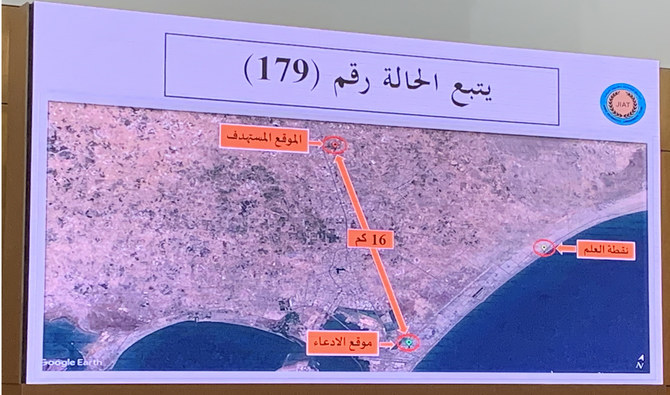

RIYADH: The Joint Incident Assessment Team in Yemen on Wednesday said it found no evidence to support a report published by the New York Times in Dec. 2018 that claimed Arab Coalition Forces attacked a civilian fishing boat, killing 11 of the 14 crew members.
JIAT spokesman Mansour Al-Mansour said that a reporter from the newspaper contacted the coalition about an alleged attack on the fishing boat Afaq on Aug. 11, 2018. When the story was published, the stated date of the attack was Aug. 14, 2018.
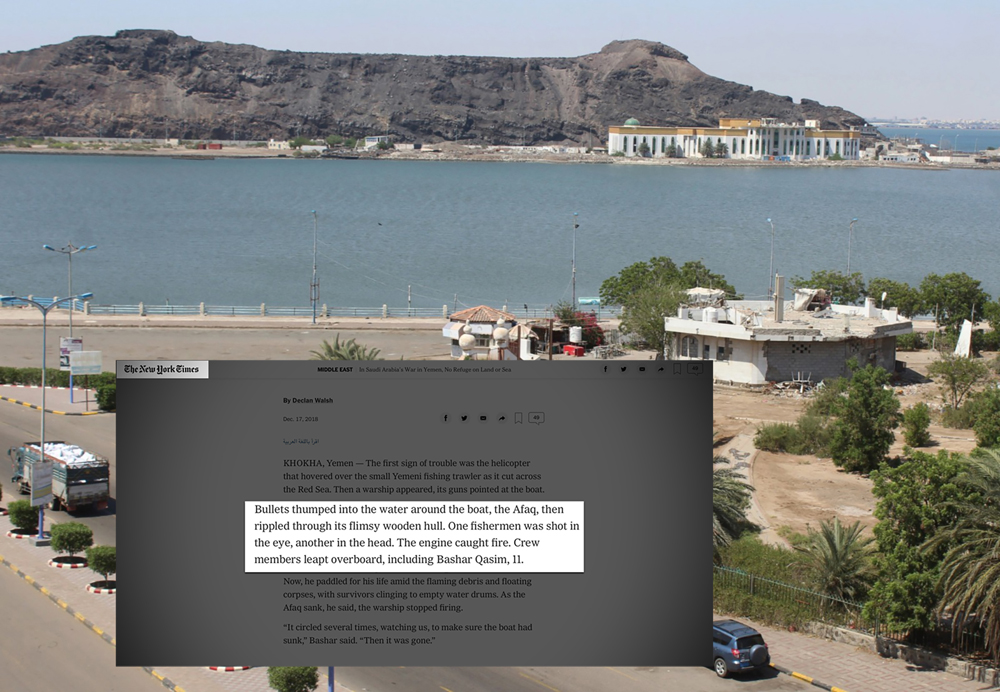
According to the newspaper story: “The first sign of trouble was the helicopter that hovered over the small Yemeni fishing trawler as it cut across the Red Sea. Then a warship appeared, its guns pointed at the boat.
“Bullets thumped into the water around the boat, the Afaq, then rippled through its flimsy wooden hull ... The engine caught fire.”
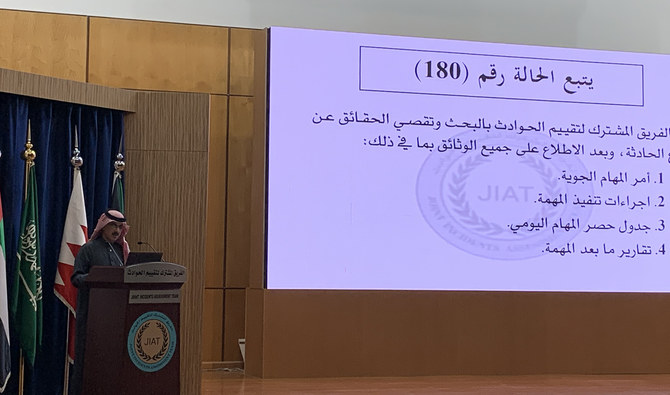
 Al-Mansour said that given the discrepancy regarding the date of the attack in the reporter’s message and the published story, JIAT investigators looked at both dates. They examined the official record of events and operations carried out by naval forces, event logs from naval units and daily intelligence reports. They also interviewed specialists in the Western Fleet and reviewed the rules of engagement for coalition forces and their adherence to the principles and provisions of international humanitarian law and customary norms.
The investigation found that Saudi naval ship Makkah and the Egyptian naval ship Alexandria were in the vicinity of the reported attack on Aug. 11 and 14, but did not engage with any surface targets.
Al-Mansour said that an unarmed helicopter from the Makkah took off at 7:50 a.m. on one of the days to carry out a medical evacuation from the Alexandria. It returned to the Makkah at 10:11 a.m.
The Saudi ship Al-Farouq was docked at Jazan Port and left set sail at 6:04 pm on one of the days. However, there were no aircraft on board.
The investigation team therefore concluded that coalition forces did not attack a civilian fishing boat in the Red Sea on either of the dates.
The investigation was one of six discussed by Al-Mansour. He said that in three cases, it was found that coalition forces had acted correctly in pursuing legitimate military objectives. In the remaining three, investigators concluded that coalition forces did not carry out any attacks or operations.
Al-Mansour said that JIAT has examined 182 incidents since the launch of Operation Decisive Storm. The team's role is to establish whether the incidents happened, whether coalition forces were involved, and whether their actions were correct and complied with international humanitarian law and the rules of engagement, he added. If mistakes or inappropriate action are discovered, he continued, the responsible individuals are held accountable and the findings revealed with full transparency.