- Khan apologized for his absence at the Kuala Lumpur Summit in December
- Following restrictions imposed by India, Malaysia seeks to export its palm oil to Pakistan
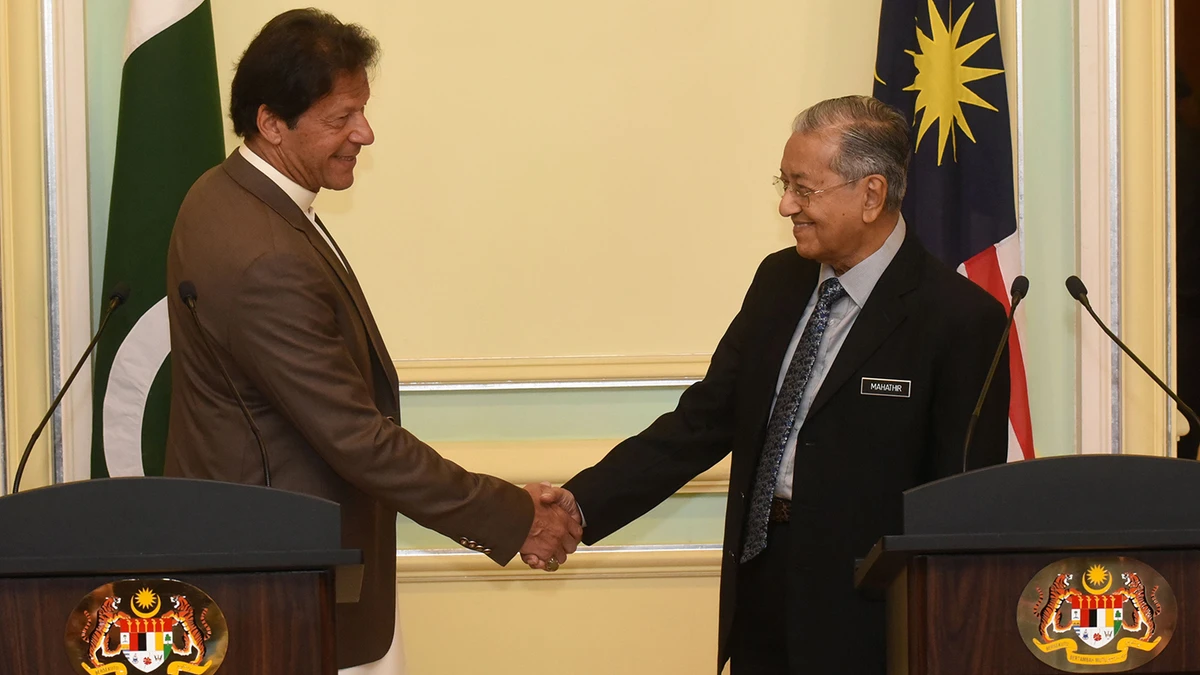
KUALA LUMPUR: Pakistani Prime Minister Imran Khan has expressed gratitude for Malaysia’s support on the issue of Kashmir and reaffirmed his country’s commitment to fostering bilateral ties with the Southeast Asian nation during an official visit on Tuesday.
Khan thanked Malaysian Prime Minister Mahathir Mohamad for “standing with (Pakistan) and speaking about the injustice in Kashmir.”
“I want to specifically thank the prime minister – the way the prime minister spoke about what the people of Kashmir are going through right now. Unfortunately, a very radical and extreme government has taken over in India and has put the people of Kashmir in an open prison for six months,” he said during a joint press conference.
Mahathir was very critical of India’s military lockdown in Kashmir during a speech at the 74th United Nations General Assembly in New York on Sept. 27, and has defended his stance since then despite a backlash by New Delhi which threatened to cut palm oil imports from Malaysia.
Malaysia is one of the largest producers of palm oil in the world, while India is one of the largest consumers of the commodity.
As a result, Malaysia is eyeing opportunities to export its palm oil to Pakistan. “We did talk about the sale of palm oil and Pakistan is quite ready to import more palm oil from Malaysia,” the 94-year old Malaysian leader said on Tuesday.
The two-day visit was Khan’s second trip to Malaysia since assuming office in 2018. He was scheduled to deliver a speech at the Kuala Lumpur Summit in December, but decided to cancel his attendance at the last minute.
“Unfortunately, our friends who are very close to Pakistan as well felt that the conference was going to divide the Ummah,” Khan said, adding that it was “clearly a misconception because that was not the purpose of the conference.”
“I was looking forward to attend the conference because I feel it is important that Muslim countries educate the Western countries and other non-Muslim countries on their misunderstandings about Islam,” he said, referring the summit which was attended by leaders from Turkey, Qatar, and Iran.
Khan’s two-day visit included a talk at the International Institute of Advanced Islamic Studies (IAIS) in Kuala Lumpur, where he shared his views on Islamophobia.
Pakistan and Malaysia also reaffirmed the 2007 Malaysia-Pakistan Closer Economic Partnership Agreement (MPCEPA) and signed an extradition treaty on Tuesday.
Pakistani Foreign Minister Shah Mahmood Qureshi, who accompanied Khan during the visit, and Malaysian Law Minister Liew Vui Keong signed the deal which deals with people who seek sanctuary in the former country after committing a crime in the latter.
Khan and Mahathir also exchanged views on the current issues regarding the situation in Palestine, and the plight of Rohingya people in Myanmar, as they vowed to “collaborate more closely on the issues affecting the Muslim Ummah.”
“As two peace-loving Islamic nations, both of us agreed to increase the collaborative efforts between our two countries, to uphold the true values of Islam while strengthening the solidarity of the Muslim Ummah,” Mahathir said.