UMM AL-FAHM, Israel: In the Israeli Arab town of Umm Al-Fahm residents are scared and angry over US President Donald Trump’s peace plan which sees them as part of a future Palestinian state.
At the same time, the “deal of the century” would give the Jewish state a green light to annex chunks of territory in the occupied West Bank, where more than 400,000 Israelis live in settlements deemed illegal under international law.
In Umm Al-Fahm, a hilltop town of over 50,000 people in northern Israel, locals are aghast at a clause on page 13 of the 181-page plan, which would barter their Israeli citizenship for the interests of the settlers.
As part of an “exchange” of territory, the Trump deal, entitled Peace To Prosperity, could transfer control of the Arab “triangle” — a cluster of 14 towns and villages where more than 260,000 Israeli Arabs live — from Israel to a mooted Palestinian state.
“The Vision contemplates the possibility, subject to agreement of the parties that the borders of Israel will be redrawn such that the Triangle Communities become part of the State of Palestine,” reads the text published by the White House.
That idea was welcomed by former defense minister Avigdor Lieberman, head of the secular nationalist Yisrael Beitenu party, who proposed such a swap in 2004.
But triangle residents find it a bitter pill to swallow.
“We don’t take this lightly. This situation is very serious, and it makes me very afraid,” said Rosine Zaid, sitting in an Umm Al-Fahm cafe.
“We’re not going to let that happen,” adds her friend Lubna Asali, between sips of coffee.
A group of five teenagers, shawarma meat sandwiches and soft drinks in their hands, say they will take part in a protest against the Trump plan due to take place Saturday in Umm Al-Fahm.
“We are ready to defend our land. We are against this program,” said 16-year-old Abdel.
He supports a Palestinian state, but with its capital in Jerusalem, which the plan acknowledges as Israel’s “undivided” capital.
“If they want to get us out of Israel, we want Jerusalem to follow us,” he says.
The Trump proposal does not in fact advocate the physical relocation of triangle residents.
Instead it would change the status of their communities, making them a Palestinian enclave, cut off from the neighboring West Bank by an Israeli barrier erected during the bloody second Palestinian intifada in the early 2000s.
They fear that as citizens of a Palestinian state they would lose the benefits of Israel’s thriving economy, its health and welfare system and the freedom to enter Israel, where many of their relatives have lived since before the creation of the Jewish state in 1948.
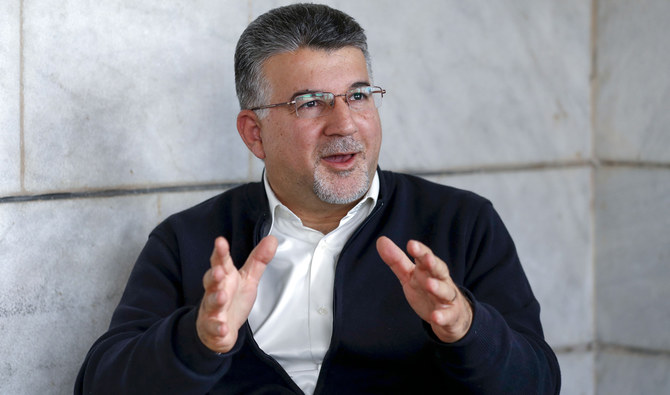
“We are part of the Arab minority in Israel and we live on our national land,” says Yousef Jabareen, a member of the Israeli parliament and an Umm Al-Fahm native.
“We refuse this plan, we want to continue to exist both socially and politically.
“I am Arab, I am Palestinian, and I am also a citizen of the State of Israel,” he added, saying that he feared that the triangle would become a “canton” landlocked in Israel.
Jabareen, who belongs to the mainly-Arab Joint List opposition alliance, says implementing the plan would shrink the Arab population of Israel and erode its influence.
Arabs currently number about 1.8 million, around 20 percent of Israel’s population.
The Trump plan would take about 260,000 Arabs out of that total, leaving the remainder politically weaker, Israeli Arab NGO Adallah writes on its website.
“According to the plan, the residents of the earmarked communities would remain in their homes but Israel’s borders would simply be redrawn to leave them outside its border,” it says.
If executed, it says, it would bring about a demographic shift through “racially-motivated separation.”
Jabareen’s Joint List backed Prime Minister Benjamin Netanyahu’s rival Benny Gantz for prime minister in a September general election.
But neither man was able to muster enough votes to form a government and a new poll is scheduled for March, the third within a year.
Gantz backs the Trump plan and has said he will submit it to Israel’s parliament for its endorsement in the coming week, drawing fire from Israeli Arabs.
For former MP Mohammed Barakeh, their choice at the polling booths will be clear.
“It will be the Arab list against the entire Israeli political establishment,” he said.


![]()

Israeli Arabs fear for their future under Trump peace plan
Short Url
https://arab.news/9hykh
Israeli Arabs fear for their future under Trump peace plan
- “We don’t take this lightly. This situation is very serious, and it makes me very afraid”


Latest updates


© 2026 SAUDI RESEARCH & PUBLISHING COMPANY, All Rights Reserved And subject to Terms of Use Agreement.