


Pakistani kite runners welcome spring in UAE

Imran and his cousins drove all the way from Fujairah to attend the kite flying festival in Al-Ain on Jan. 30, 2020. (AN photo by Asma Zain Ali)
Short Url
Updated 01 February 2020
Follow

Pakistani kite runners welcome spring in UAE

  • The day-night event is held to entertain and bring Pakistani diaspora members together
  • Bahar Basant is organized in Al-Ain by Al-Ghurair Exchange

DUBAI: Thousands of Pakistanis are participating in the two-day kite flying festival Basant Bahar 2020 which started in Al-Ain on Thursday to mark the advent of spring.
Also known as the festival of color – from the colorful kites and brightly dressed ladies and children – the event is held by Al-Ghurair Exchange.
This is the second edition of the festival. “Last year, the event was attended by 3,000 people,” Ali Hassan, the organizer of Basant Bahar, told Arab News. “This year, I expect 6,000 people.”
Kite flying competitions are part of Pakistani culture and the event is held to entertain and bring diaspora members together, Hassan said. 
Years ago, with fewer towering buildings and more empty land, it was easier to fly kites in the UAE. Today, the event is held in Al-Ain, in the middle of the desert, where the wind can help the kites soar.
“It’s different in Pakistan because it is part of the culture,” said Sargodha-born Imran, who came all the way from Fujairah along with his cousins to enjoy the festival. “There we battle it out over rooftops day and night amid search lights.”
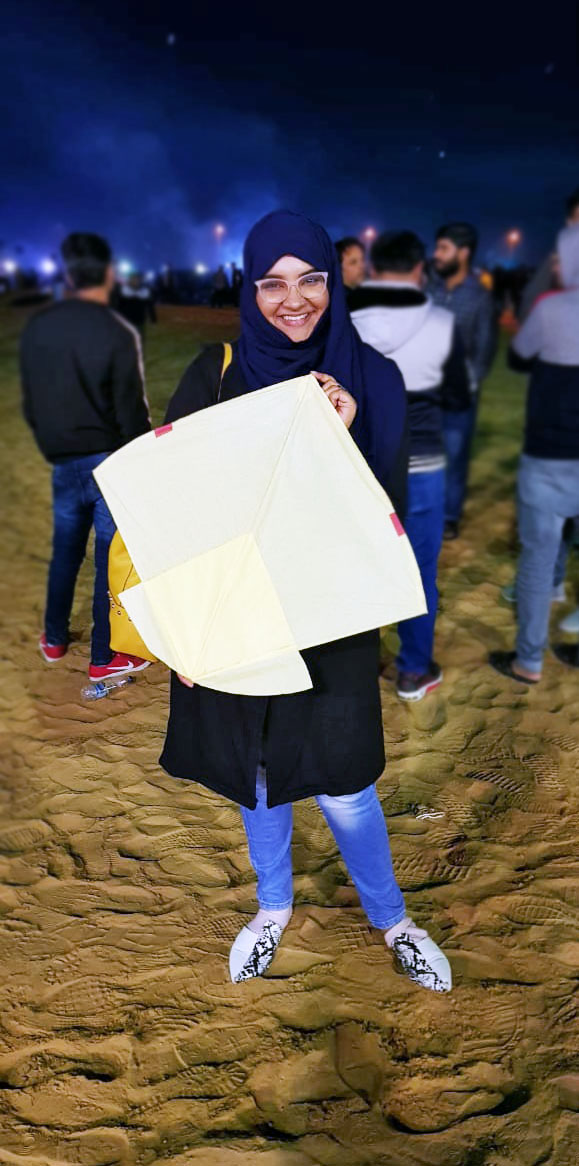


Maha Jamil for the first time participate the Bahar Basant in Al-Ain on Jan. 30, 2020. (AN photo by Asma Zain Ali)

Maha Jamil, originally from Karachi, said she was thrilled to attend the event. “This is my first time to attend any kite festival since this does not happen much in Karachi and I am enjoying the vibes here,” she said.
The Al-Ain festival is also held during the day time and at night. Colorful kites of all sizes dot the skies in the morning, while white ones are flown after sunset. Kites, also known as “patangs” or “guddas,“are made from splices of bamboo and crisp tissue paper. The “dor” or the string is covered with powdered glass to make it sharp enough to cut the kites of opponents in midair encounters.
The rules of the game are simple. Let your kite soar, drop its string on the nearest kite and then pull it. If your technique is good, the rival’s kite will fall to the ground, where horde of snatchers are waiting to catch it. The lilting sound of Punjabi numerals – since the festival is particularly popular among the Punjabis – and loud hoots will announce the catch.
Kites and dors sell like hot cakes during the Al-Ain festival, ranging from Dh2 to Dh200 for the biggest “gudda.” The tickets were priced at Dh12 per person.

Pakistan denies reports army ordered ‘depopulation’ in Tirah Valley ahead of anti-militant operation

Updated 5 sec ago
Follow

Pakistan denies reports army ordered ‘depopulation’ in Tirah Valley ahead of anti-militant operation

  • Tirah Valley residents started fleeing homes this month ahead of a planned military operation against militants
  • Reports aimed at creating alarm among public, disinformation against security institutions, says information ministry

ISLAMABAD: Pakistan’s information ministry on Sunday denied reports the army has ordered depopulation in the northwestern Tirah Valley ahead of a planned anti-militant offensive, stating that any movement of residents from the area is voluntary. 

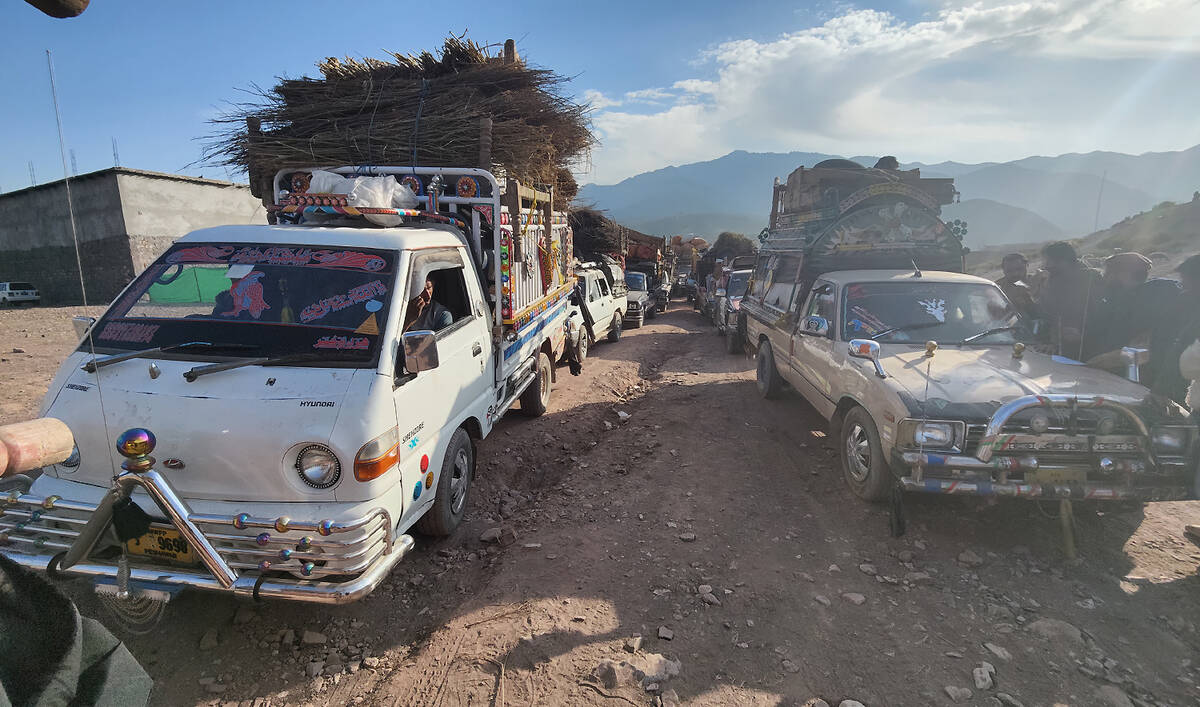
The denial from the government comes as residents of Tirah Valley in Pakistan’s northwestern Khyber Pakhtunkhwa (KP) province bordering Afghanistan flee their homes ahead of a planned military operation by the army against militants, particularly the Tehreek-e-Taliban Pakistan (TTP) group. 

Despite major military operations in the mid-2010s, Tirah Valley has remained a stronghold for insurgents, prompting authorities to plan what they describe as a targeted clearance.

“The government has taken notice of misleading claims in circulation regarding alleged ‘depopulation’ from Tirah Valley on the orders of the Army,” the Ministry of Information and Broadcasting (MoIB) said in a statement on Sunday. 

“These assertions are baseless, malicious, and driven by ulterior motives aimed at creating alarm among the public, disinformation against security institutions and furthering vested political interest.”

The ministry said Pakistan’s federal government and the armed forces had not issued directives for any such depopulation of the territory. It clarified that law enforcement agencies are “routinely conducting targeted, intelligence-based operations strictly against terrorist elements” with care to avoid disruption to peaceful civilian life. 

It said locals are increasingly concerned over presence of the “khawarij,” a term the military and government frequently use for the TTP, in Tirah Valley and desire peace and stability in the area.

The information ministry mentioned that the Khyber Pakhtunkhwa Relief, Rehabilitation and Resettlement Department issued a notification on Dec. 26 last year for the release of funds, reportedly Rs4 billion [$14.24 million], for the “anticipated temporary and voluntary movement of population from certain localities of Tirah.”

Families load their belongings onto vehicles in Pakistan’s Tirah Valley on January 15, 2026. (AN photo)

It also said that the notification mentioned that the deputy commissioner of Khyber District, where Tirah Valley is located, said the voluntary movement of people reflects the views of the local population articulated through a jirga at the district level. 

“Hence any stated position of the Provincial Government or their officials being conveyed to media that the said migration has anything to do with the Armed Forces is false and fabricated,” the information ministry said. 

“Given with malafide intent to gain political capital and unfortunately malign security institutions and therefore highly regrettable.”

The evacuation has exposed tensions between the provincial government, run by former prime minister Imran Khan’s Pakistan Tehreek-e-Insaf (PTI) party, and the military establishment over the use of force in the region.

“We have neither allowed the operation nor will we ever allow the operation,” KP Law Minister Aftab Alam Afridi said earlier this month, arguing that past military campaigns had failed to deliver lasting stability.

Pakistan military spokesperson Lt. Gen. Ahmed Shareef Chaudhry has previously defended security operations as necessary as militant attacks surge in the country. 

In a recent briefing, Chaudhry said security forces carried out 75,175 intelligence-based operations nationwide last year, including more than 14,000 in Khyber Pakhtunkhwa, attributing the surge in violence to what he described as a “politically conducive environment” for militants.