Profit at UAE’s biggest lender First Abu Dhabi Bank modestly up

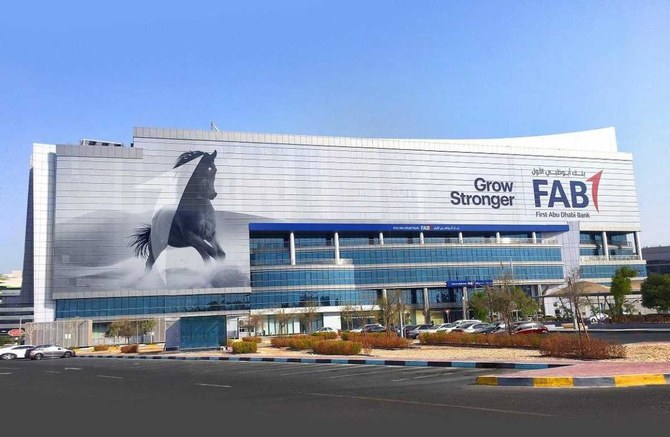
First Abu Dhabi Bank was created in 2017 by the merger of two Abu Dhabi-based lenders. (Reuters)
Short Url
Updated 28 January 2020
Follow

Profit at UAE’s biggest lender First Abu Dhabi Bank modestly up

  • First Abu Dhabi Bank was created in 2017 by the merger of two Abu Dhabi-based lenders
  • FAB’s assets grow 10 percent last year to $224 billion, making it the second largest Arab bank in terms of assets

ABU DHABI: The United Arab Emirates’ top lender, First Abu Dhabi Bank, on Tuesday announced a modest increase in net profit for 2019, despite “challenging market conditions.”
FAB said its net profit for last year rose four percent to $3.4 billion compared to $3.27 billion in 2018.
“2019 marked another year of growth for FAB, despite challenging market conditions regionally and internationally,” chairman Sheikh Tahnoon bin Zayed Al-Nahyan said in a statement.
FAB, which was created in 2017 by the merger of two Abu Dhabi-based lenders, saw its assets grow 10 percent last year to $224 billion making it the second largest Arab bank in terms of assets after Qatar National Bank.


FDI in Saudi Arabia up 10%, hits $280bn: SAMA

Updated 12 sec ago
Follow

FDI in Saudi Arabia up 10%, hits $280bn: SAMA

RIYADH: Foreign direct investments in Saudi Arabia reached SR1.05 trillion ($280 billion) by the end of the third quarter of 2025 in what was a 10 percent annual increase, official data showed. 

Figures released by the Saudi Central Bank, also known as SAMA, revealed that total foreign investments in the Kingdom increased by 17 percent year on year to reach SR3.2 trillion. 

FDI occurs when a foreign entity invests in a business in another country, gaining a long-term interest and significant influence over its management and operations.

The increase reflects the Kingdom’s broader efforts to attract long-term foreign capital under its Vision 2030 strategy, which aims to diversify the economy beyond oil revenues. Under the program, Saudi Arabia is targeting $100 billion in annual FDI by 2030.

SAMA data added that portfolio investments by foreign firms in the Kingdom, which include equity, investment funds, and debt bonds, amounted to SR1.31 trillion by the end of the third quarter of 2025, marking an increase of 24 percent compared to the same quarter in the previous year. 

The release also showed that other foreign investments, which include loans, currency, and deposits, as well as other accounts, stood at SR843.56 billion in the third quarter of 2025, up 17 percent year on year.

The figures indicated that Saudi Arabia’s total assets stood at SR5.99 trillion during the same period, reflecting a 5 percent rise compared to the third quarter of 2024.

Direct investment abroad reached SR953.66 billion in the third quarter of 2025, up 16 percent annually. 

During the same quarter, the Kingdom’s portfolio investments, which include equity and fund investments as well as debt securities, totaled SR1.94 trillion, up around 4 percent compared to the corresponding period in 2024.

Other asset-side investments, including trade credit, loans, currency and deposits, and various other accounts, increased by 8.9 percent year-on-year, reaching SR1.41 trillion in the third quarter.

Reserve assets, including monetary gold, Special Drawing Rights, the reserve position in the Fund, and other reserve assets, reached SR1.68 trillion in the same quarter, reflecting a 1.4 percent decline compared to the previous year.

In December, a report by the General Authority for Statistics revealed that Saudi Arabia’s foreign direct investment net inflows reached SR24.9 billion in the third quarter of 2025, marking a 34.5 percent increase from the same period in 2024.