

Coronavirus impact on oil demand limited, says Saudi energy minister

Saudi Arabia's Minister of Energy, Prince Abdulaziz bin Salman Al-Saud. (Reuters)
Short Url
Updated 28 January 2020
Follow

Coronavirus impact on oil demand limited, says Saudi energy minister

  • Minister recalls 2003 outbreak of Severe Acute Respiratory Syndrome did not push down oil demand

DUBAI: Saudi Arabia has urged caution against “gloomy expectations” regarding the possible impact of the spread of the coronavirus on the global economy and oil demand.
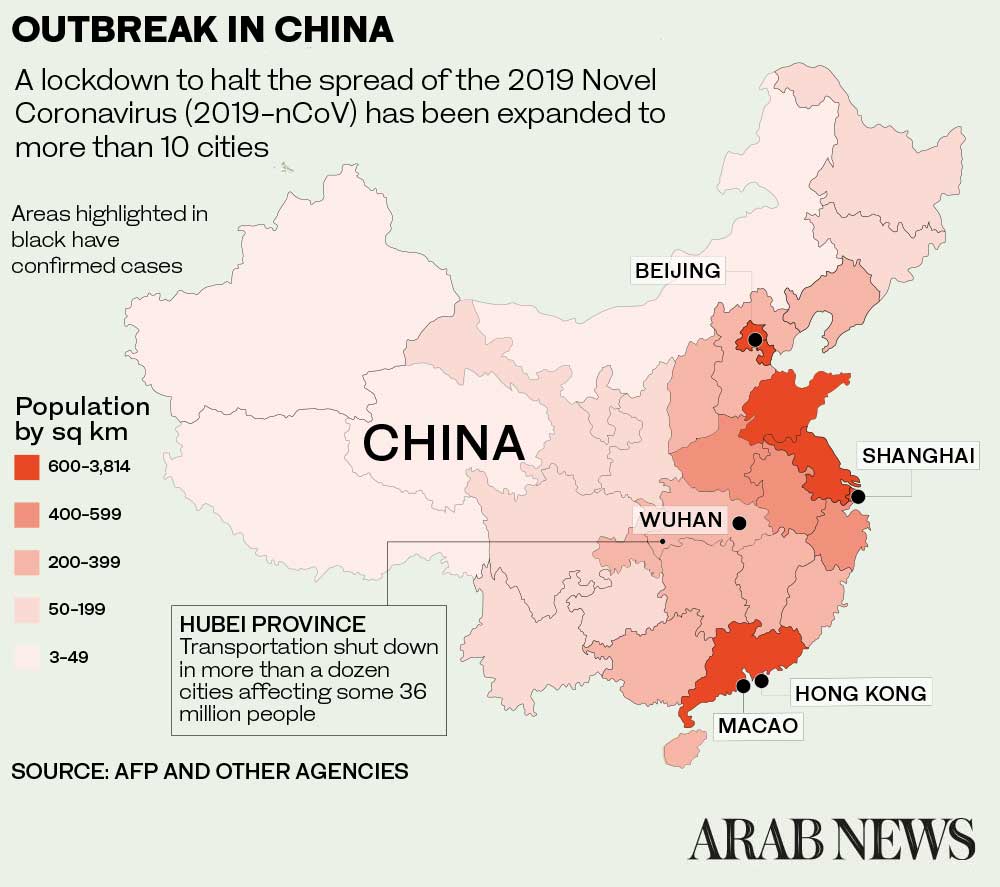
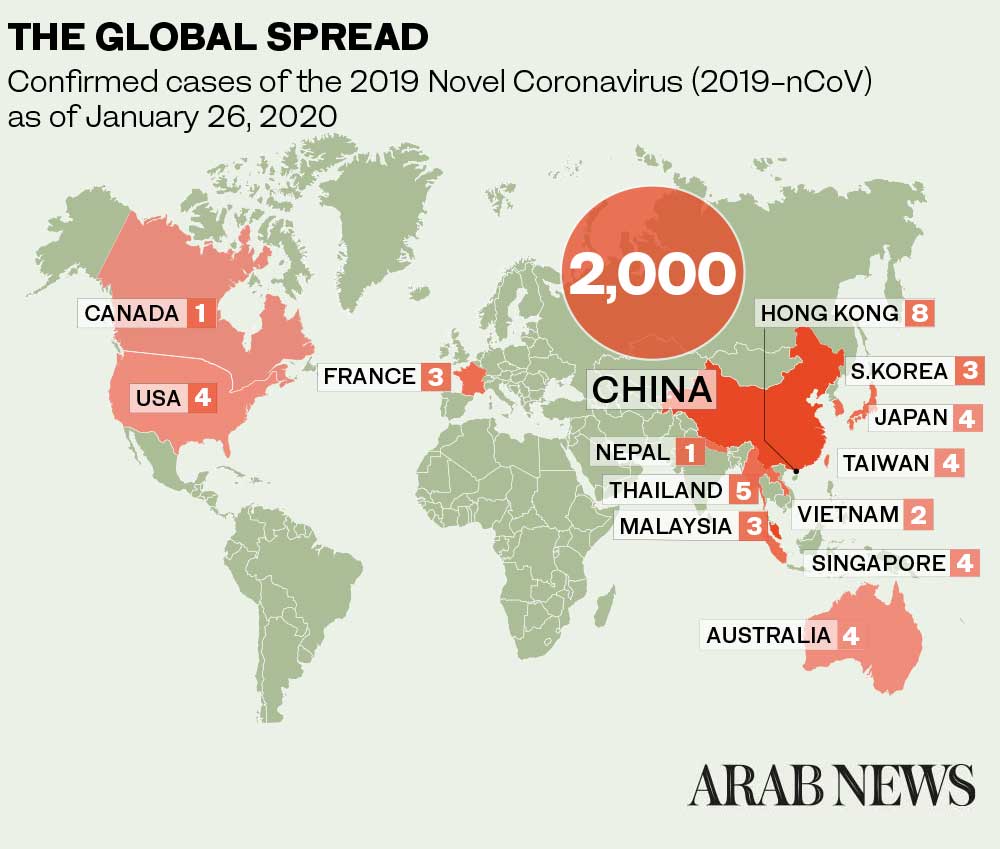
The death toll from a coronavirus outbreak in China rose to 81 on Monday with more than 2,700 infected as health authorities around the world stepped up screening of passengers from China.
Crude prices fell about 3 percent on Monday as the rising number of cases of the coronavirus and China’s city lockdowns and extension of its Lunar New Year holiday deepened concerns over oil demand.
But Saudi Energy Minister Prince Abdul Aziz bin Salman said the impact being seen on oil and other markets was “primarily driven by psychological factors and extremely negative expectations adopted by some market participants despite its very limited impact on global oil demand.”
“Such extreme pessimism occurred back in 2003 during the SARS outbreak, though it did not cause a significant reduction in oil demand,” the minister said in a statement.

Fellow Gulf OPEC oil producer UAE echoed the Saudi minister’s comments.
“It is important that we do not exaggerate projections related to future decreases in oil demand due to events in China,” UAE Minister of Energy Suhail Al-Mazrouei said.
In March “OPEC and OPEC+ member countries will discuss market conditions and, if required, all options to ensure continued market balance,” he said.
The Saudi minister said OPEC and its allies could respond to any impact on the oil market, adding he was confident the Chinese and international authorities could contain the virus.
Brent crude slid $1.37 a barrel to settle down at $59.32, its lowest since late October and the biggest intra-day fall since Jan. 8.
US crude fell $1.05 to settle at $53.14 a barrel.
Prince Abdul Aziz said he was confident the Organization of the Petroleum Exporting Countries (OPEC) and other producers, a group known as OPEC+, “have the capability and flexibility needed to respond to any developments.”
Oman’s oil minister told Reuters on Monday that he fully supported Saudi Arabia’s readiness to react to any impact the virus has on the market.

OPEC+, which includes Russia, has been reducing oil supply to support prices and has agreed to hold back 1.7 million barrels per day (bpd) of output until the end of March.
Prince Abdul Aziz said all options were open when OPEC+ meets in Vienna in March.
An OPEC source said on Monday that there were “preliminary discussions” among OPEC+ for an extension of the current oil supply cuts beyond March, and a possible deeper cut was also an option, if there was a need, and if the China virus spread impacted oil demand.


Industry leaders highlight Riyadh’s Metro, infrastructure as investment catalysts

Updated 29 December 2025
Follow

Industry leaders highlight Riyadh’s Metro, infrastructure as investment catalysts

RIYADH: Saudi Arabia’s capital, Riyadh, is experiencing a transformative phase in its real estate sector, with the construction market projected to reach approximately $100 billion in 2025, accompanied by an anticipated annual growth rate of 5.4 percent through 2029.

The Kingdom is simultaneously advancing its data center capacity at an accelerated pace, with an impressive 2.7 GW currently in the pipeline. This expansion underscores the critical role of strategic land and power planning in establishing national infrastructure as a cornerstone of economic growth.

These insights were shared by leading industry experts during JLL’s recent client event in Riyadh, which focused on the city’s macroeconomic landscape and emerging trends across office, residential, retail, hospitality, and pioneering sectors, including AI infrastructure and Transit-Oriented Development.

Saud Al-Sulaimani, Country Lead and Head of Capital Markets at JLL Saudi Arabia, commented: “Riyadh is positioned at the forefront of Saudi Arabia’s Vision 2030, offering unparalleled opportunities for both investors and developers. National priorities are continuously recalibrated to ensure strategic alignment of projects and foster deeper collaboration with the private sector.”

He added: “Recent regulatory developments, including the introduction of the White Land Tax and the rent freeze, are designed to stabilize the market and are expected to drive renewed focus on delivering premium-quality assets. This dynamic environment, coupled with evolving construction cost considerations in select segments, is fundamentally reshaping the market landscape while accelerating progress toward our national objectives.”

The event further underscored the transformative impact of infrastructure initiatives. Mireille Azzam Vidjen, Head of Consulting for the Middle East and Africa at JLL, highlighted Riyadh’s transit revolution. She detailed the Riyadh Metro, a $22.5 billion investment encompassing 176 kilometers, six lines, and 84 stations, providing extensive geographic coverage, with a depth of 9.8 km per 100 sq. km. This strategic development generates significant TOD opportunities, with properties in proximity potentially commanding a 20-30 percent premium. JLL emphasized the importance of implementing climate-responsive last-mile solutions to enhance mobility and accessibility, particularly given Riyadh’s extreme temperatures.

Gaurav Mathur, Head of Data Centers at JLL, emphasized the rapid expansion of the Kingdom’s AI infrastructure, signaling a critical area for technological investment and innovation.

Focusing on the construction sector, Maroun Deeb, Head of Projects and Development Services, KSA at JLL, explained that the industry is actively navigating complexities such as skilled labor availability, material costs, and supply chain dynamics.

He highlighted the adoption of Building Information Modeling as a key driver for enhancing operational efficiency and project delivery.