


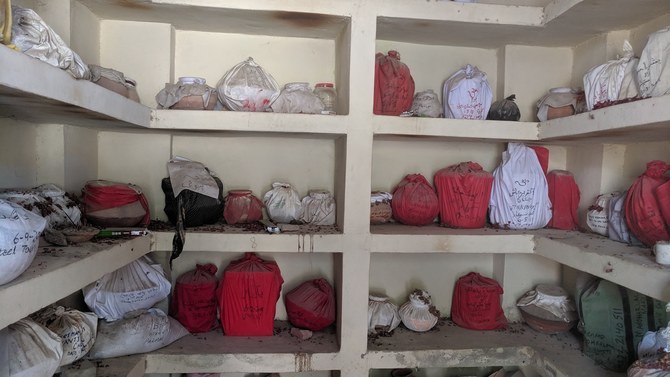
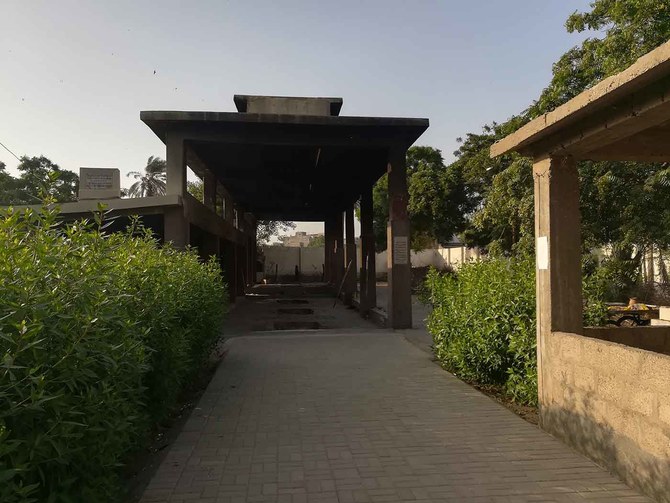

KARACHI: In a long-forgotten storeroom in the seaside metropolis of Karachi, the final wishes of over a hundred people are still waiting to be fulfilled, as a strict Indian visa regime has prevented their ashes from being scattered in the Ganges River in India.
With roughly 4 million Hindus living in Pakistan – a majority of them in the southeastern province of Sindh – many on their death-beds task relatives with taking their ashes to the river that is sacred for most followers of Hinduism. But increased travel regulations and weakening diplomatic relations have resulted in no permits being issued for deceased Pakistani Hindus since September 2016, according to senior members of the Hindu community in Karachi.
The image taken in September 2019 shows the cremated remains of Pakistani Hindus, marked and stored sometimes for years, in a small room at Karachi's only cremation ground. (AN photo)
This month, however, hopes in the community are soaring.
After three rejections since 2018, Wasta Chawla and his family of three have been granted an Indian visa to carry a relative’s remains to the Ganges. It is the first such case reported in three and a half years.
“We cannot express our feelings in words as my sister-in-law’s last wish is finally going to be fulfilled,” a tearful Chawla told Arab News.
“We will leave next month and immerse her ashes in the Ganges,” he said.
“She died in January 2018, we applied twice that year but our visas were rejected without explanation. Early last year, we tried again with no luck. In November, we applied once more and this time, after the media had highlighted the issue, we got the visa,” he added.
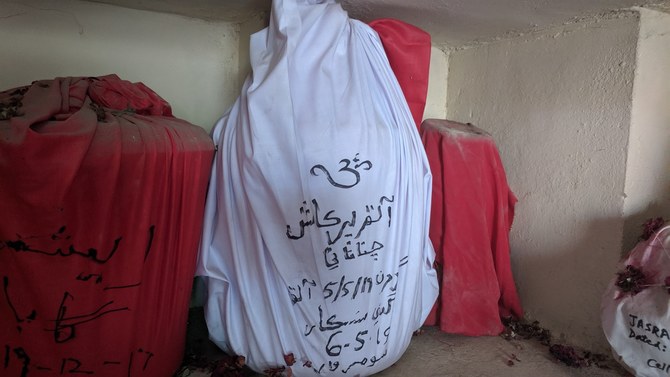
The image taken in September 2019 shows the cremated remains of Pakistani Hindus, marked and stored sometimes for years, in a small room at Karachi's only cremation ground. (AN photo)
Atam Parkash, a Pakistani-Hindu businessman who died of cancer in May last year, and whose case was highlighted by Arab News in September, had asked his family to carry his ashes to the city of Haridwar in northern India, where the River Ganges exits the Himalayan foothills. As months passed by, his relatives began to lose hope, but news from the Chawla family has renewed optimism.
Parkash’s son, Krishna Chainani, now has a visa appointment in hand for next week, and despite earlier rejections, is already making plans for the journey that will take his father to his final resting place.
“Wastu Chawla’s visa application was also rejected thrice. Now he has been granted a visa after the issue was highlighted by the media,” a beaming Chainani said, expressing his gratitude to the media and the Indian government. He added he was already spreading the good news in Karachi’s temples so people who had long given up, would begin applying for visas again.
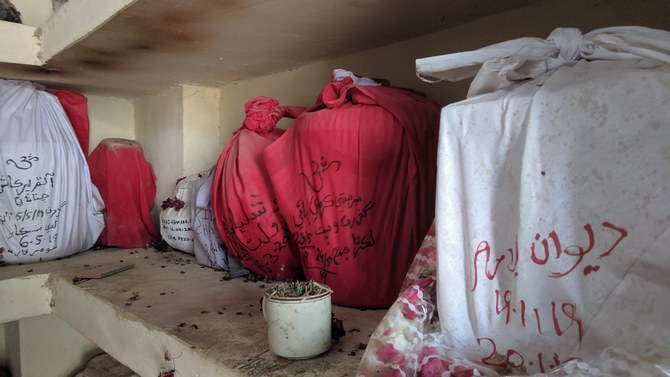
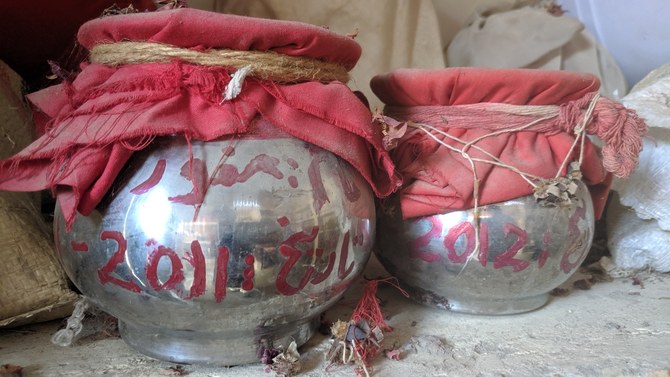
The image taken in September 2019 shows the cremated remains of Pakistani Hindus, marked and stored sometimes for years, in a small room at Karachi's only cremation ground. (AN photo)
“When I get my visa, I will visit Haridwar with my uncle and mother to immerse the asthi of my father in the Ganges,” Shainani told Arab News last week.
Shri Ram Nath Maharaj, the caretaker of the Panchmukhi Hanuman temple in Karachi’s Soldier Bazaar area and a senior member of the Hindu community, said he was the last to carry dozens of remains to Haridwar in 2016 before the visas simply stopped coming.
“We are bound to honor the will of the deceased,” Ram Nath said. “It seemed hard … but there are new hopes. We hope that this will not stop,” he said.
The Indian High Commission declined to share the number of travel documents issued but said it has always facilitated visa applications.
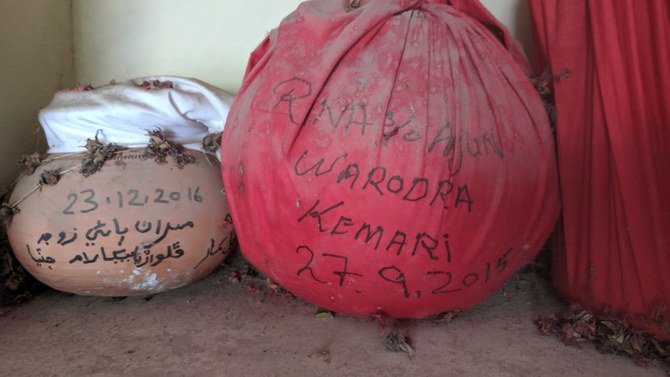
The image taken in September 2019 shows the cremated remains of Pakistani Hindus, marked and stored sometimes for years, in a small room at Karachi's only cremation ground. (AN photo)
“The High Commission of India actively facilitates visa applications of all Pakistani applicants, including members of the Hindu community who want to travel to Haridwar to perform last rites of their family members,” a spokesperson from the commission told Arab News.
He said the mission “already issues visas to relatives who want to travel to India for performing the last rites of their relatives.”
The applicants, he said, were required to submit the death certificate of the person whose ashes were to be placed in the Ganges River, in addition to the applicant’s copy of their national identity card, electricity or gas bill, and a polio vaccination certificate.
Beyond the paperwork and rejections, however, desperate families say the dead wait in anguish.
Wastu Chawla breathed a sigh of relief. He was overjoyed, he said because his deceased sister-in-law would finally be out of her discomfort.
“When she died, we cremated her body” he said. “But her soul cannot rest in peace until its last and final wish comes true.”


