Saudi Arabia committed to “25 by 25” to reduce the gap in labor market

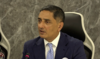
A session on "Approaching Challenges from Different Perspective" of the T20 Inception Conference in Riyadh. (AN photo/Rashid Hassan)
Short Url
Updated 21 January 2020
Follow

Saudi Arabia committed to “25 by 25” to reduce the gap in labor market

  • The G20 engagement groups share common areas of interest in the pursuit of their specific objectives including women, youth and sustainable development

RIYADH: Reducing the gender gap in labor participation is a moral imperative as well as a key for growth and sustainable development, which is why G20 countries have committed to reduce the gap in women’s labor participation 25 percent by 2025.

Speaking at a session called “Approaching challenges from different perspectives” on the concluding day of the T20 Inception Conference in Riyadh on Monday, Thoraya Obaid, chair of the W20 engagement group, said: “The G20 countries have committed to increasing women’s participation 25 percent by 2025. We in the Kingdom have also adopted this in our Saudi Vision 2030 Program.”

The G20 engagement groups share common areas of interest in the pursuit of their specific objectives including women, youth and sustainable development.

Princess Nouf bint Mohammed of the C20 engagement group highlighted the importance of civil society taking commitments and promises seriously, and fulfilling its promises with implementation and accountability.

“Civil Society is our heart and soul, we are the people on the ground, and provide support to reach our goals,” she said.

“Together with other engagement groups, we have all adopted a joint statement to work in the pursuit of specific objectives. I think where we can make it big collectively is on the climate issue.”

Othman Al-Moamar, of Y20 engagement group, said: “Young people are the most important component in today’s technology driven world, therefore more young people in entrepreneurship means more prosperity, and opportunities.”

Highlighting their role, Nasser Al-Jaryad of L20 engagement group said: “Our aim is empowering people, guaranteeing minimum living wages and collective bargaining, promoting social dialogue for social cohesion, and ending corporate monopolies.

“We also take all possible actions to improve the progressiveness of taxation system,” he added.

Abdulmohsen Al-Ghanam of U20 engagement group said their themes represented common challenges and aspirations of global cities.

The session was moderated by Abdullah Al-Saud, member of the T20 steering committee and director of research at King Faisal Center for Research and Islamic Studies.


Saudi Arabia champions AI and sustainable growth at UN tourism meeting in Kuwait

Updated 6 sec ago
Follow

Saudi Arabia champions AI and sustainable growth at UN tourism meeting in Kuwait

  • Saudi Tourism Minister says tourism today accounts for approximately 10 percent of the world economy, contributing about $10 trillion to global GDP 


KUWAIT CITY: Saudi Arabia’s Tourism Minister Ahmed Al-Khateeb has called for stronger international cooperation to build a tourism ecosystem that is integrated, resilient, and future-ready, the Saudi Press Agency reported Thursday.

In a opening address at the 52nd UN Tourism Regional Commission for the Middle East in Kuwait City, he noted that tourism is “no longer a peripheral activity but a massive engine of economic development.”

“With an estimated contribution exceeding $10 trillion to global GDP, tourism today accounts for approximately 10 percent of the world economy,” said Al-Khateeb, speaking as president of the 26th UN Tourism General Assembly. The three-day conference opened on Feb. 10 a.

He pointed to the Middle East’s exceptional recovery, which recorded a 39 percent increase in international arrivals in 2025 compared to 2019, welcoming nearly 100 million visitors last year.

The minister highlighted Saudi Arabia’s driving force behind these regional statistics, noting that the Kingdom now represents approximately 30% of the Middle East tourism market in both visitor numbers and spending.

“We are proud that Saudi tourism’s uninterrupted growth has become a driving force for regional tourism, and we look forward to continuing our close cooperation with UN Tourism to share our expertise with the world,” he said.

Focus on AI

Addressing the meeting’s central theme of Artificial Intelligence (AI), Al-Khateeb emphasized the need for responsible innovation. He described AI as a key enabler for growth but stressed that the “human touch” defining the hospitality sector must be maintained and the workforce protected.

On the sidelines of the regional commission, the minister met with counterparts from across the region to explore ways to promote regional cooperation and alignment to enhance resilience and build tourism industries that can drive inclusive economic and social development.

Al-Khateeb also met with leading investors from Kuwait to discuss investments in the Kingdom’s tourism sector and explore new opportunities to leverage Saudi Arabia’s integrated investment ecosystem, designed to enable regional and international investors to achieve sustainable, long-term value.

The 52nd UN Tourism Regional Commission for the Middle East is the first held in the region since the 26th UN Tourism General Assembly, hosted in Riyadh last November. 

That assembly resulted in the historic “Riyadh Declaration on the Future of Tourism,” which established a global consensus on sustainability, inclusive growth, and the responsible adoption of human-centric AI for the next fifty years.