

Death toll rises to 100 as extreme weather hits Pakistan, Azad Kashmir

1 / 4
Local residents remove debris of a collapsed house following heavy snowfall that triggered an avalanche in Neelum Valley, in Pakistan-administered Kashmir on January 14, 2020. (AFP)
2 / 4
People walk on a foot bridge on the banks of the Dal Lake during a snowfall in Srinagar on January 13, 2020. (AFP)
3 / 4
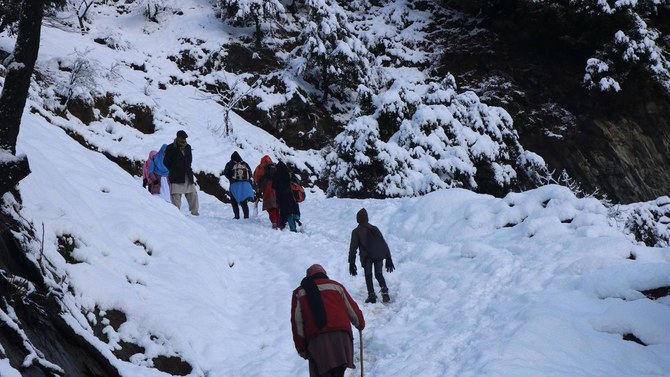
People are seen walking on a snow-covered mountain path in the Neelum Valley, Pakistan. (EPA)
4 / 4
Rescue workers walk the snow-covered road to reach the areas affected by heavy snowfall and avalanches, in Neelum Valley near line of control (LoC), Pakistan, January 14, 2020. (REUTERS)
Short Url
Updated 16 January 2020
Follow

Death toll rises to 100 as extreme weather hits Pakistan, Azad Kashmir

  • PM Khan visits Azad Kashmir on Wednesday to assess ground situation
  • Pakistan-Iran freight train service suspended as floods damage track in Dalbadin, Noshki in Balochistan

KARACHI: Prime Minister Imran Khan has instructed the authorities to urgently assist the residents of Azad Kashmir where dozens of people have lost their lives due to avalanches and many more remain missing, officials said on Wednesday.
The countrywide death toll in avalanches, landslides and other incidents caused by harsh weather has reached 100, and the authorities fear that number may increase. Rescue operations in snow-hit areas of the Neelum Valley, Gilgit-Baltistan and Balochistan continue, Pakistan Army's media wing (ISPR) confirmed on Wednesday evening.  
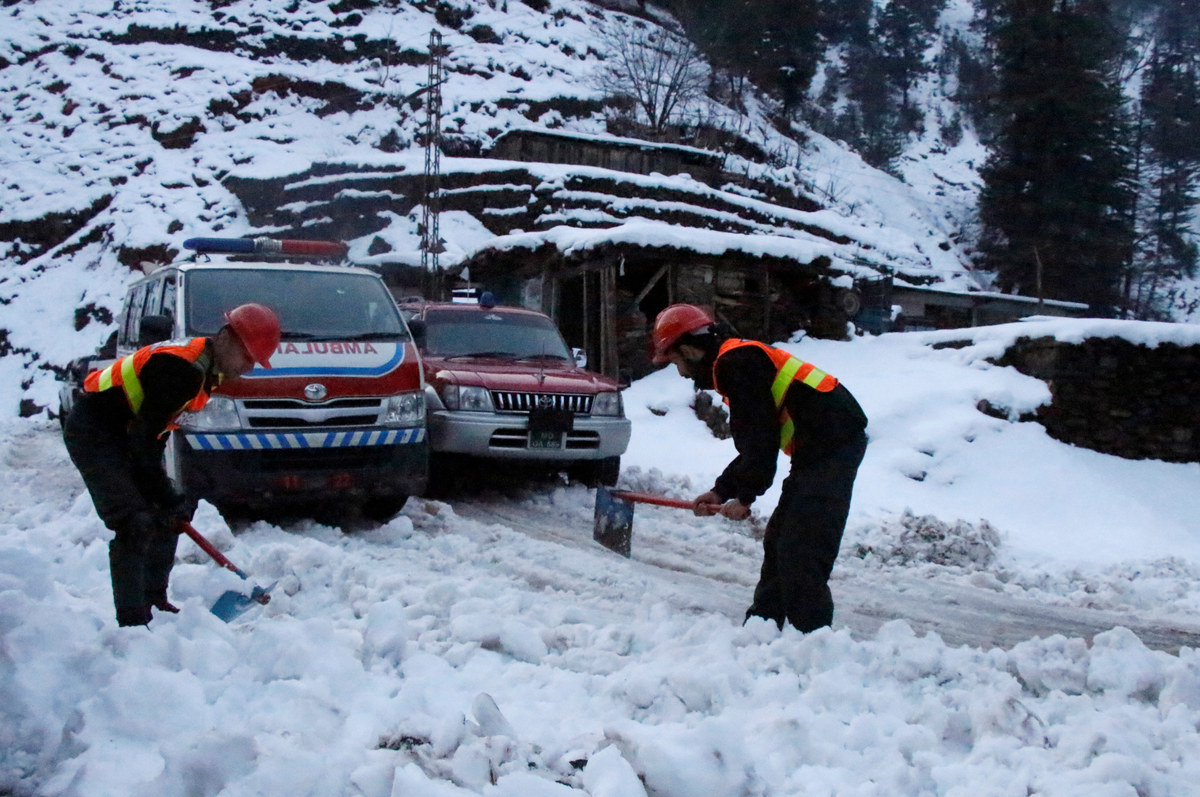


Rescue workers clear a snow-covered road to make way for an ambulance to reach the areas affected by heavy snowfall and avalanches, in Neelum Valley near line of control (LoC), Pakistan, January 14, 2020. (REUTERS)

In Azad Kashmir, heavy rains and snowfall in the last two days triggered avalanches in different areas.
“The avalanches and other rain-related incidents have killed 76 and injured 53 others. They have also damaged 198 houses, 20 shops and one mosque,” the National Disaster Management Authority (NDMA) spokesman, Saqib Mumtaz, told Arab News.
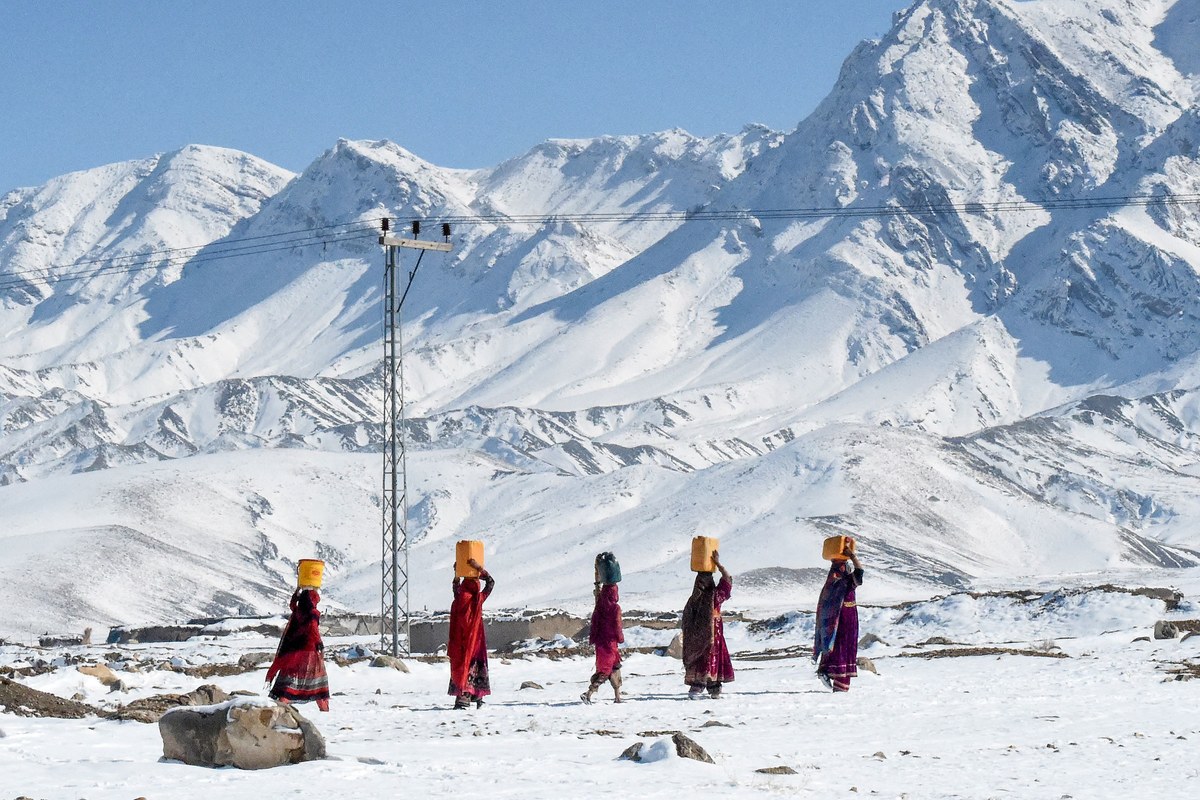


Local residents carry water pots above their heads as they walk back to their homes after heavy snowfall in Khanozai area some 75 kms in northeast of the provincial capital Quetta on January 14, 2020. (AFP)

PM Khan on Wednesday visited Muzaffarabad, the capital city of Azad Kashmir, to review the ground situation.
The regional chief secretary of the area briefed him about the damages and ongoing relief efforts.
Khan also visited a military hospital in Muzaffarabad and met with injured people who are undergoing treatment at the health facility.
Discussing the situation in Balochistan, an official told Arab News that 20 people were killed in various incidents in the province. “The situation is under control and all stranded people have been rescued,” Liaquat Shahwani said.
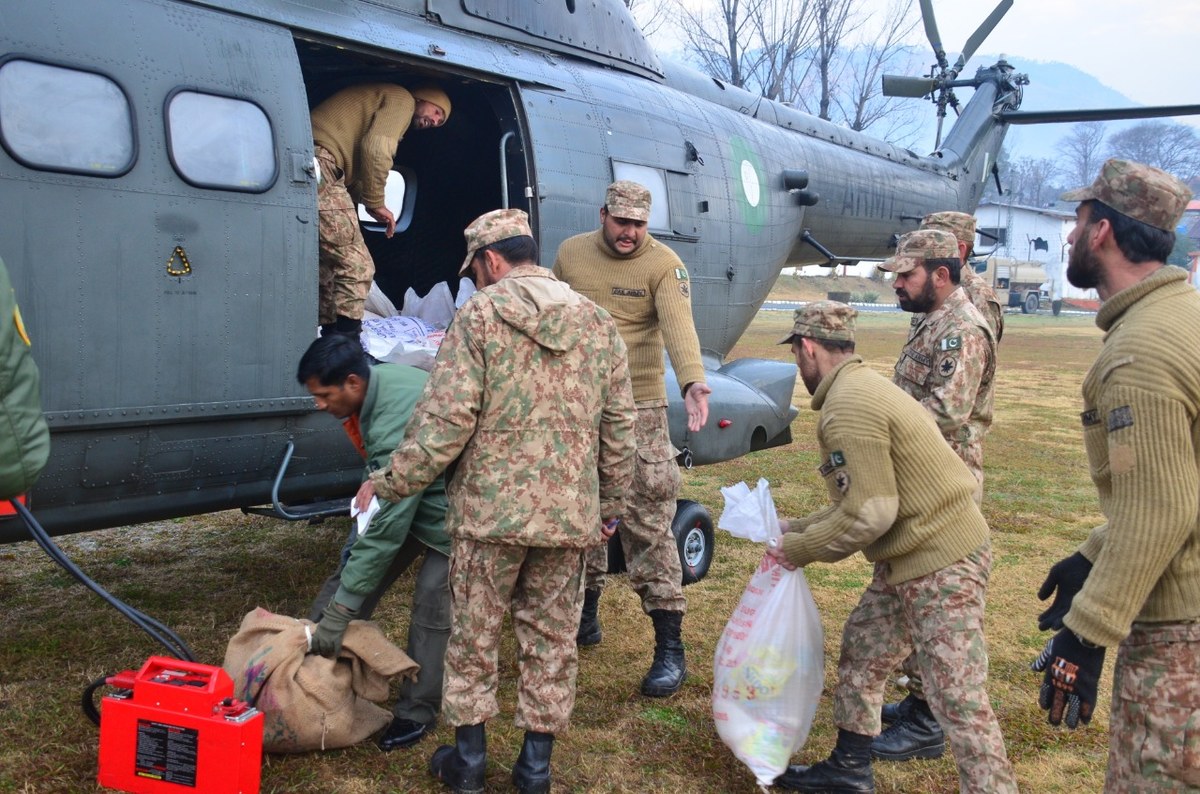


Rescue and relief efforts are underway on Jan. 15. (Photo courtesy: ISPR)

“Two people died and eight were injured in Khyber Pakhtunkhwa, while two people also died in Gilgit-Baltistan,” the NDMA said in a statement on Wednesday.
“The rescue and relief operations in Neelum Valley are underway as per the directives of Prime Minister Imran Khan. Today, three more helicopters left for the valley with rations, tents, blankets, medicines and other items of necessity,” Mumtaz, the NDMA spokesperson, said.
“The severe snowfalls and landslides in AJK [Azad Jammu and Kashmir] have caused misery & deaths. I have asked the NDMA, the military & all our federal ministers to immediately provide all humanitarian assistance on an emergency footing to the affected people in AJK,” Khan tweeted on Tuesday.

Army helicopters delivered tents, blankets, food, and medicine to locations in which road access has been cut off, according to a statement by ISPR. The military also said parts of the Karakoram Highway and Jaglot Skardu Road which were blocked earlier are already clear.
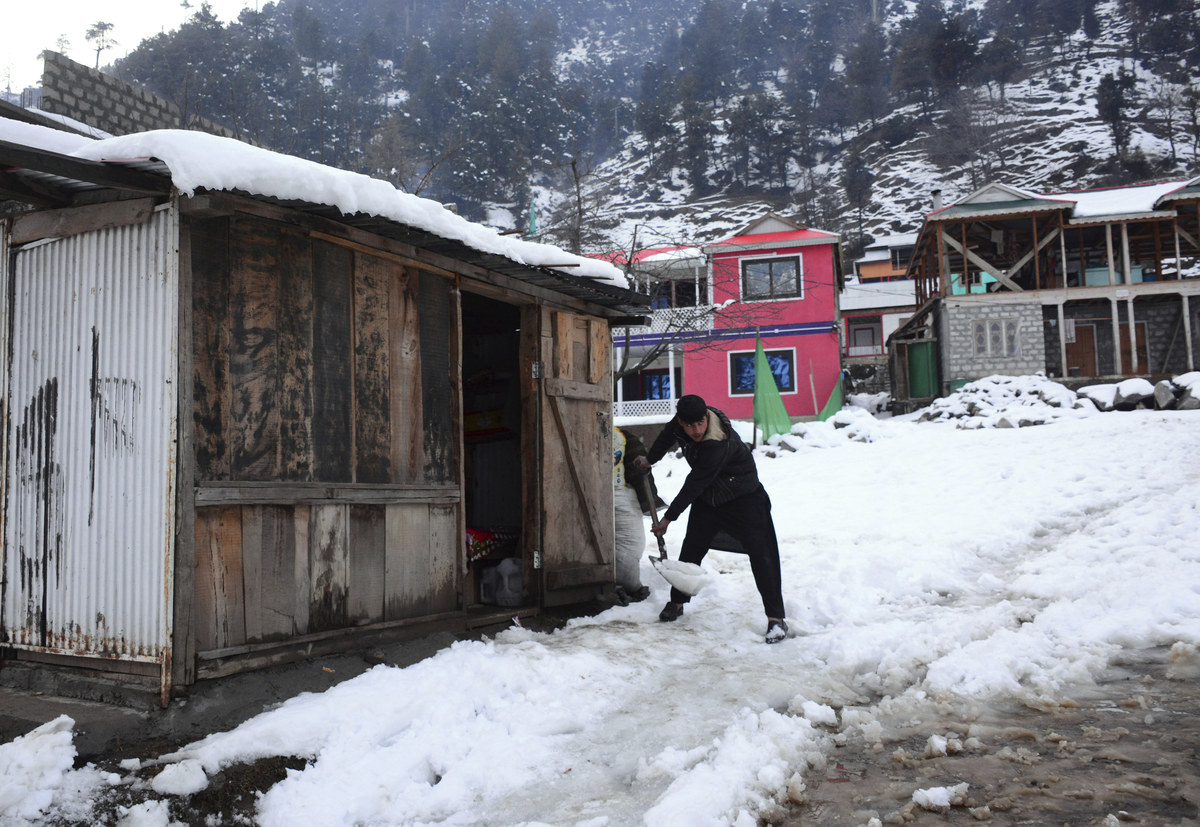


A man removes snow from outside his house after heavy snowfall, in Keran, a small town in Neelum Valley, in Azad Kashmir, Tuesday, Jan. 14, 2020. (AP)

Meanwhile, the Pakistan Meteorological Department (PMD) warns that heavy rains and snow in northwestern parts of Balochistan may result in flash floods. The province has recorded the heaviest snowfall in two decades, according to the PMD.
A westerly wave has also engulfed the upper parts of the country, the PMD said in a statement on Tuesday, forecasting cold and dry weather in most parts of Pakistan and extremely frigid climate in north Balochistan.
Rain and snowfall are also expected in Gilgit-Baltistan and Azad Kashmir.
Other than that, reports indicate that floods in Balochistan have affected the freight train service between Pakistan and Iran, which remained suspended due to major damage to the railway track in Noshki and Dalbandin.


Pakistan, Muslim countries reject Israel’s plan to expel Palestinians from Gaza

Updated 4 sec ago
Follow

Pakistan, Muslim countries reject Israel’s plan to expel Palestinians from Gaza

  • Israel has announced plans to open the Rafah crossing with Egypt for Gaza residents fleeing the enclave
  • Muslim nations seek implementation of Trump’s peace plan, establishment of independent Palestinian state

ISLAMABAD: Pakistan, together with seven other Arab and Muslim countries, on Friday rejected Israel’s attempt to expel Palestinians by opening the Rafah border crossing with Egypt solely for fleeing Gaza residents, and called for adherence to the peace plan proposed by US President Donald Trump’s administration.

Trump’s Gaza plan calls on Israel to allow humanitarian aid into the territory and keep the Rafah crossing open from both sides.

However, Israel has continued to restrict aid flows, and its military said on Wednesday the crossing would open in the coming days “exclusively for the exit of residents from the Gaza Strip to Egypt.”

“The Foreign Ministers of the Islamic Republic of Pakistan, the Arab Republic of Egypt, the Hashemite Kingdom of Jordan, the United Arab Emirates, the Republic of Indonesia, the Republic of Türkiye, the Kingdom of Saudi Arabia, and the State of Qatar express their deep concern regarding the Israeli statements concerning the opening of the Rafah Crossing in one direction, with the aim of transferring residents of the Gaza Strip into the Arab Republic of Egypt,” said the joint statement circulated in Pakistan by the foreign office.

“The Ministers underscore their absolute rejection of any attempts to expel the Palestinian people from their land and stress the necessity of the full adherence to the plan proposed by US President Donald Trump, including its provisions on keeping the Rafah Crossing open in both directions, ensuring the freedom of movement for the population, and refraining from compelling any resident of the Gaza Strip to leave,” it continued.

The statement appreciated the US president’s commitment to establishing peace in the region and emphasized the importance of implementing his plan “without delay or obstruction” to help consolidate regional stability.

“The Ministers underscore the need to fully sustain the ceasefire, alleviate civilian suffering, ensure the unrestricted entry of humanitarian assistance into the Gaza Strip, initiate early recovery and reconstruction efforts, and create the conditions necessary for the Palestinian Authority to resume its responsibilities in the Gaza Strip,” the statement added.

They reaffirmed their countries’ readiness to work with the United States and all concerned regional and international actors to achieve “a just, comprehensive, and sustainable peace in accordance with international legitimacy and the two-state solution,” including the establishment of an independent Palestinian state on the pre-1967 lines with East Jerusalem as its capital.

Pakistan’s foreign office circulated the statement after Deputy Prime Minister Ishaq Dar held a telephone conversation with Saudi Foreign Minister Prince Faisal bin Farhan to discuss regional developments, particularly Gaza.

Dar condemned Israel’s plan to partially reopen the Rafah crossing only for fleeing Gaza residents, calling it a “clear violation” of the region’s peace plan.