
Wedding bells: Eman Suleman dons tradition, simplicity with style

Eman Suleman and husband Jamil Rizvi wear Zara Shahjahan ensembles during the mehndi day, Lahore, Jan. 11, 2020. (Photo courtesy: Maham Haseeb Bosan)
Short Url
Updated 13 January 2020
Follow

Wedding bells: Eman Suleman dons tradition, simplicity with style

  • Suleman is one of Pakistan’s most sought-after fashion models and a #MeToo activist
  • The ceremony was reminiscent of traditional Pakistani weddings

ISLAMABAD: Surrounded by friends and family, model and actor Eman Suleman tied the knot with Jamil Rizvi in a series of ceremonies in Lahore last weekend, which resembled a joyful and intimate journey back in time.
Suleman, who is starring in Sarmad Khoosat’s upcoming film “Zindagi Tamasha,” is one of the in-demand faces in fashion, and one of the outspoken voices for the #MeToo movement in Pakistan.
Like her work and activism, Suleman’s choice of wedding wardrobe was greatly informed by her individuality, attracting much attention and comments.



Eman Suleman on her nikah day at her family home in Lahore, Jan. 7, 2020. (Photo courtesy: Kayhan Suleman)

She paired her ensembles with minimal, unfussy accessories and makeup, and took her guests to a simpler time in Pakistani weddings, when home was the venue, decor was celebratory, and outfits weighed less than 30 kilograms.
For the nikah ceremony, which took place at her home in Lahore, Suleman wore a rust orange look with ghota, folded gold fabric work, and no jewelry.
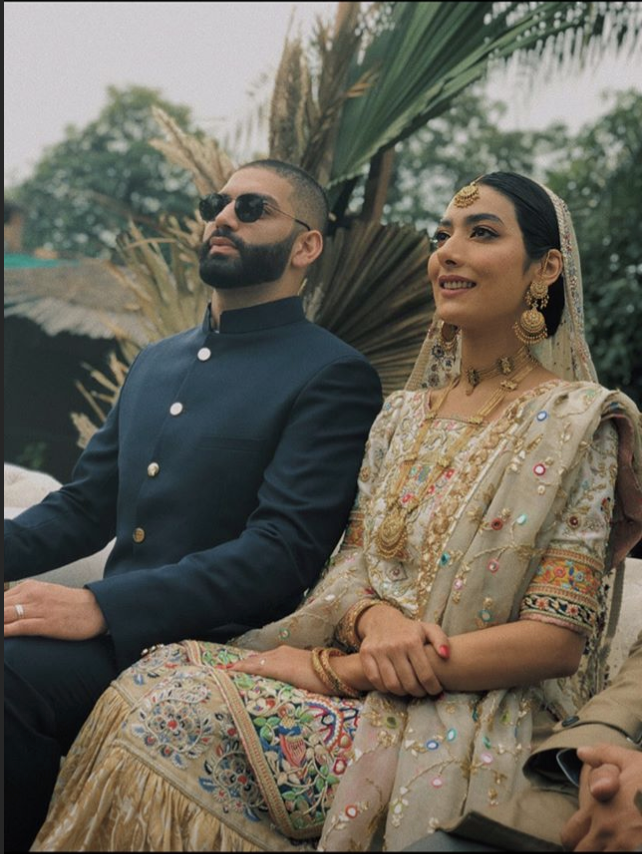


Eman Suleman and Jamil Rizvi on their walima day, Lahore, Jan. 12, 2020. (Photo courtesy of Zara Peerzada)

For her mehndi, a day-to-night event, she reached for classic touches in a white and gold Zara Shahjahan outfit – a Lahore-based designer known for her bridal collections borrowing from the past, which mirror Suleman’s own “less is more” aesthetic. 
Shahjahan was also the choice for the baraat – groom’s wedding procession – for which Suleman wore classic crimson, the signature bridal color of South Asia. She paired the look with simple earrings and traditional head jewelry, letting the outfit shine.
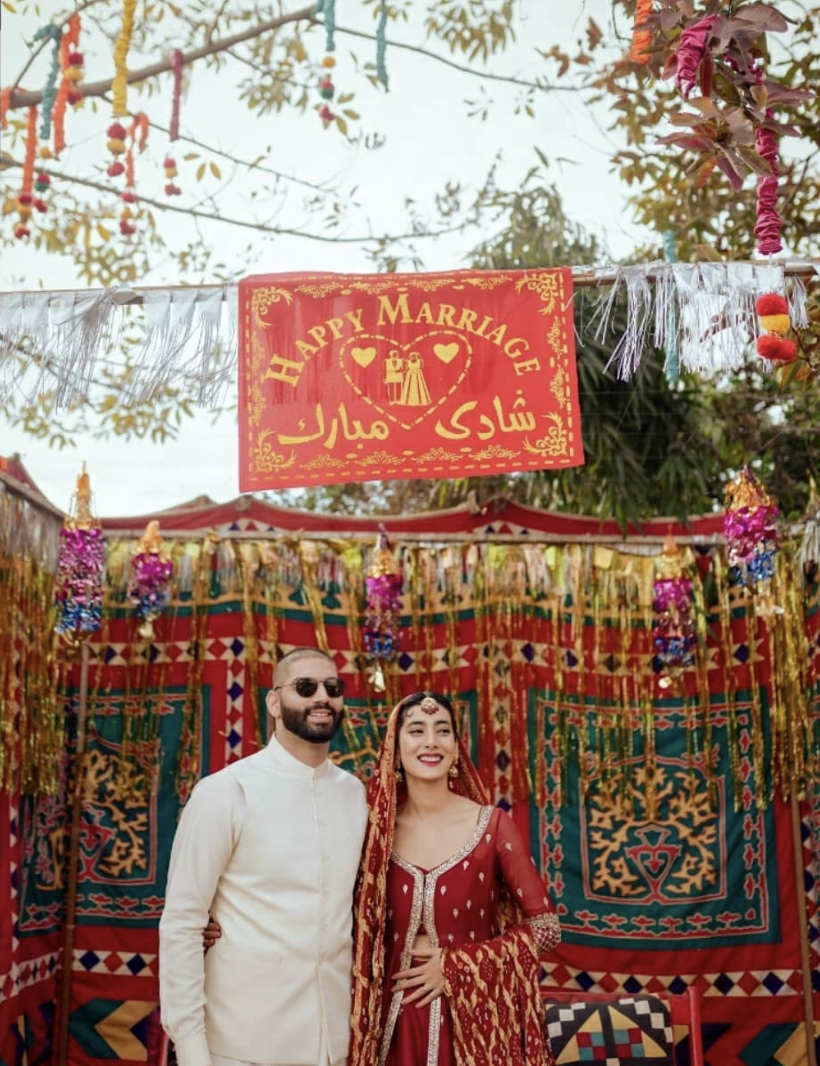


Eman Suleman and Jamil Rizvi pose on their baraat day, Lahore, Jan. 11, 2020. (Photo courtesy: Maham Haseeb Bosan)

The venue was also an ode to the past. The couple opted for a bright-red decor stage, reminiscent of traditional Pakistani weddings that took place at home. A sign with “Shahdi Mubarak” and “Happy Marriage” inscriptions added to its nostalgic ambiance.
On the last day, the walima – marriage banquet – Suleman went for an ethereal ivory look with mid-length sleeves and a sheer dupatta from The House of Kamiar Rokni. Adorned with colorful embroidery and golden jewelry the look was also evocative of bygone days.

Pakistan drops 8,000 MW power procurement, claims $17 billion savings amid IMF-driven reforms

Updated 11 sec ago
Follow

Pakistan drops 8,000 MW power procurement, claims $17 billion savings amid IMF-driven reforms

  • Government says decision taken “on merit” as it seeks to cut losses, circular debt, ease consumer pressure 
  • Power minister says losses fell from $2.1 billion to $1.4 billion, circular debt dropped by $2.8 billion

ISLAMABAD: Pakistan has abandoned plans to procure around 8,000 megawatts of expensive electricity, the power minister said on Sunday, adding that the decision was taken “purely on merit” and would save about $17 billion.

The power sector has long been a major source of Pakistan’s fiscal stress, driven by surplus generation capacity, costly contracts and mounting circular debt. Reforming electricity pricing, reducing losses and limiting new liabilities are central conditions under an ongoing $7 billion IMF program approved in 2024.

Pakistan has historically contracted more power generation than it consumes, forcing the government to make large capacity payments even for unused electricity. These obligations have contributed to rising tariffs, budgetary pressure and repeated IMF bailouts over the past two decades.

“The government has abandoned the procurement of around 8000 megawatts of expensive electricity purely on merit, which will likely to save 17 billion dollars,” Power Minister Sardar Awais Ahmed Khan Leghari said while addressing a news conference in Islamabad, according to state broadcaster Radio Pakistan.

He said the federal government was also absorbing losses incurred by power distribution companies rather than passing them on to consumers.

The minister said the government’s reform drive was already showing results, with losses reduced from Rs586 billion ($2.1 billion) to Rs393 billion ($1.4 billion), while circular debt declined by Rs780 billion ($2.8 billion) last year. Recoveries, he added, had improved by Rs183 billion ($660 million).

Leghari said electricity tariffs had been reduced by 20 percent at the national level over the past two years and expressed confidence that prices would be aligned with international levels within the next 18 months.

Power sector reform has been one of the most politically sensitive elements of Pakistan’s IMF-backed adjustment program, with higher tariffs and tighter enforcement weighing on households and industry. The government says cutting losses, improving recoveries and avoiding costly new capacity are essential to stabilizing public finances and restoring investor confidence.