

Saudi desert innovation that cooled water long before refrigeration

The qirbah is known for its longevity and remains in use in modern times, often hung outside vehicles to keep drinking water cool. (SPA)
Short Url
Updated 14 December 2025
Follow

Saudi desert innovation that cooled water long before refrigeration

  • Crafting a qirbah involved softening the hide with fat or tallow, cutting it to size and stitching it with a large needle

BURAIDAH: For generations, desert communities in Saudi Arabia relied on the qirbah, a traditional waterskin made from tanned animal hide, to carry, store and cool water, as well as preserve clarified butter and buttermilk. 

Typically suspended in open air, often from a simple three-legged wooden stand, the qirbah cooled water naturally through evaporation, reflecting a practical response to harsh desert conditions and symbolizing self-reliance and ingenuity, Saudi Press Agency said in a recent report. 
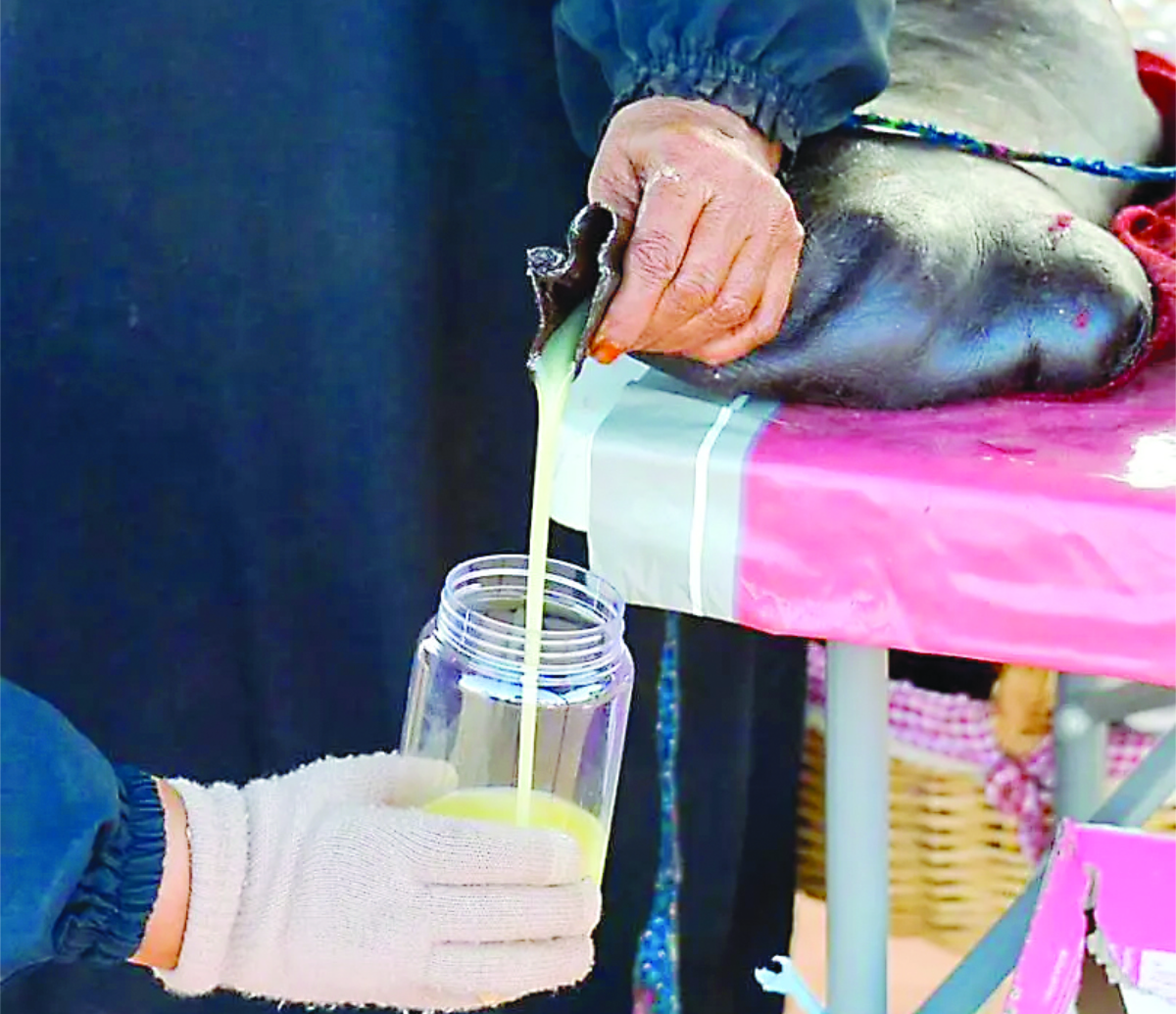


The qirbah is known for its longevity and remains in use in modern times, often hung outside vehicles to keep drinking water cool. (SPA)

Mohammed Al-Shomar, a specialist in heritage tools, told SPA that several types of qirbah were used for different purposes. 

Al-Sa’n, made from goat or sheep hide, was used to store and cool water, while Al-Sumeel served for storing and churning buttermilk. 

Al-Akka was designed for clarified butter, and Al-Shakwa was more versatile, used for milk, butter, sour buttermilk, and honey. 

FASTFACTS

• The qirbah cooled water naturally through evaporation, reflecting a practical response to harsh desert conditions and symbolizing self-reliance and ingenuity.

• Crafting a qirbah involved softening the hide with fat or tallow, cutting it to size and stitching it with a large needle.

Crafting a qirbah involved softening the hide with fat or tallow, cutting it to size and stitching it with a large needle.  

The neck formed the opening, while the legs acted as grips for carrying or securing the container.  

Once essential for long desert journeys, the qirbah is known for its longevity and remains in use in modern times, often hung outside vehicles to keep drinking water cool. 

Today, renewed interest in innovations like the qirbah reflects Saudi Arabia’s broader efforts to preserve and celebrate traditional heritage as part of its cultural transformation.


Decoder

Qirbah

The qirbah has been used by Saudi desert communities for generations to transport, store, and cool water, as well as preserve clarified butter and buttermilk.


Celestial spectacle in KSA’s north on first day of Ramadan

Updated 19 February 2026
Follow

Celestial spectacle in KSA’s north on first day of Ramadan

  • Venus-crescent moon alignment visible in Northern Borders
  • Meteorology center issuing swift weather alerts for pilgrims

ARAR/JEDDAH: The holy month of Ramadan has commenced in the Kingdom with a striking astronomical display in the Northern Borders Region, setting a serene tone for the month, the Saudi Press Agency reported.

In addition, the National Center for Meteorology has confirmed its readiness to support pilgrims in Makkah and Madinah.

On Tuesday evening in Arar there was a rare alignment of the planet Venus with the slender crescent moon marking the first day of Ramadan.

Appearing shortly after sunset, the crescent shimmered low on the western horizon above Venus — one of the brightest celestial bodies — in a display enhanced by clear skies.

While the conjunction is a recurring astronomical phenomenon caused by the apparent proximity of the two bodies as viewed from Earth, its coincidence with the start of the holy month added a special aesthetic and spiritual dimension to the atmosphere in the north, the SPA said.

The plan includes heightened performance levels at observatories in the Kingdom’s airports to manage increased flight traffic and aviation safety. (SPA)

Meanwhile, as the faithful began fasting, the NMC announced the readiness of its observatories at the Kingdom’s airports to manage increased flight traffic and ensure aviation safety.

The NCM’s CEO Dr. Ayman bin Salem Ghulam said there would be round-the-clock weather monitoring for Makkah, Madinah, and the roads leading to the two holy mosques.

To ensure pilgrims have real-time access to information, the NCM has integrated its data with the Nusuk and Tawakkalna smart applications. Ten-day forecasts and alerts will also be available via the Anwaa app and on guidance boards along highways.

The center has 14 media platforms to deliver swift weather alerts, ensuring high standards of security and logistical support throughout the season, the SPA reported.