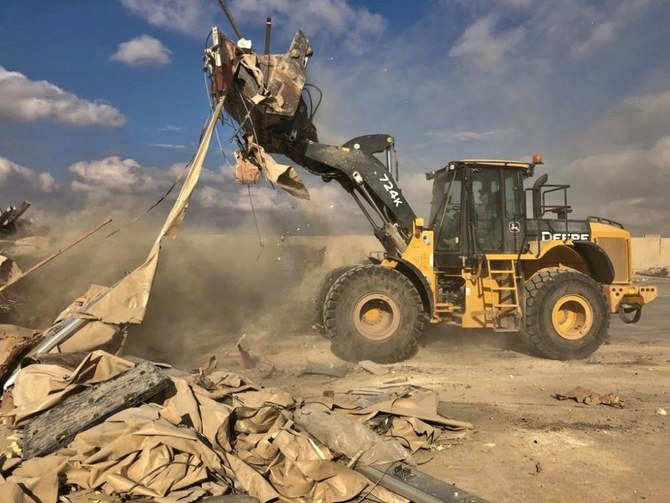
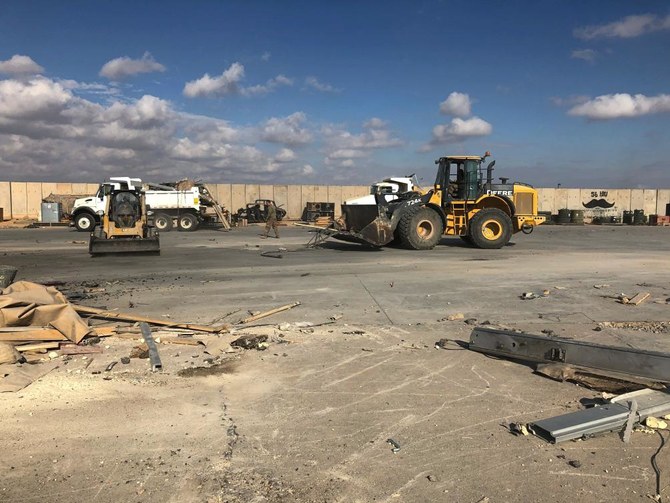
AIN AL-ASAD BASE, Iraq: US troops were clearing rubble and debris on Monday from a military base housing American soldiers in western Iraq, days after it was struck by Iranian ballistic missiles.
The Ain Al-Asad air base in Iraq’s western Anbar province is a sprawling complex about 180 kilometers west of Baghdad and houses about 1,500 members of the US military and the US-led coalition fighting the Islamic State militant group.
It was struck by a barrage of Iranian missiles on Wednesday, in retaliation for the US drone strike that killed a top Iranian commander, Gen. Qassem Soleimani, whose killing raised fears of a wider war in the Middle East.
An Associated Press crew touring the Ain Al-Asad base Monday saw large craters in the ground and damaged military trailers as well as forklifts lifting rubble and loading it onto trucks from a large area the size of a football stadium.
The US said no American soldiers were killed or wounded in the Iranian attack.
Ain Al-Asad air base was first used by American forces after the 2003 US-led invasion that toppled dictator Saddam Hussein, and later saw American troops stationed there amid the fight against the Daesh group in Iraq and Syria.
Trump visited the sprawling Ain Al-Asad air base in December 2018, making his first presidential visit to troops in the region. Vice President Mike Pence also has visited the base.


![]()
![]()

US troops clear rubble from Iraq base days after Iran strike
Short Url
https://arab.news/mm7jz
US troops clear rubble from Iraq base days after Iran strike
- The Ain Al-Asad air base in Iraq’s western Anbar province is a sprawling complex about 180 kilometers west of Baghdad
- Ain Al-Asad air base was first used by American forces after the 2003 US-led invasion that toppled dictator Saddam Hussein


Latest updates


Recommended


© 2026 SAUDI RESEARCH & PUBLISHING COMPANY, All Rights Reserved And subject to Terms of Use Agreement.