

Survey: Most Saudis prefer Japan as Middle East mediator

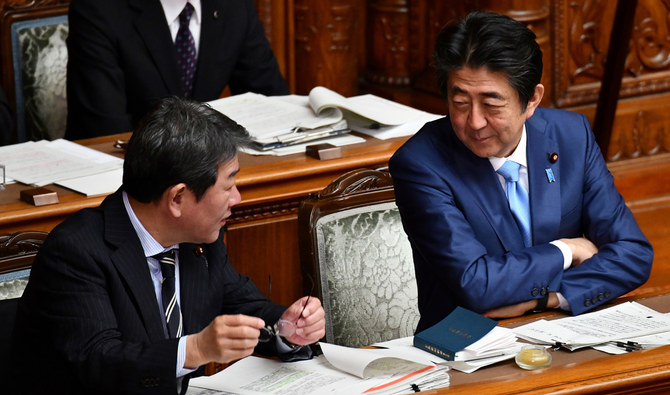
Japan, at 51 percent, led the Middle East’s former biggest powerbroker and mediator. (AFP)
Short Url
Updated 12 January 2020
Follow

Survey: Most Saudis prefer Japan as Middle East mediator

  • YouGov poll sheds light on Saudis' general awareness of Japan’s politics and policies
  • Over 6 percent of Saudi respondents correctly identified Japan as belonging to the G20

DUBAI: More than half of Saudis polled as part of a recent YouGov survey said they view Japan as the most neutral mediator of a possible peace deal between Israel and Palestine.

Japan, at 51 percent, led the Middle East’s former biggest powerbroker and mediator, the US, by a hefty 20 percent.

The study, which was commissioned by Arab News, was intended to learn more about Arabs’ perception of Japan on topics as wide ranging as culture, society and economy.

YouGov interviewed 3,033 Arabic speakers, aged 16 years or above, residing in 18 different countries across the Arab world.

Among other Saudi Arabia-related findings, 38 percent believe the emperor of Japan signs the laws, while the numbers who believe that this power lies with the prime minister, the president and the supreme court were 35, 21 and 6 percent respectively.

The results showed that 64 percent of Saudis correctly identified Japan as belonging to the G20, while 59 percent identified it is a member of the G7.

However, 33 percent wrongly said Japan was a member of the UN Security Council.

The majority of respondents were positive about the political relationship between the Gulf Cooperation Council (GCC) and Japan: 38 percent of Saudis were supportive, 20 percent were neutral, 40 percent answered positively and only one percent negatively.

According to Cyril Widdershoven, director of VEROCY, a Dutch consultancy that advises on investments, energy and infrastructure risks and opportunities in the Middle East and North Africa (MENA) region, the main takeaway was that Saudis assess the position of Japan on the basis of their own system of the distribution of powers.

“As Japan officially is still led by an emperor, Saudis perhaps consider its political system to be royal family led,” he said.

“It is also hard for most Saudis, and in general Arabs in the region, to understand the mechanics of the trias politika system, in which there is a clean and clear power separation between royals, political parties and the judicial system — and the implications of this for the legal and financial systems.”

He said that, in general, people tend to assess other countries’ systems through the lens of their own cultural, political and economic structures, and consider them identical if they appear somewhat similar to their own.

“Furthermore, a democratic system — such as Japan’s — is not a fixed and clear-cut system. It depends on certain arrangements made according to the laws and traditions of the particular country,” he told Arab News.

“It is normal therefore that people don’t take all of this into account. The overall power position of Japan, especially when looking as a Saudi, is somewhat overestimated.”

The main reason for this, Widdershoven says, is that there is a lot of MENA, and especially GCC, media interest in Asian powers such as Japan, and also China and India, because of their status as headline newsmakers.

“Economic and trade relations with these countries are very strong. This produces a general tendency among Arabs to view them as major world powers, something that is not based on facts — except in the case of China — but on information they have received,” Widdershoven said.

“Additionally, Japanese products are major attractions in the Arab world. So the perceived role of Japan is influenced by many different factors except the actual global geopolitical status of Japan.

“Economic power and influence are not the same as hard military and geopolitical power.”

Widdershoven expects the relationship between Japan and Saudi Arabia to grow stronger in the coming years, on the back of increasing investments in innovation, finance, and defense technology.


Saudi Arabia launches key projects at World Defense Show in Riyadh

Updated 09 February 2026
Follow

Saudi Arabia launches key projects at World Defense Show in Riyadh

  • Defense Minister Prince Khalid bin Salman unveils initiatives
  • New firms set up and deals inked at event running to Feb. 12  

RIYADH: Defense Minister Prince Khalid bin Salman unveiled new initiatives and signed several agreements on the opening of the third World Defense Show in Riyadh on Sunday.

Prince Khalid opened the show on behalf of Crown Prince Mohammed bin Salman, the Saudi Press Agency reported.

Organized by the General Authority for Military Industries, the five-day event will run until Feb. 12, showcasing the Kingdom’s rapid strides toward strategic independence and technological leadership in the defense sector.

The 2026 edition features a purpose-built venue with a 2,700-meter runway for live air and land demonstrations, underscoring the show’s status as a premier global defense event.

The GAMI’s Gov. Ahmad Al-Ohali said the show reflects Saudi Arabia’s commitment to localizing over 50 percent of military spending in line with Vision 2030, and fostering an integrated ecosystem where government bodies and international partners collaborate on innovation.


The event brings together official delegations, government entities, and leading international companies specializing in the defense and security sectors. (SPA)

Strategic agreements and major launches

At the Saudi Arabian Military Industries Group pavilion, Prince Khalid launched several key initiatives.

  • New entities: The inauguration of the SAMI Land Co., SAMI Autonomous Co., and the SAMI Land Industrial Complex.
  • Supply chain: The unveiling of the SAMI Local Content Program and the HEET Program.
  • International cooperation: A memorandum of understanding was signed between the Saudi General Authority for Defense Development and the Korean Agency for Defense Development on advanced military research.
  • Defense deals: The minister signed cooperation agreements with Slovakia, Malaysia, and Somalia.
Defense Minister Prince Khalid signed cooperation agreements with Slovakia, Malaysia, and Somalia. (SPA)


Technological debuts and innovations

The show is also serving as a launchpad for cutting-edge security technologies across various government sectors.

  • AI-Powered Lucid Gravity: Public Security debuted its advanced Lucid Gravity electric security vehicle at the Ministry of Interior’s pavilion.

The vehicle integrates state-of-the-art artificial intelligence and specialized security equipment designed to accelerate emergency response times and support field operations.

Public Security’s advanced Lucid Gravity electric security vehicle is displayed at the Ministry of Interior’s pavilion. (SPA)

By leveraging predictive intelligence and advanced command-and-control systems, the Lucid Gravity exemplifies the ministry’s commitment to protecting the Kingdom.

  • Smart helmet: Also at the Ministry of Interior’s pavilion, the General Directorate of Civil Defense unveiled its smart helmet.

Designed to revolutionize public safety and emergency response, the helmet features day-and-night cameras and specialized sensors to detect hazardous materials in hard-to-reach locations.

The device serves as a mobile command node, delivering live video feeds directly to command-and-control centers. By enabling real-time data analysis and faster decision-making, the helmet reduces response times and enhances personnel safety in high-risk environments.


The smart helmet features day-and-night cameras and specialized sensors to detect hazardous materials in hard-to-reach locations. (SPA)


  • Border security: The General Directorate of the Border Guard showcased an integrated security system featuring radar and thermal cameras capable of detecting drones and classifying moving targets to protect critical infrastructure.

It also functions as an early warning system for critical facilities and border areas and is fully integrated with command-and-control systems.


Border Guard's ntegrated security system features radar and thermal cameras capable of detecting drones and classifying moving targets to protect critical infrastructure. (SPA)
  • Counter-terrorism: The Islamic Military Counter Terrorism Coalition presented a comprehensive framework integrating intellectual, media, and military domains to combat extremism and terror financing.

    Visitors were briefed on specialized programs designed to raise the readiness of national personnel and foster sustainable institutional cooperation among member states to combat extremism.

    On the event’s opening day, the pavilion hosted high-level delegations, including ministers, military leaders, and ambassadors who reviewed and praised the coalition’s pivotal role in coordinating local and international security efforts.

    A view of the Islamic Military Counter Terrorism Coalition pavilion. (SPA)
  • Meteorology: The National Center for Meteorology displayed advanced weather systems essential for ensuring the safety of the event’s air shows and military operations.

    At its dedicated pavilion, the NCM is showcasing its latest advanced meteorological technologies and systems. These solutions serve both the military and civilian sectors, providing accurate data to support beneficiary entities’ operational processes.

World Defense Show CEO Andrew Pearcey said that participation is expected to surpass previous records, reflecting the event’s growing importance on the international stage.

NCM's latest meteorological technologies and systems serve both the military and civilian sectors