

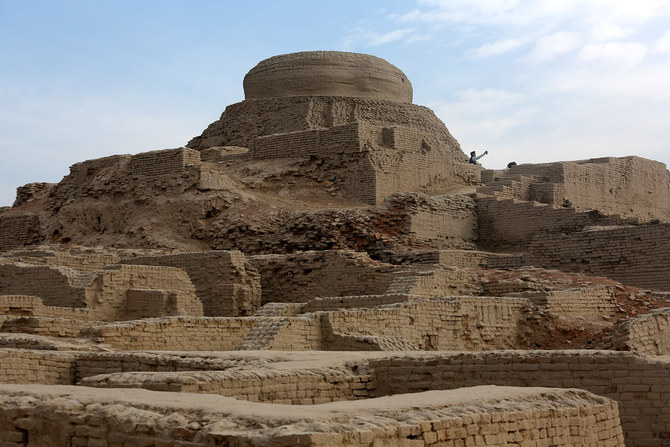

MOHENJO DARO, Larkana: No major breakthrough was reached at an international conference centered on decoding an ancient script discovered in the historic city of Mohenjo Daro in Pakistan’s southern Sindh province, it was revealed on Friday.
Archaeologists and experts from over a dozen countries, including the US, UK, China, Italy and Germany, put their heads together during the three-day moot which ended on Saturday, to decode the language which they say, could resolve many mysteries regarding one of the world's oldest civilizations.
"This was the first step to decipher the Indus script. The conference gave us clues for further discussions and research," Ghulam Akbar Laghari, Secretary of Sindh’s Culture and Tourism Department, told Arab News, and added: “The Indus is the only script of any ancient civilization which hasn't been deciphered yet."
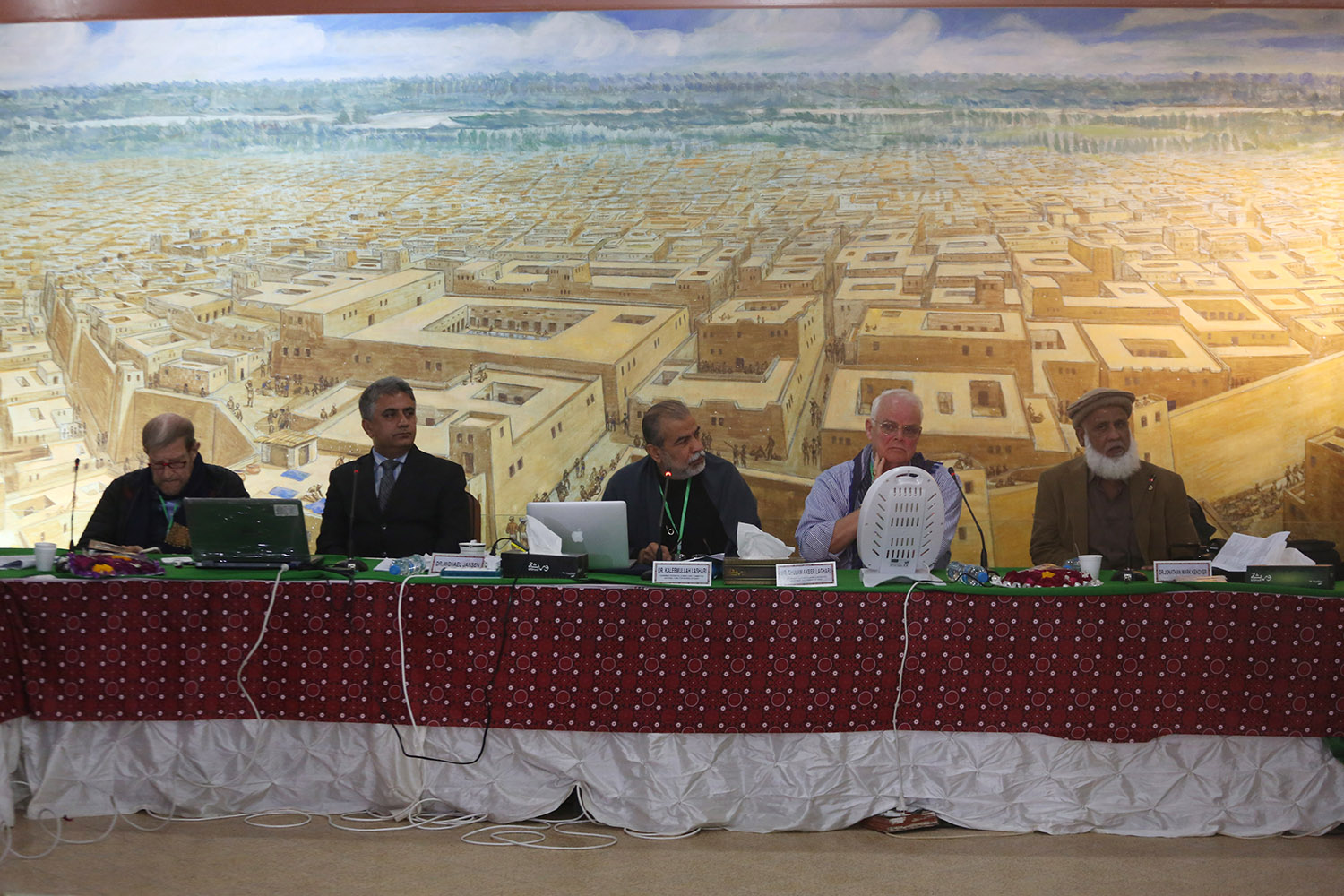
A three-day international conference on the Indus Script was held at the Museum of Mohenjo Daro site, in Larkana, Sindh between January 9 to January 11, 2020. (AN photo by SA Babar)
Four archaeologists and experts from India were unable to attend the conference due to severed ties between the neighboring countries, organizers said, but their research was read out to other attendees.
Dr. Andreas Fuls, a geologist from the Technical University of Berlin, who specializes in mapping and surveys, said he was hopeful that some day the Indus script would be decoded.
"The Indus culture of 2600 to 1700 BC developed a writing system that still remains mostly undeciphered. The inscriptions found on several artefacts, including seals, tablets, pots, bangles, tags, and other types of artefacts show a distinct pattern of Indus signs," he said.
"We are at the beginning stage to understand the content of the script,” he added.
“The Indus civilization is a puzzle for the entire world. Unlike other ancient civilizations which were region specific, it has cast a shadow everywhere in the world. The history of the entire world is connected with it," Amar Fayaz Buriro, a history expert said.
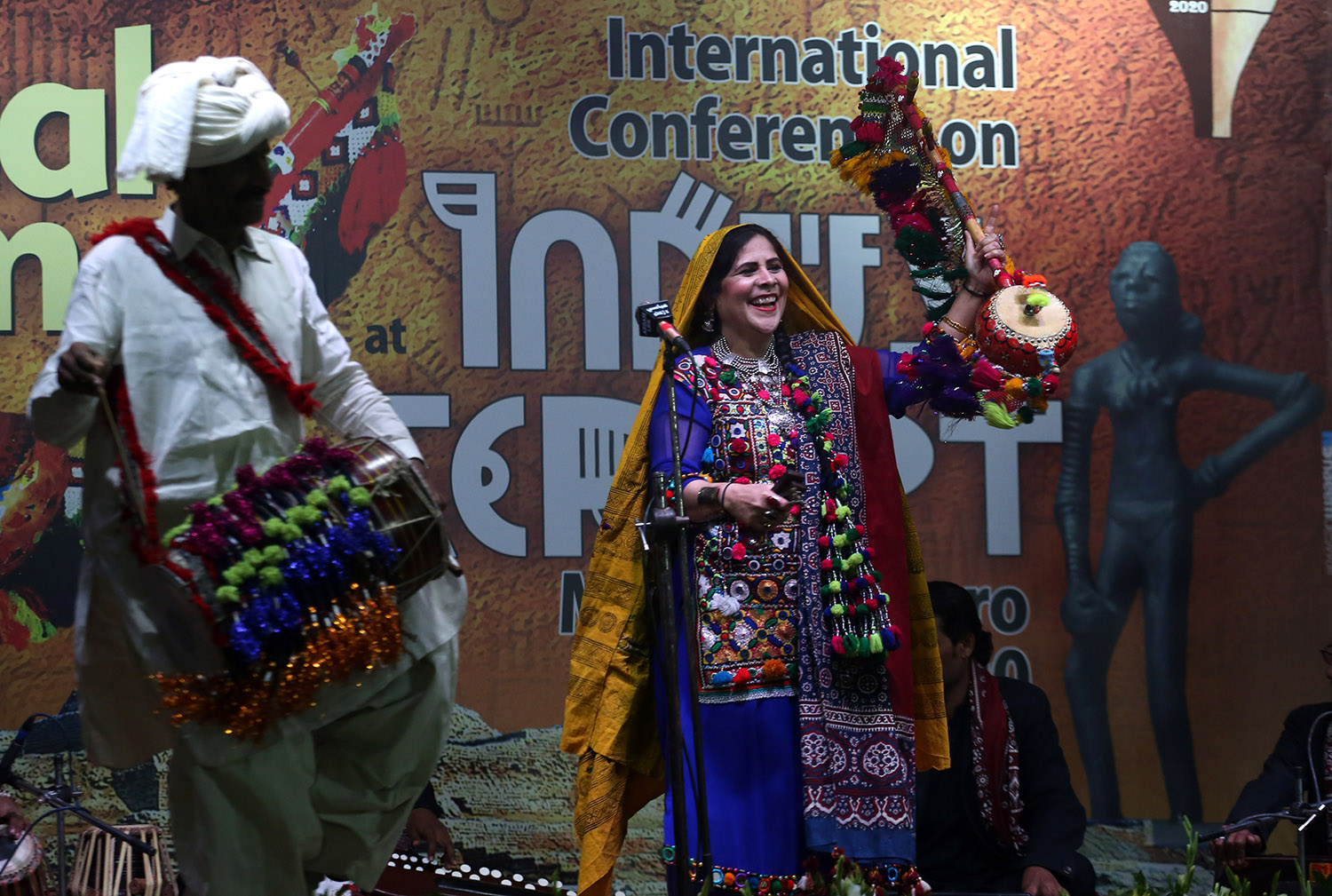
A local artist is performing on the occasion of a three-day international conference on the Indus Script held at the Museum of Mohenjo Daro, in Larkana between January 9 to January 11, 2020. (AN photo by SA Babar)
Kaleemullah Lashari, a renowned archeologist and the convener of the conference, said the script continued to evade all attempts at its decoding.
“Decades of work has helped in developing some understanding about the Indus Civilization, but the reading of the Indus signs remains a difficult task," he admitted.
It was not easy to read ancient writing, he said, when there was such a great disconnect between the present and the distant past.
Mohenjo Daro, the metropolitan city of the Indus civilization, was discovered in 1911 and its excavation began in 1922. The civilization, which flourished between 2500-1800 BC, is the vastest of all ancient civilizations, with more than a thousand sites recorded so far from north Afghanistan to Indian Gujrat.
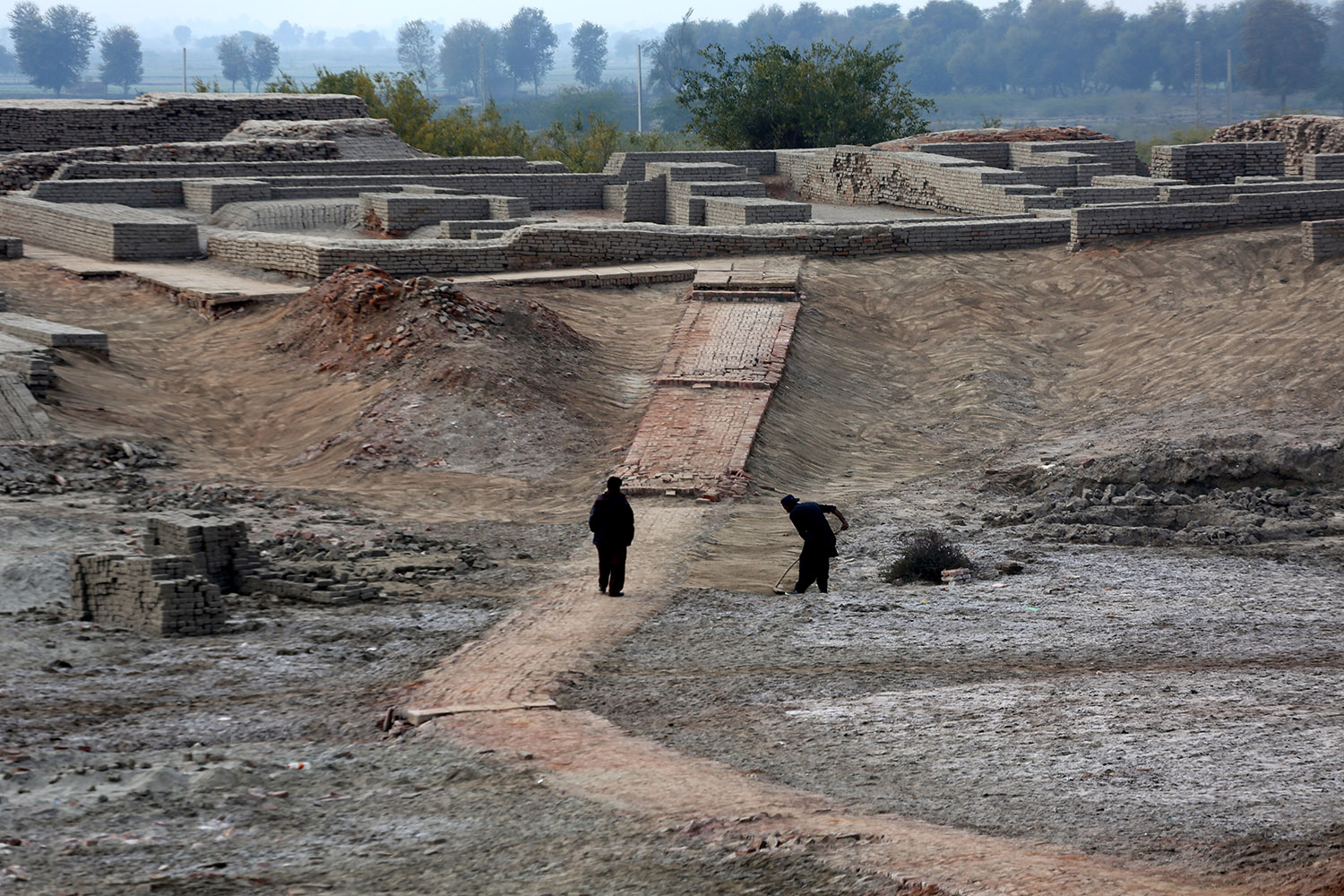
Mohenjo Daro, an ancient city in the southern Sindh province of Pakistan is considered the center of the 5,000 year old Indus civilization. (AN photo by SA Babar)
"We don't know that the mystery will be resolved in a few more steps or a thousands steps,” culture minister Laghari said. “But the efforts will lead us to decoding the script of this most significant civilization.”


