





TEHRAN: Iran’s aviation authority said it would not hand over to Americans the recovered black boxes of a Boeing 737 that crashed Wednesday, killing all 176 passengers and crew.
“We will not give the black boxes to the manufacturer (Boeing) and the Americans,” Iran Civil Aviation Organization head Ali Abedzadeh said, quoted by Mehr news agency.
“It’s not yet clear which country the black box will go to for the investigation,” he added.
Following the crash of Ukraine International Airlines flight PS752 shortly after takeoff from Tehran on Wednesday, Iran said it had recovered the Boeing 737’s two black boxes.
Abedzadeh said that based on global aviation rules, it was the right of the country where air crashes occur to carry out the investigation.
“This accident will be investigated by Iran’s aviation organization but the Ukrainians can also be present during the incident’s investigation,” he added.
Under the rules of the International Civil Aviation Organization, of which Iran, Ukraine and the United States are all members, air crash investigations are led by the country where the accident occurred.
However, according to aviation experts, the countries that are capable of analyzing black boxes are few — notably Britain, France, Germany and the United States.
France’s Accident Investigation Bureau, which handles air crash investigations, said it had not received any request for help from the Iranian authorities after Wednesday’s crash.
The airline has suspended flights to Tehran indefinitely. Ukrainian prime minister Oleksiy Valeriyovych Honcharuk later on Wednesday said a total flight ban to Iran would start on Thursday, January 9.
Ukrainian president Volodymyr Zelensky, who earlier cancelled his trip to Oman, expressed his condolences to relatives of those killed, adding embassy officials were clarifying circumstances of the tragedy.
Eleven Ukrainian citizens perished in the Iran plane crash, including nine crew, the Ukraine Security Council said. Ukraine foreign minister Vadym Volodymyrovych Prystaiko added there were also three Britons, 10 Swedes, 82 Iranians and 63 Canadians on board the ill-fated flight.
US Secretary of State Mike Pompeo said the United States was calling for complete cooperation with any investigation into cause of the crash of the Ukrainian airliner in Iran.
In a statement, Pompeo said the United States was prepared to offer Ukraine all possible assistance after the crash on Wednesday.
Canada’s Prime Minister Justin Trudeau said that Ottawa would work to ensure a thorough investigation of a Ukrainian jetliner crash in Iran that killed dozens of Canadians.
"This morning, I join Canadians across the country who are shocked and saddened to see reports that a plane crash outside of Tehran, Iran, has claimed the lives of 176 people, including 63 Canadians," Trudeau said in a statement.
"Our government will continue to work closely with its international partners to ensure that this crash is thoroughly investigated, and that Canadians' questions are answered," Trudeau said.
Here is the latest video from the Boeing plane crash in Iran. Carrying 180 passengers and crew headed for Ukraine. Possible technical difficulties right after takeoff.
Watch: pic.twitter.com/FUgI5J04DK— (@dylwthit) January 8, 2020
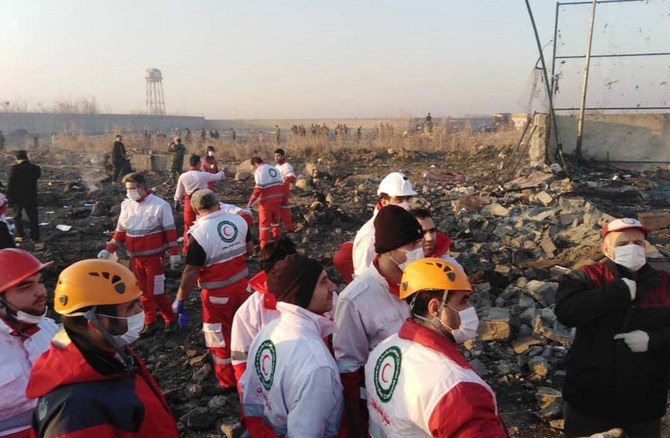
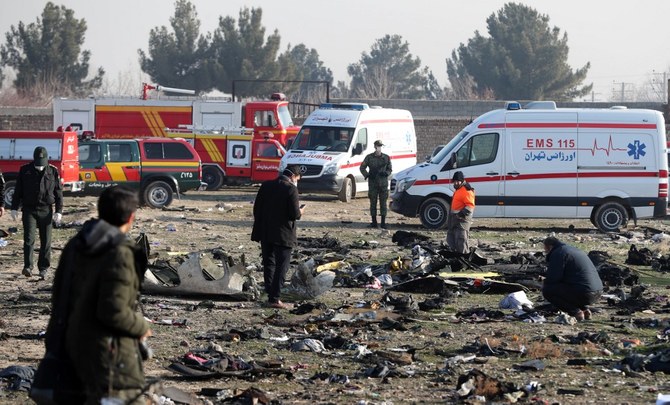
An investigation team was at the site of the crash in southwestern outskirts of Tehran, civil aviation spokesman Reza Jafarzadeh said.
“After taking off from Imam Khomeini International Airport, it crashed between Parand and Shahriar,” Jafarzadeh said. “An investigation team from the national aviation department was dispatched to the location after the news was announced.”
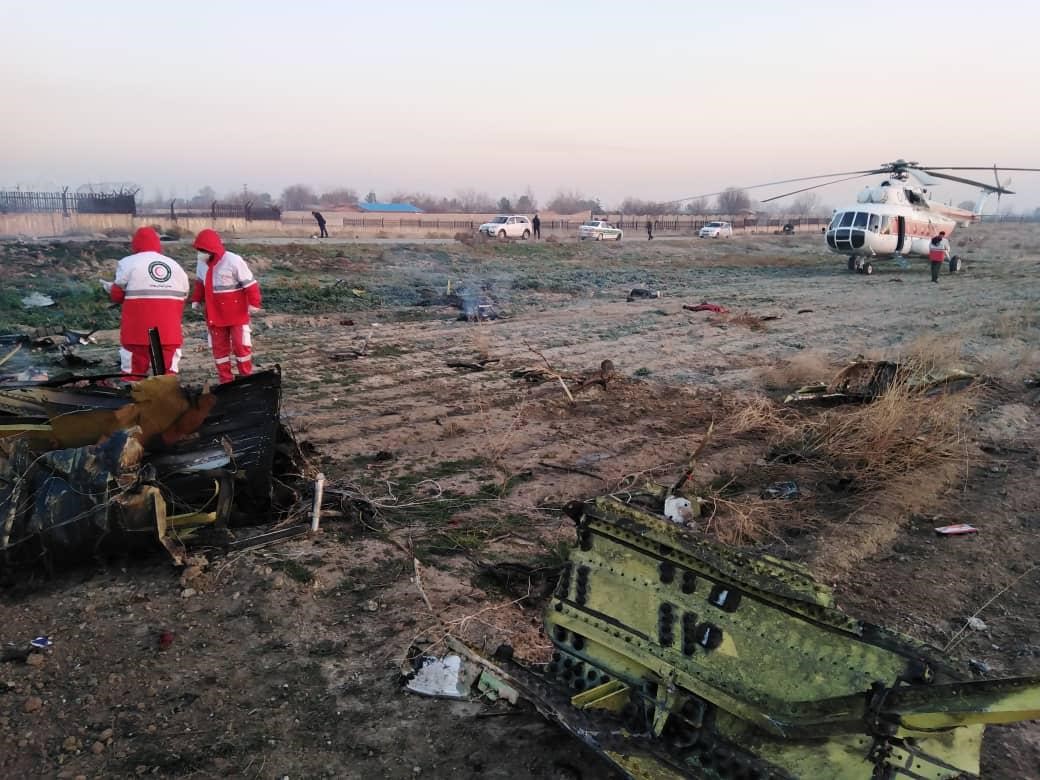
Rescuers search through the debris of the Ukrainian airline that crashed shortly after take-off in Tehran. (Getty Images)
Flight data from the airport showed a Ukrainian 737-800 flown by Ukraine International Airlines took off Wednesday morning, then stopped sending data almost immediately afterward, according to website FlightRadar24. The airline did not immediately respond to a request for comment.
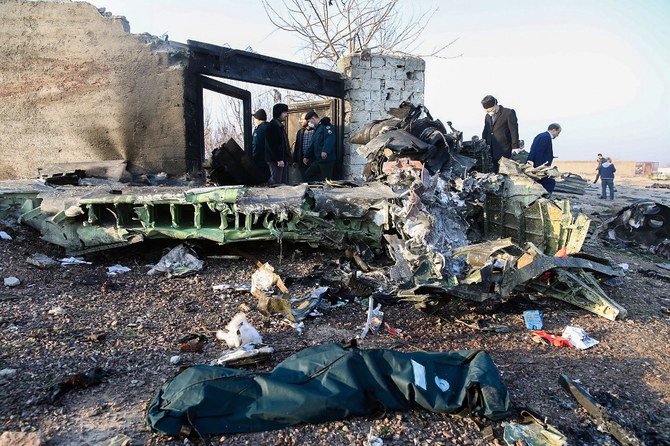
A photo later published by Iran’s state-run IRNA news agency showed rescue officials in a farm field, with what appeared to be pieces of the aircraft laying nearby.
The crash came hours after Iran launched a ballistic missile attack targeting two bases in Iraq housing US forces in retaliation for the killing of Revolutionary Guard Gen. Qassem Soleimani.
First film of Ukrainian airline plane crash in #Parand #Tehran #Iran
6:30 This morning.#planecrash #Ukraine pic.twitter.com/a9jwHn4G6E
— Mehrdad Torabi (@mehrdadt1987) January 8, 2020
The Boeing 737-800 is a very common single-aisle, twin-engine jetliner used for short to medium-range flights. Thousands of the planes are used by airlines around the world.
Introduced in the late 1990s, it is an older model than the Boeing 737 MAX, which has been grounded for nearly 10 months following two deadly crashes.
A number of 737-800 aircraft have been involved in deadly accidents over the years.
In March 2016, a flydubai 737-800 from Dubai crashed while trying to land at Rostov-on-Don airport in Russia, killing 62 onboard. Another 737-800 flight from Dubai, operated by Air India Express, crashed in May 2010 while trying to land in Mangalore, India, killing more than 150 onboard.
Chicago-based Boeing Co. was “aware of the media reports out of Iran and we are gathering more information,” spokesman Michael Friedman told The Associated Press.
Boeing, like other airline manufacturers, typically assists in crash investigations. However, that effort in this case could be affected by the US sanctions campaign in place on Iran since President Donald Trump unilaterally withdrew from Tehran’s nuclear deal with world powers in May 2018.
Both Airbus and Boeing had been in line to sell billions of dollars of aircraft to Iran over the deal, which saw Tehran limit its enrichment of uranium in exchange for the lifting of economic sanctions. But Trump’s decision halted the sales.
Under decades of international sanctions, Iran’s commercial passenger aircraft fleet has aged, with air accidents occurring regularly for domestic carriers in recent years, resulting in hundreds of casualties.


