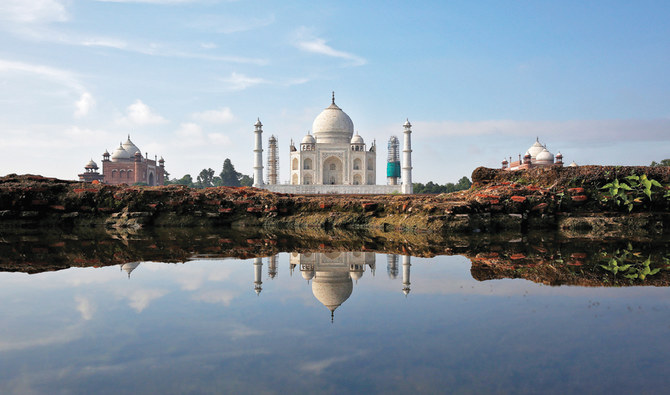

MUMBAI: India’s tourism industry has been hit by a wave of violent anti-government protests against a new citizenship law that have rocked several cities this month, with at least seven countries issuing travel warnings. Officials estimate about 200,000 domestic and international tourists canceled or postponed their trip to the Taj Mahal in the past two weeks, one of the world’s most popular tourist attractions.
“There has been a 60 percent decline in visitor footfalls in December this year,” said Dinesh Kumar, a police inspector overseeing a special tourist police station near the Taj Mahal who has access to visitor data. He said the decline was compared to December last year.
“Indian and foreign tourists have been calling our control rooms to check security. We assure them protection, but many still decide to stay away,” said Kumar.
A group of European tourists traveling in a group across India said they now planned to cut short their 20-day trip.
“We are all retired folks, for us travel has to be slow and relaxing. The newspaper headlines have led to a sense of concern and we will leave sooner than we had planned,” said Dave Millikin, a retired banker living on the outskirts of London.
The Taj Mahal, situated in the town of Agra, attracts over 6.5 million tourists every year, generating nearly $14 million annually from entrance fees. A foreign tourist pays 1,100 rupees (about $15) to enter the grounds, although nationals from neighboring countries get a discount.
Managers in luxury hotels and guest houses around the Taj Mahal said last-minute cancellations during the festive season have further dampened business sentiment at a time when the country’s economic growth has slowed to 4.5 percent, its slowest pace in more than 6 years.
FASTFACTS
• Officials estimate about 200,000 domestic and international tourists canceled or postponed their trip to the Taj Mahal in the past two weeks, one of the world’s most popular tourist attractions.
• The Taj Mahal, situated in the town of Agra, attracts over 6.5 million tourists every year, generating nearly $14 million annually from entrance fees. A foreign tourist pays about $15 to enter the grounds, although nationals from neighboring countries get a discount.
In a bid to clamp down on violence and unrest, authorities have suspended mobile internet services in Agra.
“Blocking the internet has affected travel and tourism in Agra by about 50-60 percent,” said Sandeep Arora, president of the Agra Tourism Development Foundation that groups over 250 tour operators, hotels and guides.
The US, Britain, Russia, Israel, Singapore, Canada and Taiwan have issued travel adviseries asking their citizens to either refrain from visiting or to exercise caution when visiting regions embroiled in India’s protests.
Jayanta Malla Baruah, the head of the Assam Tourism Development Corp., said the state, home to the world’s largest concentration of one-horned rhinoceros, is visited on average by 500,000 tourists during December. “But this time, due to the ongoing protests and travel adviseries by various countries, the number is down by 90 percent if not more.”