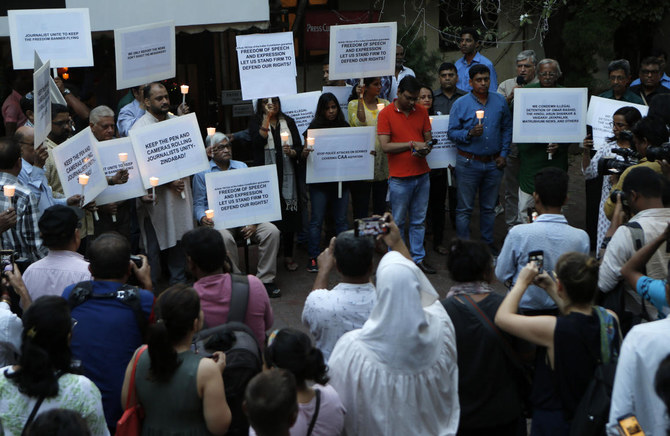
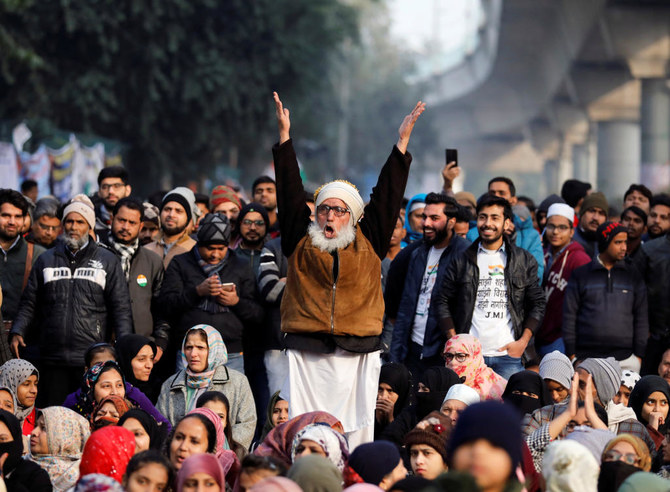
NEW DELHI: Indians took to the streets again on Thursday in yet more protests against a citizenship law, a day after pro-government Hindu hardliners staged a show of force complete with horses, drums and batons.
Two weeks of at times violent demonstrations have killed at least 27 people as anti-government protesters have vented their anger nationwide in the biggest challenge to Prime Minister Narendra Modi since he stormed to power in 2014.
Modi denies accusations that the law, which eases naturalisation procedures for non-Muslim minorities from three nations, is part of a master plan to reshape India as a purely Hindu nation.
But coupled with plans for a national register of citizens, it has stoked fears at home and abroad, including in Washington and at the UN rights office, about the marginalisation of India's 200 million Muslims.
On Wednesday several thousand baton-wielding volunteers from a Hindu hardline group - of which Modi is a lifelong member - held a rally in the southern city of Hyderabad, in a show of support for the government.
Members of the Rashtriya Swayamsevak Sangh (RSS), a militaristic group that has long espoused "Hindutva" or Hindu hegemony, marched through the streets beating drums and blowing horns.
The parade, organised before the protests began, saw volunteers ride horses, sing songs, and perform group exercises using lathis - bamboo batons deployed by Indian riot police.
The protests against the citizenship law meanwhile show no signs of going away, although in recent days numbers have been smaller.
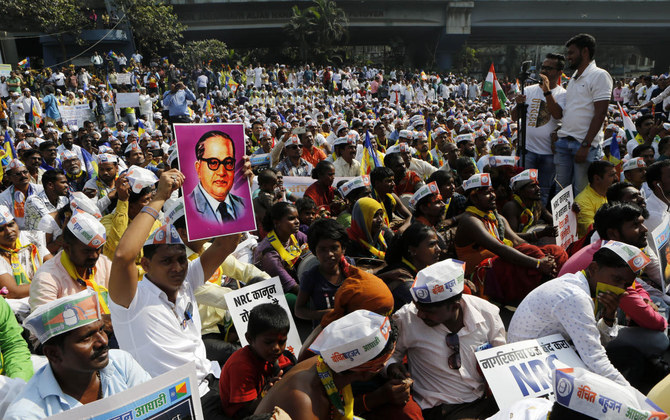
Around 2,500 people rallied against the government in the financial capital Mumbai on Thursday, police told AFP, with demonstrators waving flags and carrying banners calling for a boycott of the citizenship law.
Protesters also took to the streets in the eastern city of Kolkata while hundreds of Muslim women demonstrated in the southern state of Karnataka where two people were shot dead by police in protests last week.
While many of the protests have been peaceful, demonstrations have sometimes turned violent with police also accused of a disproportionate response.
In India's most populous state Uttar Pradesh - where 19 people have been killed - the authorities have arrested thousands and sought damages from more than 100 people accused of rioting and destroying public property.
Around 130 people have been ordered to pay nearly 5 million rupees ($70,000) within a week, with officials warning that their properties will be confiscated and auctioned to recover the amount if necessary.
Authorities were bracing for further protests on Friday in Uttar Pradesh, home to a large Islamic minority, and in parts of New Delhi following Muslim prayers.
Mobile internet, which was cut across large parts of Uttar Pradesh and elsewhere last week, has been restored, although the cities of Agra - home to the Taj Mahal - and Bulandshahr remain offline.

More India protests as Hindu hardliners flex muscles
Short Url
https://arab.news/jd7zz
More India protests as Hindu hardliners flex muscles
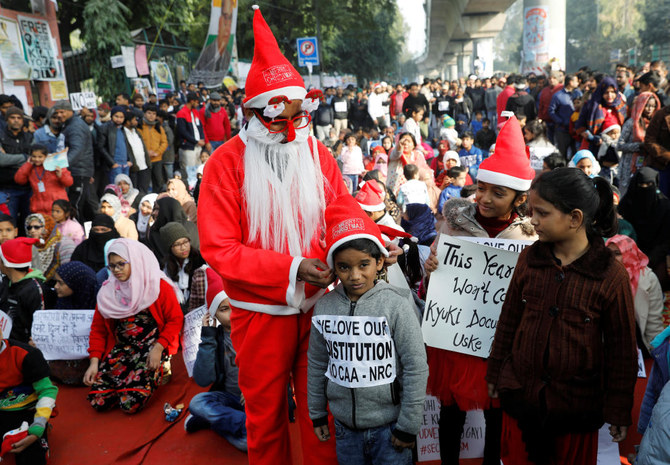
- Modi denies accusations that the law is part of a master plan to reshape India as a purely Hindu nation
- It has stoked fears at home and abroad, including in Washington and at the UN rights office, about the marginalisation of India's 200 million Muslims
Zimbabwe opposition says constitutional ‘coup’ under way
- The accusations came after the cabinet approved amendments that would allow President Emmerson Mnangagwa to extend his term in office
HARARE: Leading Zimbabwe opposition figures accused the government Wednesday of a constitutional “coup” after the cabinet approved amendments that would allow President Emmerson Mnangagwa to extend his term in office.
Sweeping changes to the constitution accepted by the cabinet Tuesday include extending the presidential term to seven years and follow a decision by the ruling Zanu-PF that Mnangagwa should stay in office beyond the end of his second term in 2028.
The amendments will be presented to parliament, which is weighted in favor of the Zanu-PF, but the opposition insists they also need to be put to a national referendum.
“The process that is currently happening in Zimbabwe is a coup by the incumbent to extend his term of office against the will of the people,” opposition politician and fierce government critic Job Sikhala told AFP.
“We have got an incumbent who wants to railroad himself, using the tyrannical and dictatorial tendencies of his rule, into another two years to 2030,” he said.
He said his National Democratic Working Group had asked the African Union to intervene.
Mnangagwa came to power in 2017 in a military-backed coup that ousted Robert Mugabe, who ruled the southern African country for 37 years.
He was elected to a five-year term in 2018 and again in 2023 but has been accused of allowing rampant corruption to the benefit of the Zanu-PF — which has been in power since independence in 1980 — while eroding democratic rights.
Sikhala, a former lawmaker with the Citizens Coalition for Change (CCC) party, was arrested in South Africa last year for alleged possession of explosives. He says they were planted in his vehicle in an apparent assassination attempt.
“What is unfolding in Zimbabwe is not constitutional reform. It is a constitutional coup,” Jameson Timba, a CCC leader who has established a group called the Defend the Constitution Platform (DCP), said in a statement on X.
The president and his party are using “formal processes” such as cabinet decisions “to entrench power without the free and direct consent of the people,” he said.
Sweeping changes to the constitution accepted by the cabinet Tuesday include extending the presidential term to seven years and follow a decision by the ruling Zanu-PF that Mnangagwa should stay in office beyond the end of his second term in 2028.
The amendments will be presented to parliament, which is weighted in favor of the Zanu-PF, but the opposition insists they also need to be put to a national referendum.
“The process that is currently happening in Zimbabwe is a coup by the incumbent to extend his term of office against the will of the people,” opposition politician and fierce government critic Job Sikhala told AFP.
“We have got an incumbent who wants to railroad himself, using the tyrannical and dictatorial tendencies of his rule, into another two years to 2030,” he said.
He said his National Democratic Working Group had asked the African Union to intervene.
Mnangagwa came to power in 2017 in a military-backed coup that ousted Robert Mugabe, who ruled the southern African country for 37 years.
He was elected to a five-year term in 2018 and again in 2023 but has been accused of allowing rampant corruption to the benefit of the Zanu-PF — which has been in power since independence in 1980 — while eroding democratic rights.
Sikhala, a former lawmaker with the Citizens Coalition for Change (CCC) party, was arrested in South Africa last year for alleged possession of explosives. He says they were planted in his vehicle in an apparent assassination attempt.
“What is unfolding in Zimbabwe is not constitutional reform. It is a constitutional coup,” Jameson Timba, a CCC leader who has established a group called the Defend the Constitution Platform (DCP), said in a statement on X.
The president and his party are using “formal processes” such as cabinet decisions “to entrench power without the free and direct consent of the people,” he said.
© 2026 SAUDI RESEARCH & PUBLISHING COMPANY, All Rights Reserved And subject to Terms of Use Agreement.