JEDDAH: A business charity campaign is aiming to light up the lives of needy Saudi children.
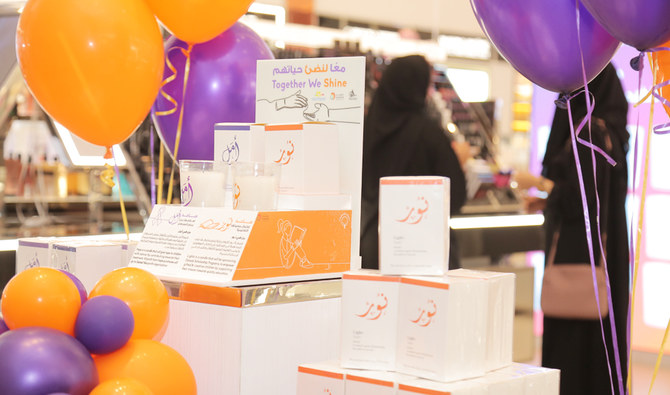
Jamjoom and Chalhoub Group’s “Together We Shine” initiative is targeting the sale of 10,000 candles to raise money for its health and education drive.
With corporate social responsibility becoming ever more widespread in the business world, entrepreneurs and companies are consistently doing more to help humanitarian causes.
And Jamjoom and Chalhoub Group was no exception, its corporate social responsibility executive, Raghad Abualkheer, told Arab News.
The leading retail, distribution and communication services powerhouse for renowned brands in the beauty, fashion and gift sectors, launched its candle campaign in October.
“Amal is our candle of hope, with all profits from its sale being donated to Sanad (Children’s Cancer Support Association), whose mission is to help children with cancer by contributing toward their treatment,” she said.
“And Noor is our candle of light, where all the profits from sales will be sponsoring Doroob scholarship programs, aimed at empowering gifted and creative children by supporting their mission toward quality education.”
The campaign will run until March 2020, with the hope of selling 10,000 candles.
“Over the last five years, in collaboration with The National Home Health Care Foundation, we donated to cancer patients the profits of selling yellow daffodil flower pins in our stores. The average sales per year were 5,000 pieces.
FASTFACT
The campaign will run until March 2020, with the hope of selling 10,000 candles.
“This year, we changed the idea to help more less-fortunate people in two sectors, education and humanitarian (children with cancer), and this is where we got the idea for the campaign,” Abualkheer added.
The company wanted to raise awareness of child cancer and support treatments. “Aside from the candle being sold in Jamjoom and Chalhoub Group stores, we also communicate through our social media platforms.”
“As a group, we believe that we have a responsibility to give back to the community in various ways. Participating in the ‘Together We Shine’ campaign is a way of bringing hope and light to the life of people and children in need.
“We are grateful to partner with Sanad Children’s Cancer Support Association and the Doroob scholarship program to support their important mission,” said Abualkheer.
The campaign was run in the UAE during 2018 with the group collaborating with different charity partners, and next year the plan is to implement it in Kuwait. “Every contribution can make a difference to an individual’s life. We need everyone’s support to make this world a better place,” she added.