In Islamabad’s Himalayan foothills, these are the hiking trails to conquer

A view of the Margalla Hills with Faisal Mosque in the distance. Since 1980, the Margalla Hills have been a protected and maintained site by the city's Capital Development Authority. Sept. 13, 2019 (Obaid Khan, Wikipedia)
Short Url
Updated 23 December 2019
Follow

In Islamabad’s Himalayan foothills, these are the hiking trails to conquer

  • Pakistan’s modern capital has a range of hiking trails easily accessible in the Margalla Hills
  • The trails vary in difficulty level, with some easy enough for novices and families

Islamabad: North of Islamabad, the lush Margalla Hills mark the relatively benign beginnings of the mighty Himalayas. The cold winter months don’t usually stop outdoor enthusiasts from lacing up their hiking boots and gaining some elevation on one of the six trails. If your new year’s resolution involves incorporating more fitness into your life, whether you’re a local or just visiting, these hilly tracks are for you.

Trail 1
The first trail is a full leg workout, and requires a real time commitment-- approximately two hours depending on speed. The trail reaches its peak at the top terminal of Pir Sohawa in Islamabad. If you head up the main road for another 20 minutes, you’ll find yourself at the famous Monal restaurant, with breath-taking views of the city below.
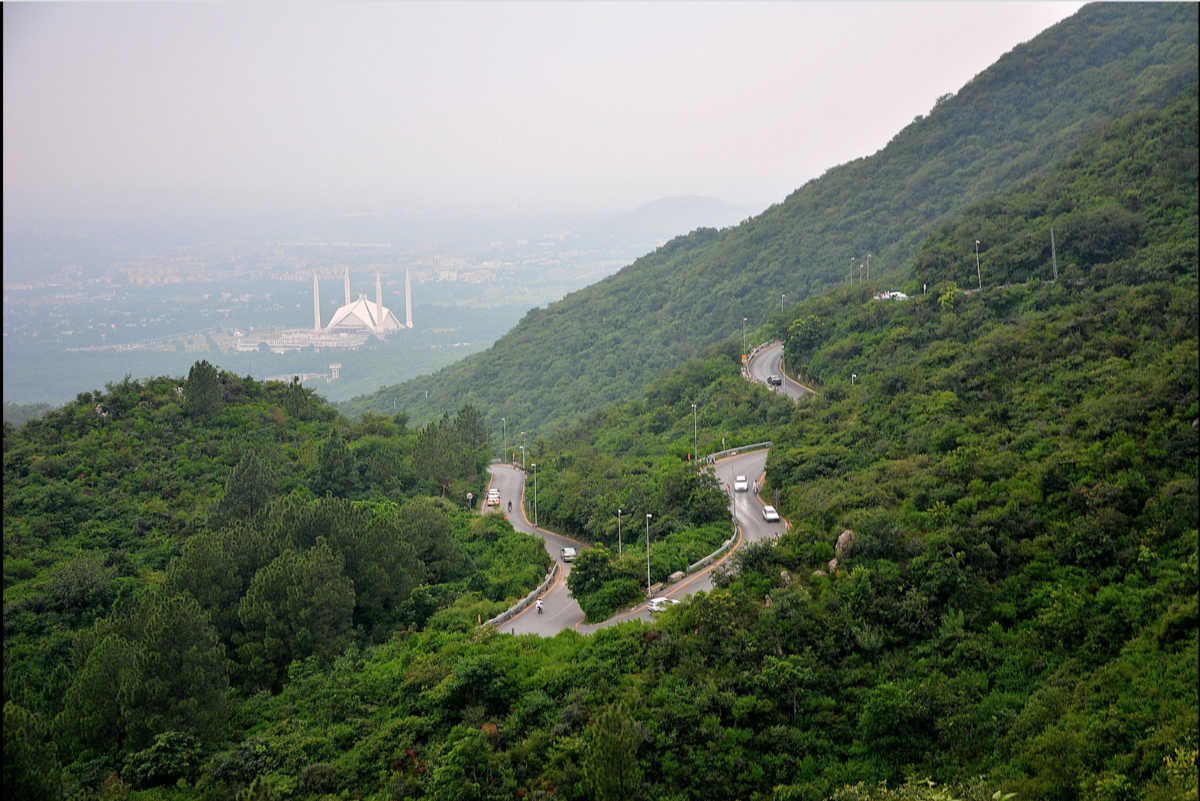


A view of the Margalla Hills with Faisal Mosque in the distance. Since 1980, the Margalla Hills have been a protected and maintained site by the city's Capital Development Authority. Sept. 13, 2019 (Obaid Khan, Wikipedia)

Trail 2
A lighter impact trail, this is good for families and starts out just above the Pir Sohawa road, or behind the Islamabad Zoo. It ends up in Daman-e-Koh viewpoint, about halfway to the Monal, which makes it a relatively easier climb for hiking novices. The viewpoint offers attractions like playgrounds, street food, and chai wallahs. It’s also a popular tourist spot and it’s usually easy to grab a cab for the way down, if you’re done with hiking for the day. Daman-e-Koh also connects the hiking trails to the cactus ridge walking path which intersects other trails in the hills.
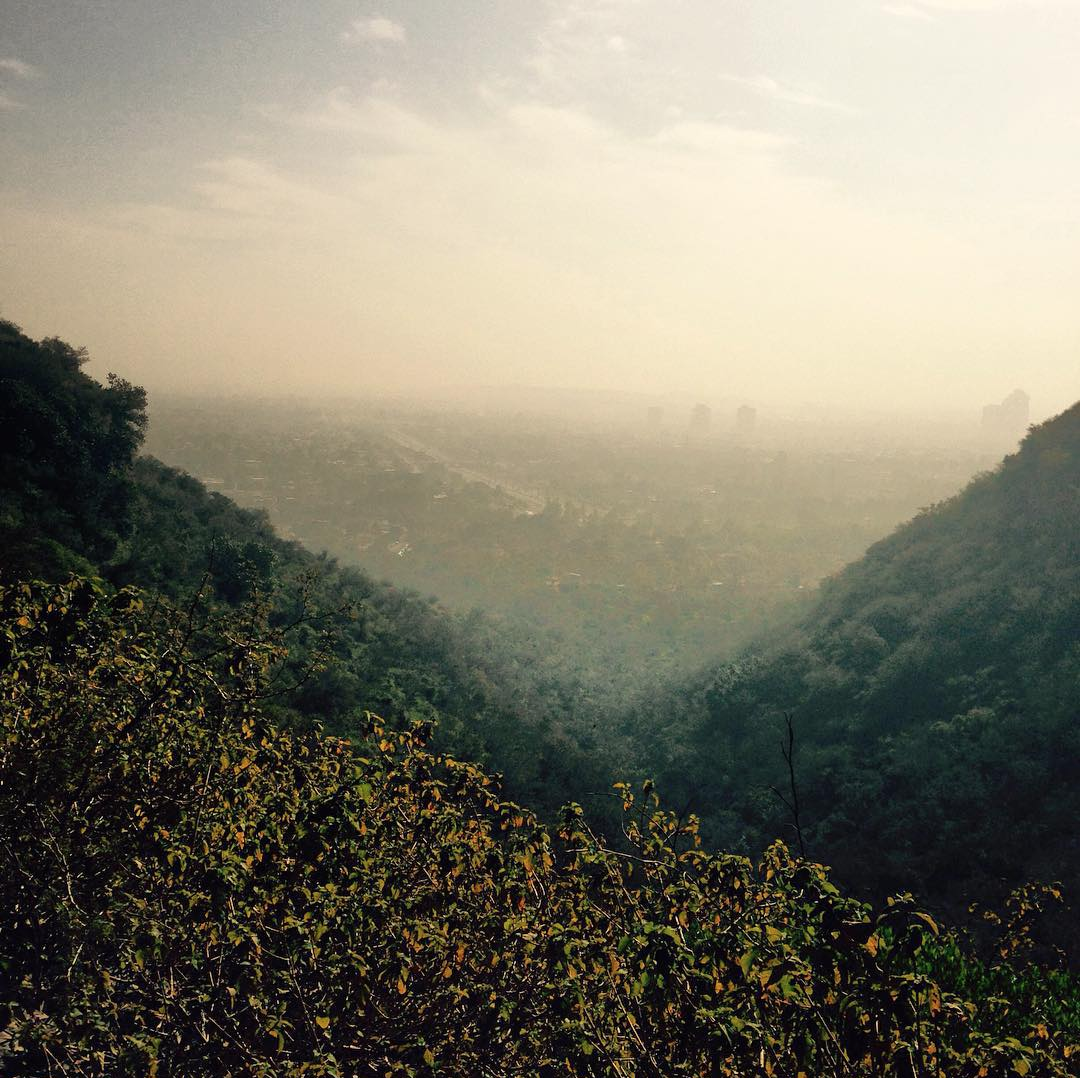


Margalla Hill's Trail 4's flat terrain connects Trail 3 and 5 and makes for a stunning walk across the hills before descending or climbing up further. April 9, 2016. (AN photo by Sabah Bano Malik)

Trail 3
The oldest and perhaps most popular of the trails is Trail 3, divided into trails ‘A’ and ‘B.’ The hike can be both challenging and relaxing depending on which you pick. With starting points off of Margalla Road in Islamabad, 3A is a steep, rocky, albeit short 40-minute hike that is a cardio buster. On the other hand, 3B is a wooden, more forest-covered trek that meets at the same viewpoint but takes a little longer at nearly an hour. The tougher 3A is also listed in the Strava runners app with an 18-minute run challenge, and also has points for people who are interested in rock climbing.
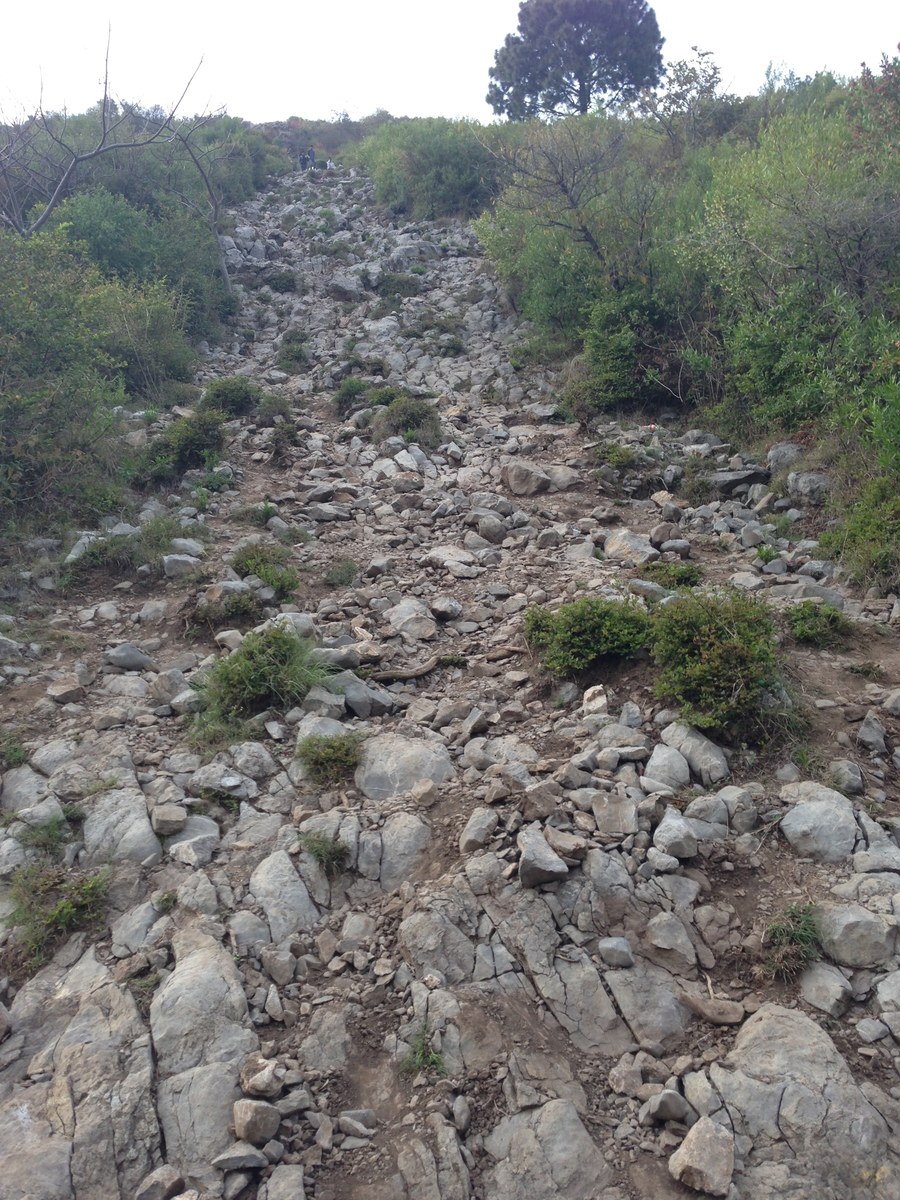


A shot of Trail 3B's fire trail- a narrow and steep slip on the side of the hills that makes for a formidable climb. May 16, 2018. (AN photo by Sabah Bano Malik)

Trail 4
If you’re looking for a longer walk with panoramic views, the stunning Trail 4 is for you. A flatter terrain nestled in the hills and home to gorgeous scenes from the hills, this trail is ideal for those looking to extend their walking time and to get immersed into the hillsides for a day of avid walking.
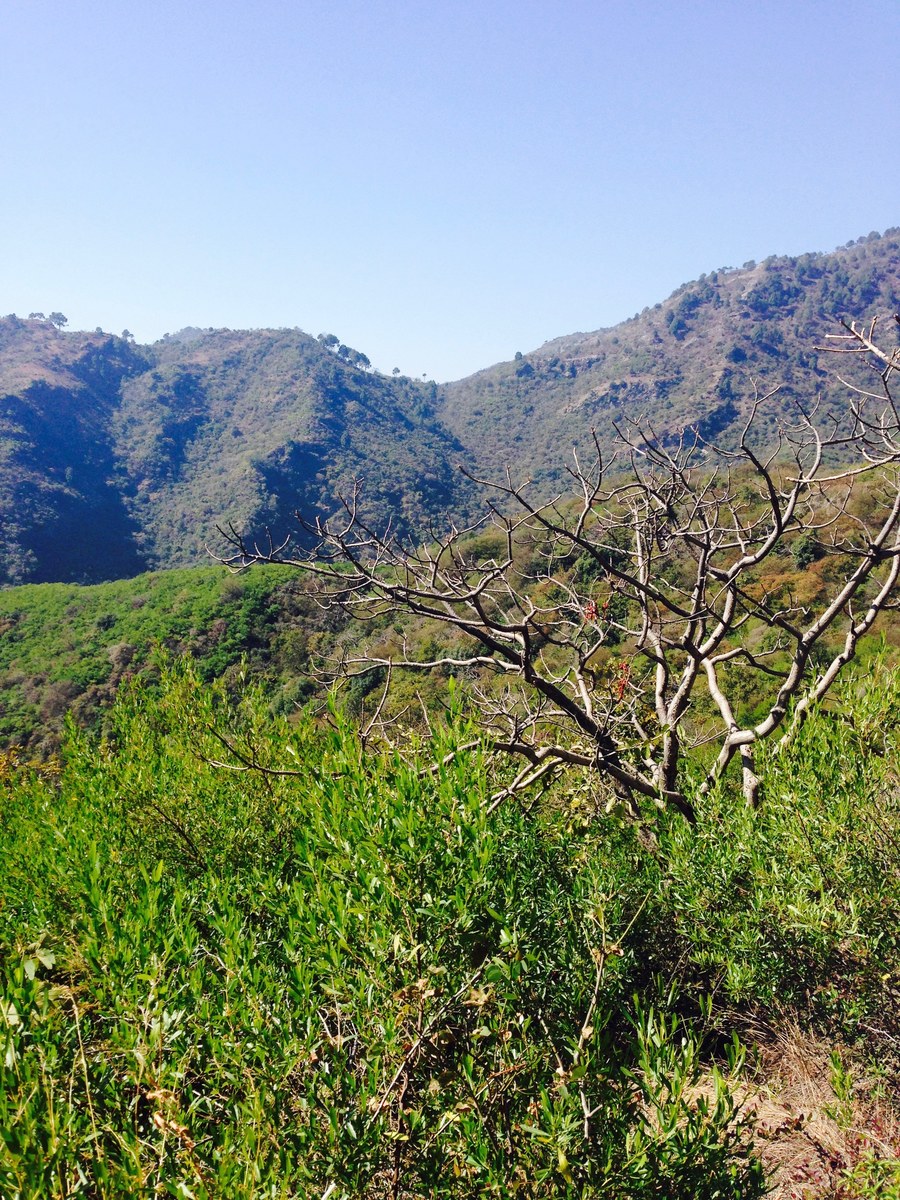


Margalla Hills National Park which frames the capital city has a number of trails interconnecting its main trails, including the cactus ridge walk that sits adjacent to Trail 2. March 12, 2015. (AN photo by Sabah Bano Malik)

Trail 5
Trail 5 is an extremely popular trail, scenic with a diverse landscape. It is ideal for runners, walkers, families, those looking for a challenge and even pets! It is one of the only trails which is dog-friendly due to its mostly flat terrain at the beginning which leads you through gorgeous forested areas punctuated with tributaries aligned with massive rock formations. Though it is not a difficult hike, it’s an adventurous one. The trail is also home to a number of scenic waterfalls and has a walking path which lands you at the gorgeous Saidpur village, which is bustling full of restaurants.
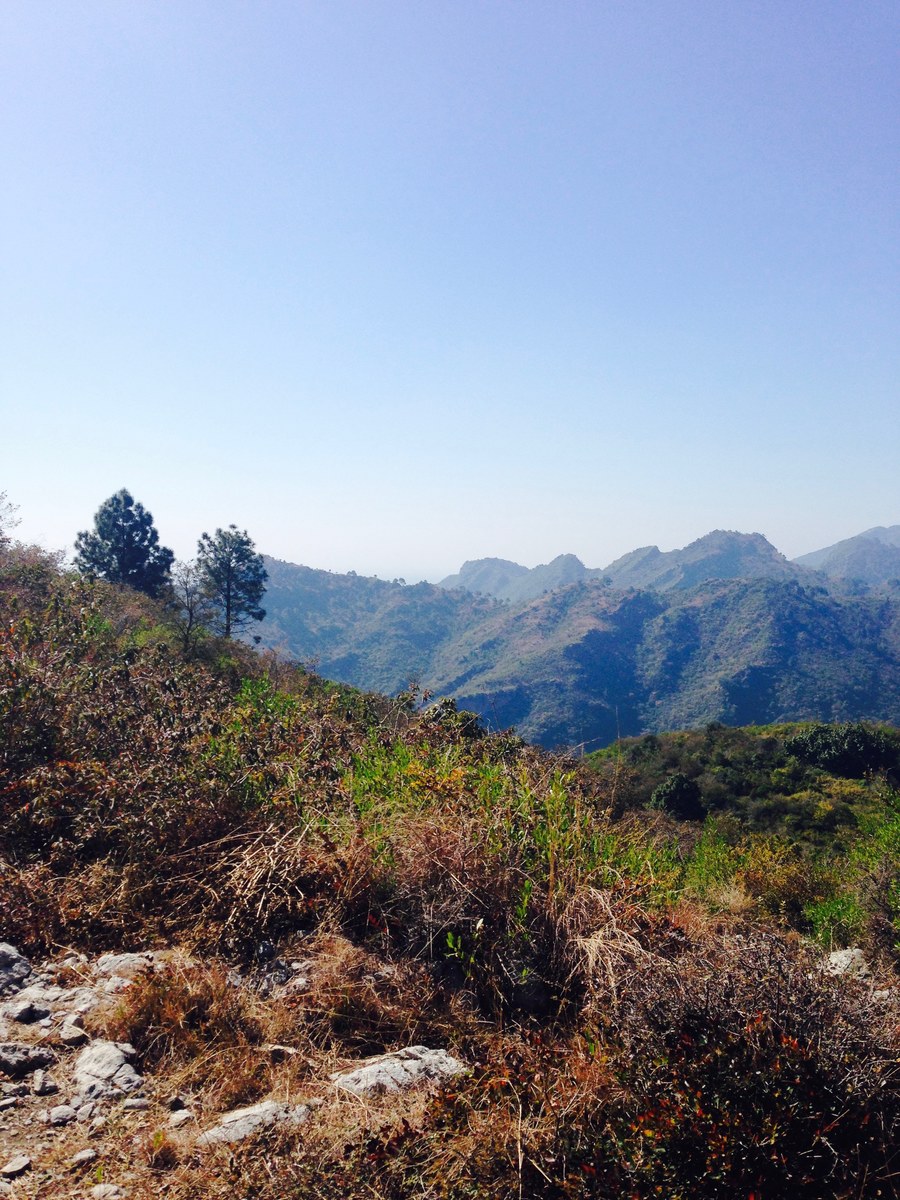


Beautiful views of the Margalla Hills north of Pakistan's capital, from a popular hiking trail. March 12, 2015. (AN photo by Sabah Bano Malik)

Trail 6
A hidden but iconic starting point behind Faisal Mosque’s visitors’ parking lot, Trail 6 is a favorite among the city’s hiking enthusiasts. It is steep with a view pay-off that makes the two-hour hike truly worth it. For avid hikers, it provides a challenging climb that is usually not as crowded as Trails 3 or 5. Trail 6 also has a track within it which is difficult and more challenging but gives you a landing spot at a waterfall great for dipping your toes into and for taking in the city beneath. This trail is not for beginners but certainly one to aspire to.


Pakistan’s finance chief says country shifting from aid to trade, investment with Gulf nations

Updated 5 sec ago
Follow

Pakistan’s finance chief says country shifting from aid to trade, investment with Gulf nations

  • Aurangzeb says remittances from the GCC topped $38 billion last fiscal year, projected at $42 billion this time
  • He tells an international media outlet discussions on a free trade agreement with the GCC are at an advanced stage

ISLAMABAD: Pakistan is no longer seeking aid-based support and is instead pivoting toward trade- and investment-led partnerships, Finance Minister Muhammad Aurangzeb said in an interview with an international media outlet circulated by the finance division on Monday, acknowledging longstanding economic backing from Gulf countries.

Aurangzeb spoke to CNN Business Arabia at a time when Pakistan seeks to consolidate macroeconomic stability after a prolonged crisis marked by soaring inflation, currency pressure and external financing gaps.

Aurangzeb said the government’s economic direction, articulated by Prime Minister Shehbaz Sharif, aims to replace reliance on external assistance with sustainable growth driven by investment and exports, particularly from partners in the Gulf Cooperation Council (GCC), which includes Saudi Arabia, the United Arab Emirates, Qatar, Kuwait, Oman and Bahrain.

“We are not looking for aid flows anymore,” he said. “For us, we are very clear ... that going forward is really trade and investment, which is going to bring sustainability and be win-win for our longstanding bilateral partners in GCC and for Pakistan.”

“This FDI [foreign direct investment] is going to help us in terms of GDP growth [and] more employment opportunities as we go forward,” he continued. “So, you know, all hands are on deck at this point in time to make this materialize.”

Aurangzeb said Pakistan’s shift was underpinned by improving macroeconomic indicators following an 18-month stabilization program.

He noted that inflation, which peaked at 38 percent in 2023, has fallen to single-digit levels, while the country has posted primary fiscal surpluses and kept the current account deficit within targeted limits, adding that foreign exchange reserves now cover about 2.5 months of imports.

The finance chief described recent international assessments as external validation of the government’s reform path.

“All three international credit rating agencies are now aligned in terms of their upgrades and outlook for Pakistan this year,” he said, adding that the successful completion of the second review under the International Monetary Fund’s loan program, approved by the lending agency’s executive board, reinforced confidence in Pakistan’s economic management.

The finance minister said reforms across taxation, energy, state-owned enterprises, public finance and privatization were central to consolidating stability and supporting growth.

He pointed out Pakistan’s tax-to-GDP ratio had risen to about 10.3 percent from 8.8 percent at the start of the reform program and is on track to reach 11 percent, driven by efforts to widen the tax base to include under-taxed sectors such as real estate, agriculture and wholesale and retail trade, while tightening compliance through technology-based monitoring.

Aurangzeb also highlighted the role of the GCC in supporting Pakistan’s external position, particularly through remittances.

He said inflows reached about $38 billion last fiscal year and are projected to rise to nearly $42 billion this time, with more than half originating from GCC states, reflecting the contribution of Pakistani nationals working in the region.

The finance chief said Pakistan was actively engaging Gulf partners to attract investment in sectors including energy, oil and gas, mining, artificial intelligence, digital infrastructure, pharmaceuticals and agriculture, while discussions on a free trade agreement with the GCC were at an advanced stage.