

Pakistan £6 million payment to India ‘obligatory’ - former additional attorney general

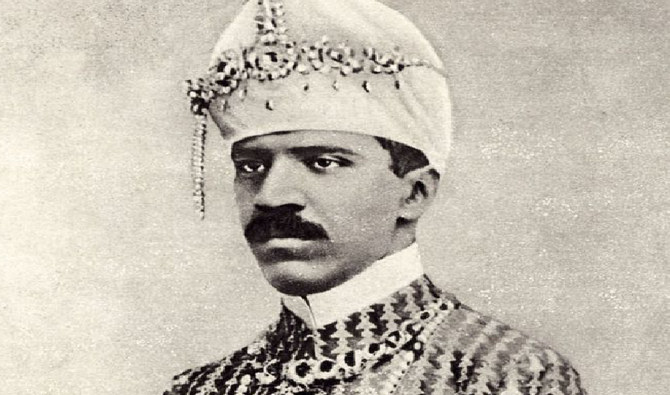
Mir Osman Ali Khan was once the world's richest man. (Photo Courtesy: Wikipedia Commons)
Short Url
Updated 22 December 2019
Follow

Pakistan £6 million payment to India ‘obligatory’ - former additional attorney general

  • On Thursday, a UK court ordered Pakistan to pay £6 million in obligatory legal costs in the Nizam of Hyderabad case 
  • Says the court can force Pakistan to pay through its foreign assets in case of noncompliance

NEW DELHI/ LAHORE: Pakistan’s former additional attorney general said cabinet approval was not required for a £6 million 'obligatory' payment to the Nizam of Hyderabad’s descendants and the Indian government, following a UK High Court ruling on Thursday that ordered Pakistan to pay a percentage of their legal costs following a closure of the case.
“This issue will not be put before the cabinet for approval. Why would it? It is a liability on the state of Pakistan,” Muhammad Waqar Rana, ex-additional attorney general, told Arab News on Saturday.
He said this was an “obligation” that needed to be paid off. 

“The cabinet cannot simply disapprove it and refuse to pay. This amount will have to be paid from the federal consolidated fund otherwise court can force us to pay through our foreign assets, such as (our) ships or our aircrafts parked in the UK,” he added.

In October, the decades-old legal dispute, where both Pakistan and India claimed funds belonging to the last Nizam of Hyderabad during Partition in 1947 and deposited in a London bank account, was decided by a London judge in favor of India. 
The Nizam’s descendants joined hands with the Indian government in the legal battle against Pakistan. 
The current value of the funds is £35 million after accruing over 70 years of interest.
Rana said the government would further have to pay interest if it delayed the matter. “The earlier it pays the better. Interests will be added from the day of the order.”
Pakistan decided it would not appeal the London High Court’s decision, after which it was ordered in Thursday’s consequential hearing to pay 65 percent on account of all costs in legal fees-- a sum which equals £6 million. Of this, Pakistan will have to pay around £2 million directly to the Indian government.
“This is not (going to be) an easy distribution. There are so many claimants for the money from the Nizam’s side,” Mir Ayoob Ali Khan, a Hyderabad based journalist, told Arab News.
The dispute has its roots in 1948, when the last Nizam of Hyderabad, Mir Osman Ali Khan, deposited £1 million in the UK account of then Pakistan high commissioner, for safe-keeping. At the time, the Nizam had requested Pakistan to keep the money for him, though he had refused to join either India or Pakistan and kept Hyderabad’s status as a princely state.
In 1948 however, Hyderabad was annexed through a military operation by India. 
Earlier in October, following the court ruling in favor of India, a Pakistan foreign office statement said the court did not take into account the historical context of the funds' transfer.
“India illegally annexed Hyderabad in violation of International Law and all civilized norms, leading the Nizam of Hyderabad to make desperate efforts to defend his people and the state from Indian invasion,” the statement said.
Pakistan has claimed since formal court proceedings began in 2013, that the money had been given to Pakistan by the Nizam as payment for weapons to defend his kingdom against India.
“Our claim was that the £35 million was a payment made to Pakistan for the arms supplied to the Nizam of Hyderabad to defend himself against Indian aggression,” Rana said.
“Unfortunately, we could not prove it in court.”
The Indian foreign ministry could not be reached for comment.


Pakistan, seven Muslim countries condemn new Israeli measures aimed at annexing West Bank

Updated 11 sec ago
Follow

Pakistan, seven Muslim countries condemn new Israeli measures aimed at annexing West Bank

  • Israel approves steps to make it easier for settlers to buy land in West Bank, grant Israeli authorities more enforcement powers over Palestinians
  • Foreign ministries of Pakistan, Egypt, Jordan, United Arab Emirates, Indonesia, Türkiye, Saudi Arabia and Qatar issue joint condemnation 

ISLAMABAD: Pakistan and seven Arab and Muslim states on Monday jointly condemned recent Israeli decisions to impose new legal and administrative measures in the occupied West Bank, saying they amount to an attempt to enforce unlawful sovereignty and accelerate annexation of Palestinian territory.

The West Bank is among the territories that the Palestinians seek for a future independent state. Much of it is under Israeli military control, with limited Palestinian self-rule in some areas run by the Western-backed Palestinian Authority (PA).

Israel’s security cabinet approved a series of steps on Sunday that would make it easier for settlers in the occupied West Bank to buy land while granting Israeli authorities more enforcement powers over Palestinians. The measures reportedly include scrapping decades-old regulations that prevent Jewish private citizens buying land in the West Bank. They are also reported to include allowing Israeli authorities to administer some religious sites, and expand supervision and enforcement in areas under PA administration in matters of environmental hazards, water offenses and damage to archaeological sites.

In a joint statement issued in Islamabad, the foreign ministries of Pakistan, Egypt, Jordan, the United Arab Emirates, Indonesia, Türkiye, Saudi Arabia and Qatar said Israel had no sovereignty over the occupied Palestinian territory and accused it of pursuing measures aimed at entrenching settlement activity and imposing a new legal and administrative reality on the ground.

“The foreign ministers condemned in the strongest terms the illegal Israeli decisions and measures aimed at imposing unlawful Israeli sovereignty, entrenching settlement activity, and enforcing a new legal and administrative reality in the occupied West Bank,” the statement said, adding that such actions were accelerating attempts at “illegal annexation and the displacement of the Palestinian people.”

The ministers warned that continued Israeli expansionist policies and “illegal measures” in the West Bank were fueling violence and instability across the region.

They said the actions constituted “a blatant violation of international law,” undermined the two-state solution and infringed on the Palestinian people’s right to establish an independent and sovereign state along the pre-1967 borders, with East Jerusalem as its capital.

The statement said these measures were “null and void” and in clear violation of United Nations Security Council Resolution 2334, which condemns Israeli actions aimed at altering the demographic and legal status of territory occupied since 1967, including East Jerusalem.

Calling on the international community to act, the foreign ministers urged states to fulfill their “legal and moral responsibilities” and to compel Israel to halt what they described as dangerous escalation in the West Bank and inflammatory statements by Israeli officials.

They reiterated that fulfilling the Palestinian people’s right to self-determination and statehood through a two-state solution, in line with international resolutions and the Arab Peace Initiative, remained “the only path” to achieving lasting peace, security and stability in the region.

Prime Minister Benjamin Netanyahu’s ruling coalition includes many pro-settler members who want Israel to annex the West Bank, land captured in the 1967 Middle East war to which Israel cites biblical and historical ties.

The United Nations’ highest court said in a non-binding advisory opinion in 2024 that Israel’s occupation of Palestinian territories and settlements there is illegal and should be ended as soon as possible. Israel disputes this view.