Meet the Pakistani calligrapher painstakingly restoring art at Masjid an-Nabawi

Calligrapher Shafiq-uz-Zaman Khan shows his sketch at a hotel in Karachi during an interview with Arab News on Dec. 18, 2019. (AN photo)
Short Url
Updated 20 December 2019
Follow

Meet the Pakistani calligrapher painstakingly restoring art at Masjid an-Nabawi

  • Shafiq-Uz-Zaman Khan has been working at the holy site in Madinah for almost thirty years
  • Khan has won many awards in the Kingdom as well as the Pride Of Performance in Pakistan in 2014

KARACHI: For as long as he could remember, calligrapher Shafiq-Uz-Zaman Khan had one wish: to be able to paint even one panel on the walls of Madinah’s Al-Masjid an-Nabawi, one of the holiest sites in Islam and the final resting place of its final prophet, Muhammad (peace be upon him).
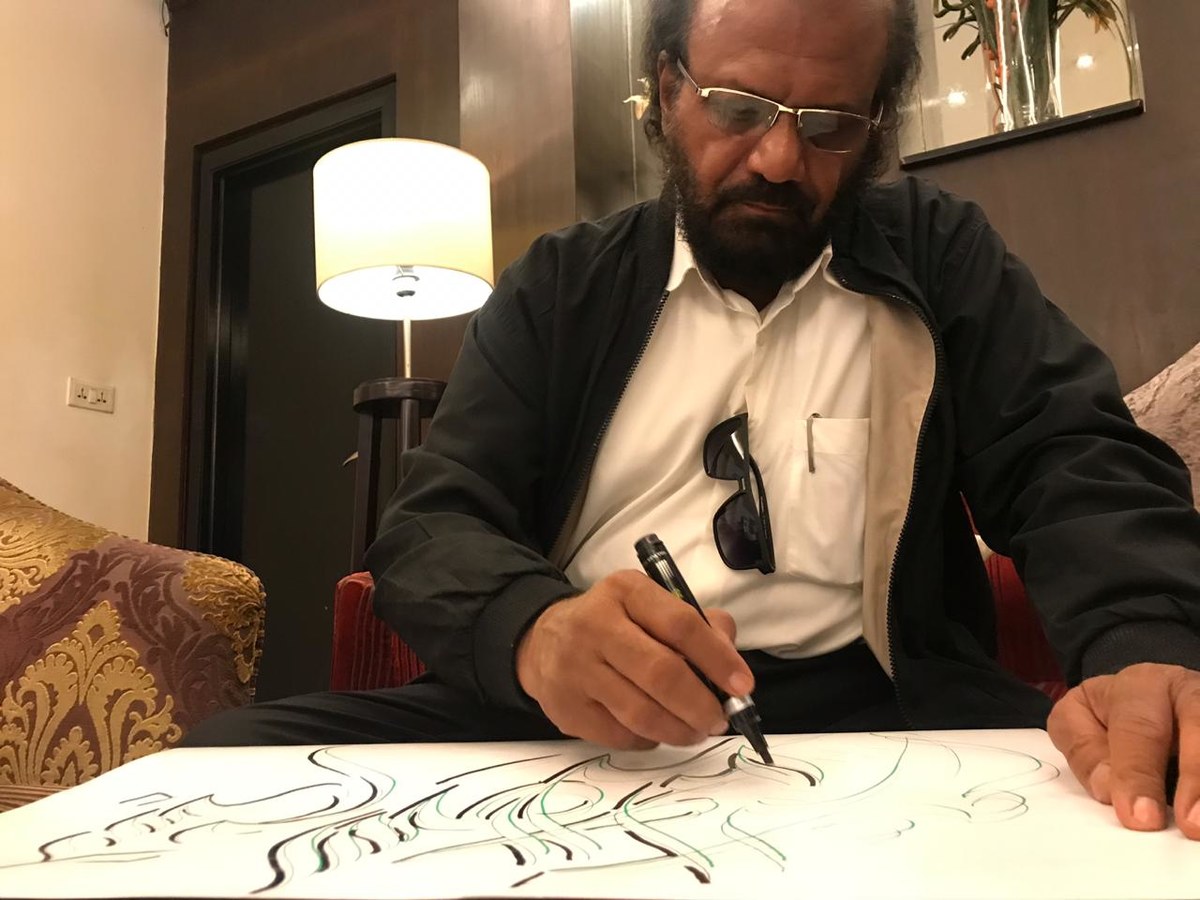


Shafiq-uz-Zaman Khan, a Pakistani calligrapher of Madinah's Masjid an-Nabawi demonstrates his decorative writing during an interview with Arab News in Karachi, Dec. 18, 2019. (AN photo)

In 1990, he entered a competition aimed at choosing an artist to restore 133-year-old calligraphy on the old structure of the mosque and create fresh designs for new structures added to the building. At the time, Khan made a living painting billboards and hoardings and the organizers of the competition at first refused to register him for the contest, saying he was not a professional calligrapher. But not only did Khan manage to convince them that his passion for the craft deserved a shot, he eventually went on to win the contest and embark on a lifelong journey of restoring calligraphic works at what is now one of the largest mosques in the world.
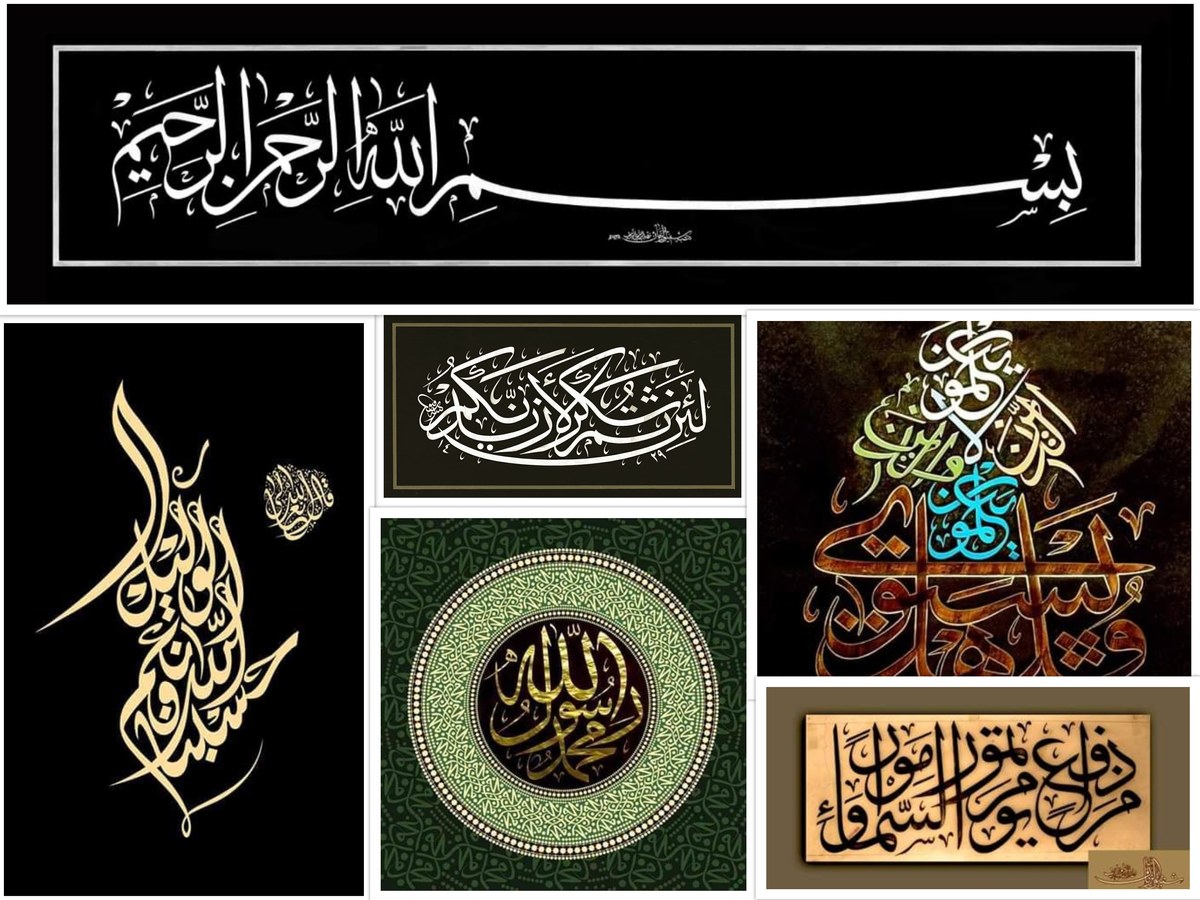


Some of Shafiq-uz-Zaman Khan's art work  (Supplied)

Almost 30 years later, about 85 percent of the restoration work is complete, Khan told Arab News in Karachi during a recent visit from Madina. When the job is complete, he says he plans to return to Karachi and set up a calligraphy academy.
“People say that I have not being able to complete the work in almost three decades; they don’t understand that this work requires precision,” Khan, who writes in Khat-e-Sulas, the king of fonts, said. One meter of calligraphy takes him a whole night to complete, he added.
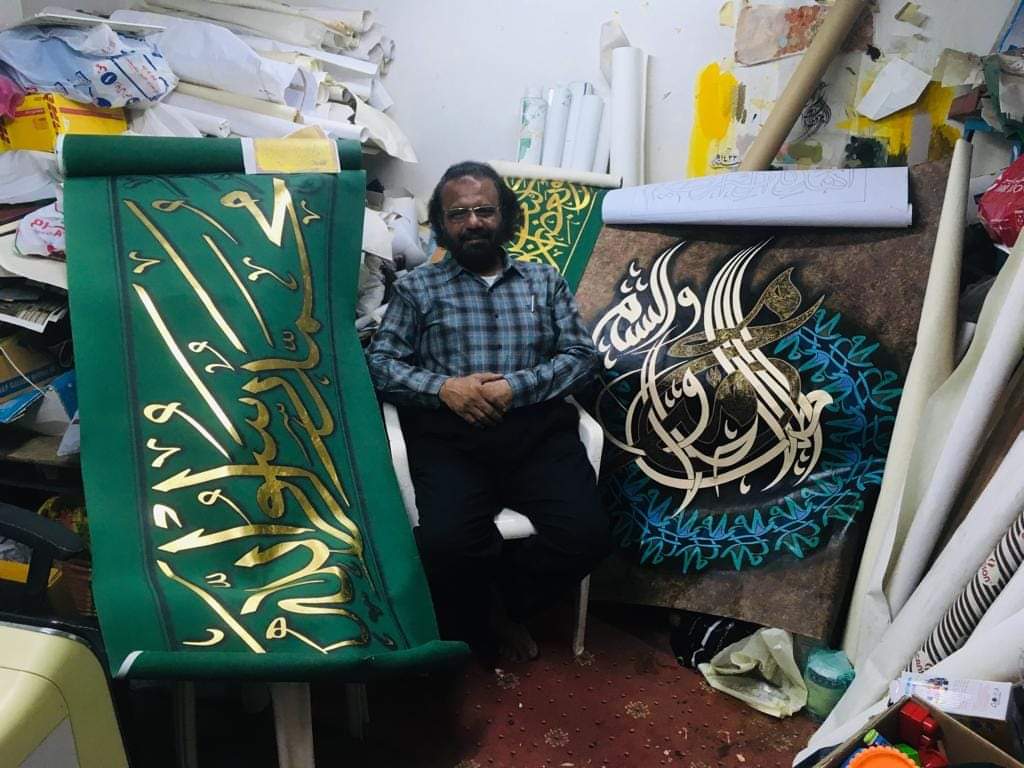


In this undated photo, Shafiq-uz-Zaman Khan is seen at his workshop in Madinah, Saudi Arabia. (Photo supplied)

Born in Rawalpindi, Khan grew up in Karachi and started working as an artist for advertising agencies soon after clearing his grade ten exams. He said he was painting a Qur’anic verse on a billboard near Dow Medical College over thirty years ago when he met two men who changed the course of his life.
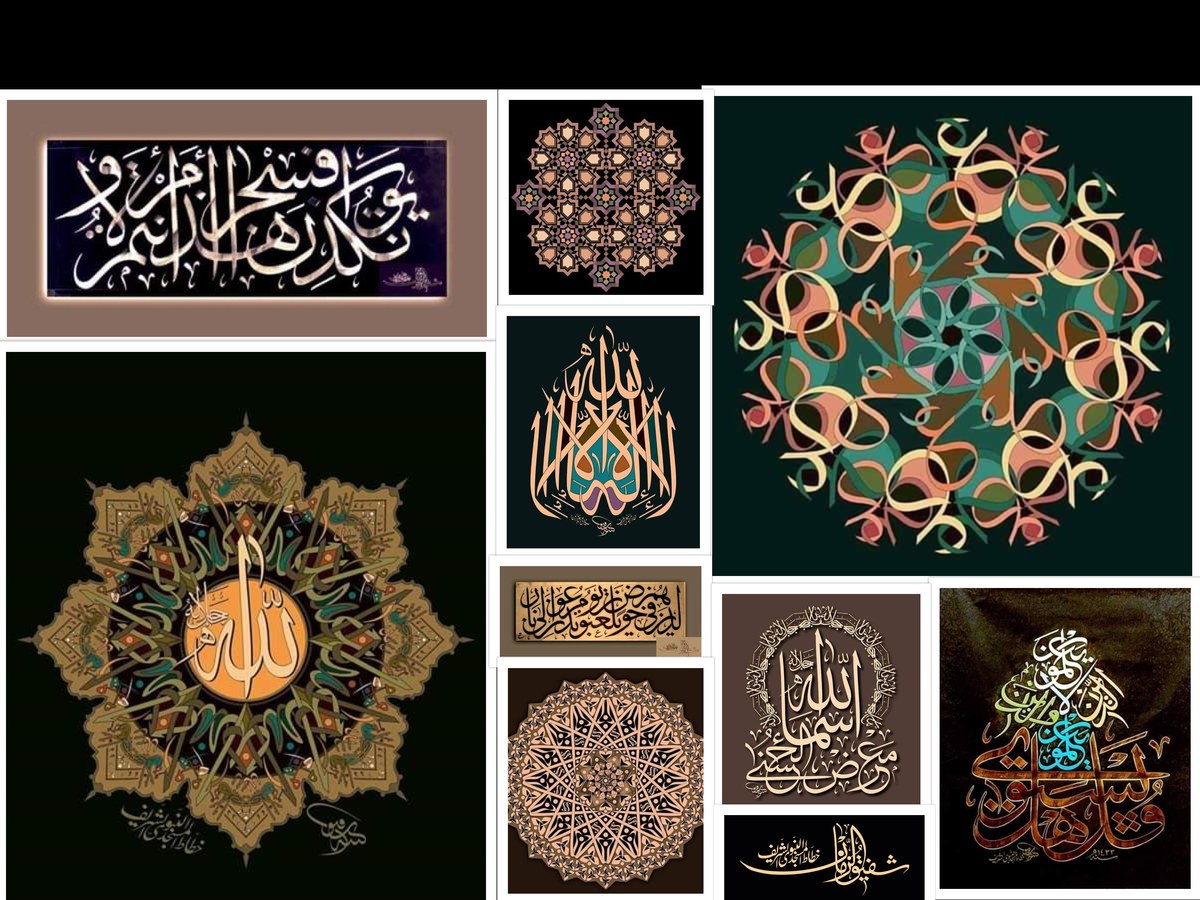


Some of Shafiq-uz-Zaman Khan's art work  (Supplied)

“One of them said a Saudi colleague – accompanying him at that time – was impressed to see my work and wanted to take me to Riyadh,” Khan said. Soon after, Khan moved to the Kingdom and just two years later was chosen to restore the great calligrapher Abdullah Zuhdi’s work at Al-Masjid an-Nabawi.
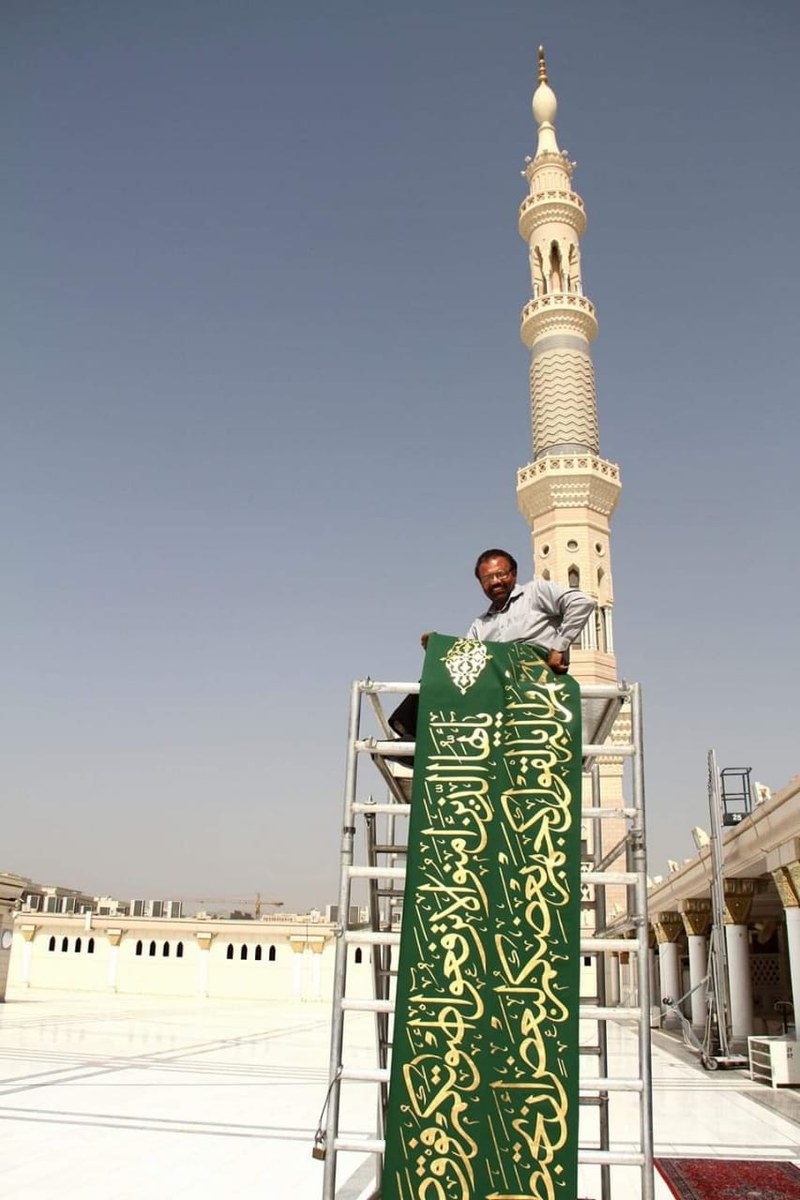


In this undated photo, Shafiq-uz-Zaman Khan is seen fixing his calligraphic panel at Masjid an-Nabawi in Madinah, Saudi Arabia. (Photo supplied

Zuhdi started painting at the mosque in 1857 during the reign of Sultan Abdulmajid, an Ottoman ruler and himself an accomplished calligrapher. But Zuhdi, though a great master of his time, left many of the verses incomplete when there was no more space on a dome to complete them.
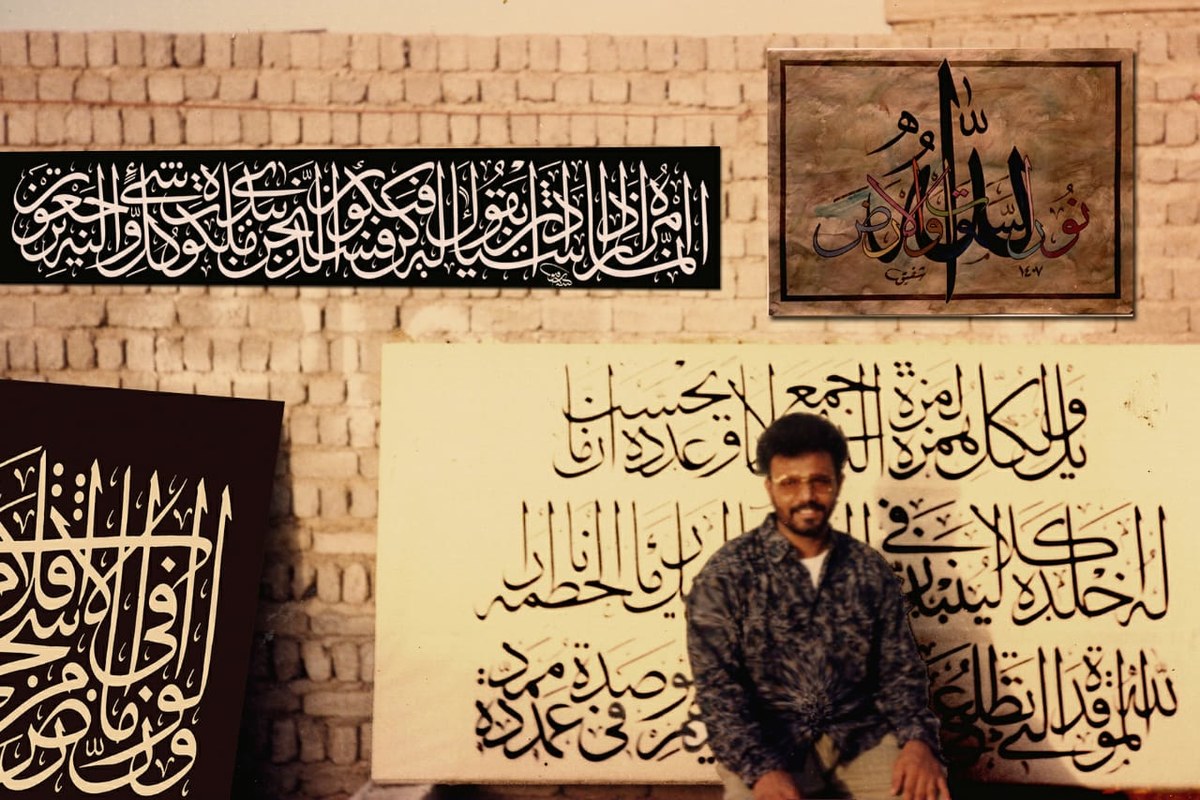


In this undated photo, Shafiq-uz-Zaman Khan, is seen presenting calligraphy work at his workshop in Madinah, Saudi Arabia. (Photo supplied)

When Khan started the restoration work, he said the most challenging task was ensuring that verses were completed and there was uniformity in the work on each dome.
Though Khan is mostly unknown in Pakistan, he said he has achieved some degree of fame as a calligrapher and won many awards in the Kingdom as well as the Pride Of Performance in Pakistan in 2014.

Pakistan to launch last 2025 anti-polio nationwide drive targeting 45 million children next week

Updated 3 sec ago
Follow

Pakistan to launch last 2025 anti-polio nationwide drive targeting 45 million children next week

  • Over 400,000 frontline health workers will participate in Dec. 15-21 nationwide polio vaccination campaign, say authorities
  • Pakistan is one of only two countries in the world, the other being Afghanistan, where wild poliovirus remains endemic

KARACHI: Pakistan will kick off the last nationwide anti-polio vaccination campaign of 2025 targeting 45 million children next week, the National Emergencies Operation Center (NEOC) said on Monday, urging parents to coordinate with health workers during the drive. 

The campaign takes place days after Pakistan launched a nationwide vaccination drive from Nov. 17-29 against measles, rubella and polio. Pakistan said it had targeted 22.9 million children across 89 high-risk districts in the country with oral polio vaccination drops during the drive. 

Over 400,000 health workers will perform their duties during the upcoming Dec. 15-21 nationwide polio vaccination campaign, the NEOC said in a statement. 

“Parents are urged to cooperate with polio workers and ensure their children are vaccinated,” the NEOC said. “Complete the routine immunization schedule for all children up to 15 months of age on time.”

Health authorities aim to vaccinate 23 million children in Punjab, 10.6 million in Sindh, over 7.2 million in Khyber Pakhtunkhwa, over 2.6 million in Balochistan, more than 460,000 in Islamabad, over 228,000 in Gilgit-Baltistan and more than 760,000 children in Pakistan-administered Kashmir during the seven-day campaign, it added. 

Pakistan is one of only two countries in the world where wild poliovirus remains endemic.

Polio is a highly infectious and incurable disease that can cause lifelong paralysis. The only effective protection is through repeated doses of the Oral Polio Vaccine for every child under five during each campaign, alongside timely completion of all routine immunizations.

Islamabad’s efforts to eliminate poliovirus have been hampered by parental refusals, widespread misinformation and repeated attacks on anti-polio workers by militant groups. In remote and volatile areas, vaccination teams often operate under police protection, though security personnel themselves have also been targeted and killed in attacks.