



ISLAMABAD: Former President Pervez Musharraf was sentenced to death by a special court in Islamabad on Tuesday.
Convicted of high treason, he is Pakistan’s first military ruler to stand trial for superseding the Constitution.
Musharraf seized power in 1999 in a bloodless coup. He stepped down in 2008.
After the Sept. 11, 2001 terrorist attacks on the United States, Musharraf joined the US “war on terror,” despite criticism in Pakistan.
During his term as president, he had survived several assignation plots.
Musharraf left the country in 2016 for medical treatment and has since been self-exiled in Dubai.
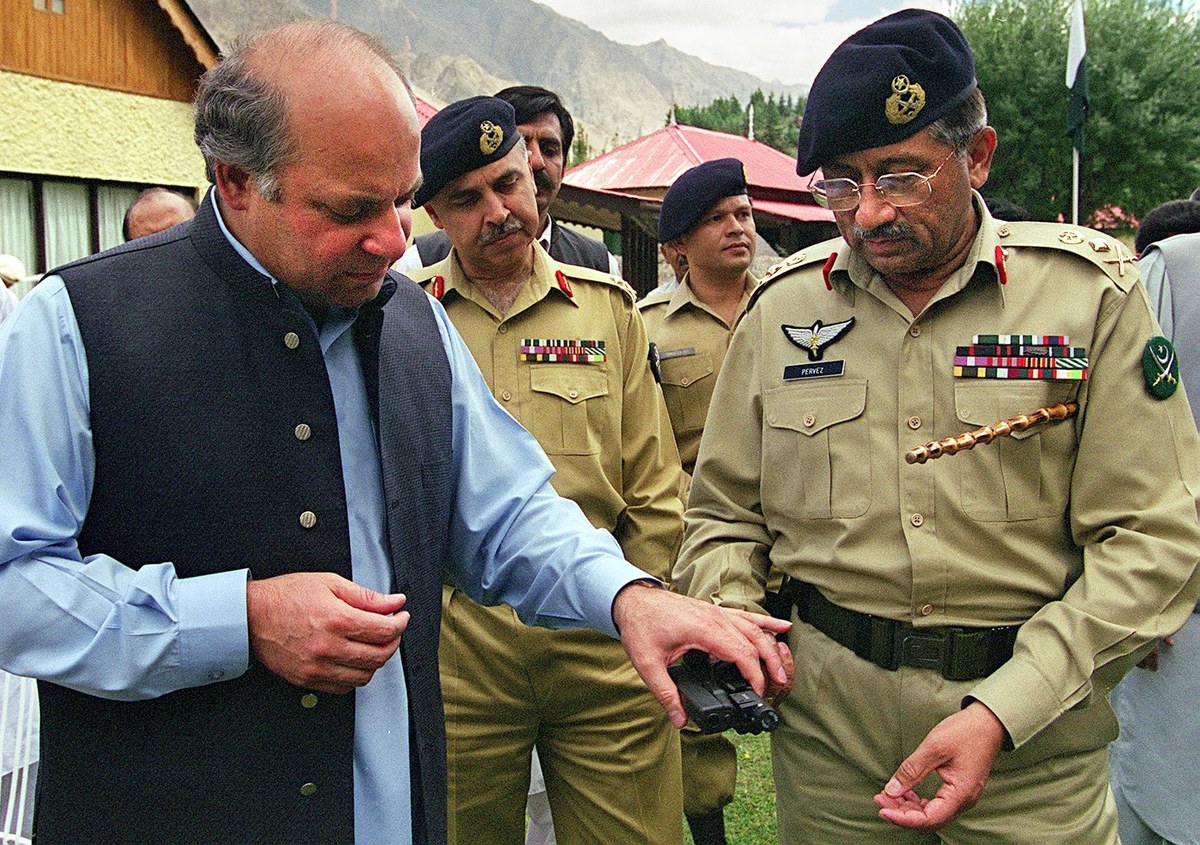
In this photo from Sept. 8, 1999, then Prime Minister Nawaz Sharif (left) is looking at a pistol of then Army Chief Gen. Pervez Musharraf while they visit the families of soldiers killed fighting in Kargil. (AFP)
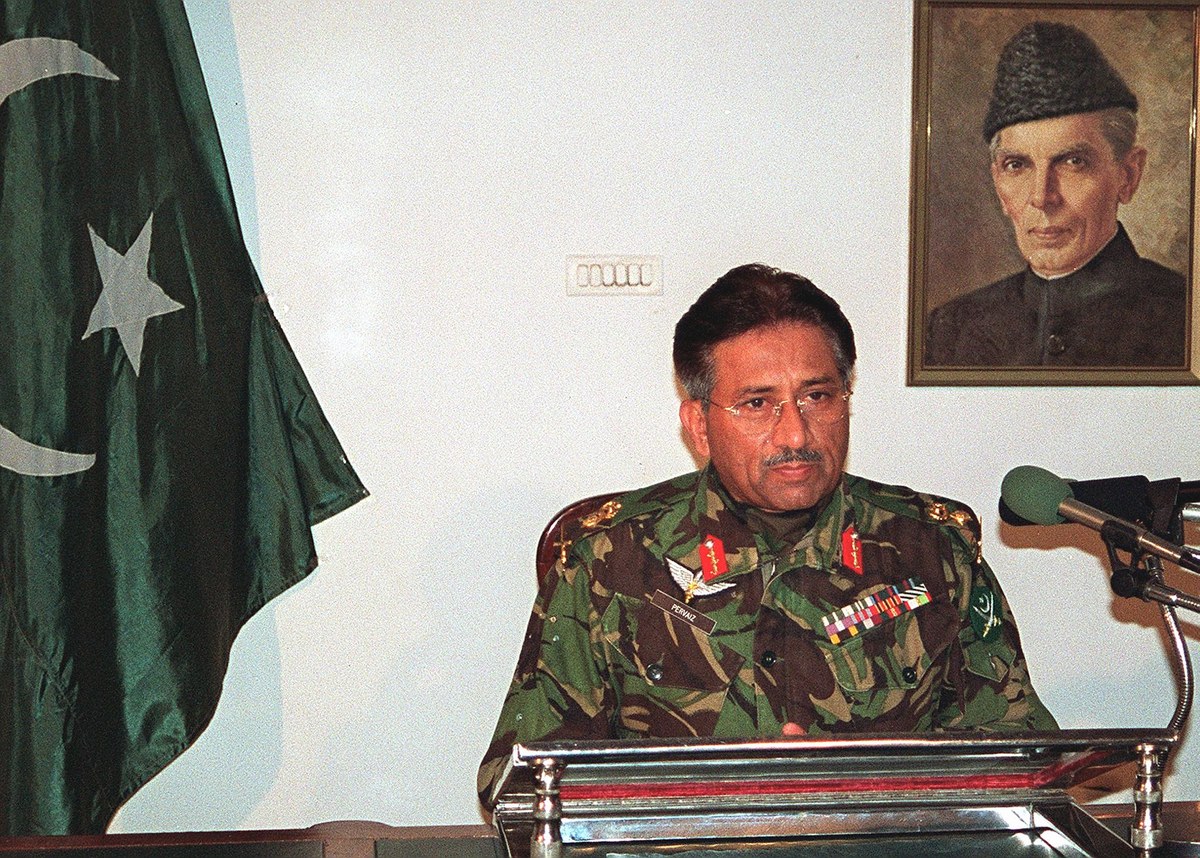
Gen. Pervez Musharraf speaks as army chief during a nationwide address on state-owned television in Karachi, Oct. 13, 1999. (AFP)
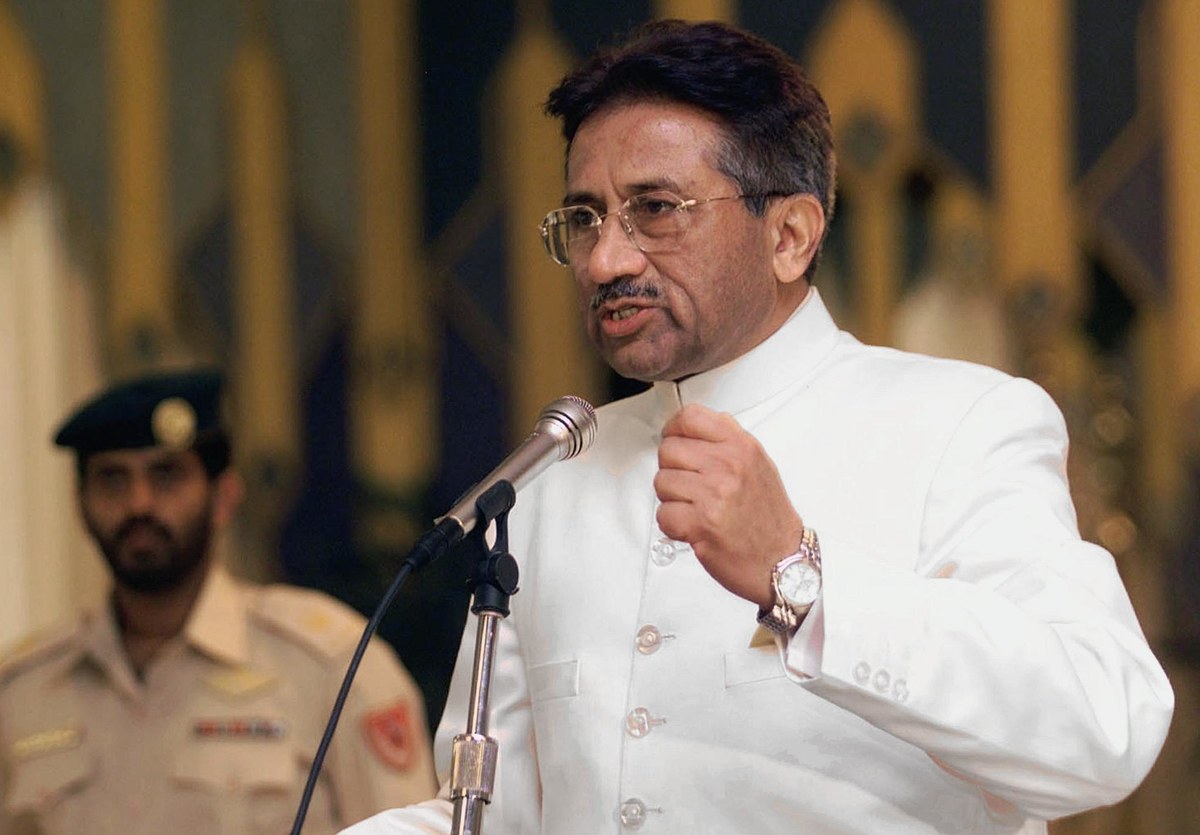
Pervez Musharraf gestures as he addresses Pakistani expats in the United Arab Emirates in Abu Dhabi on Oct. 27, 1999. (AFP)
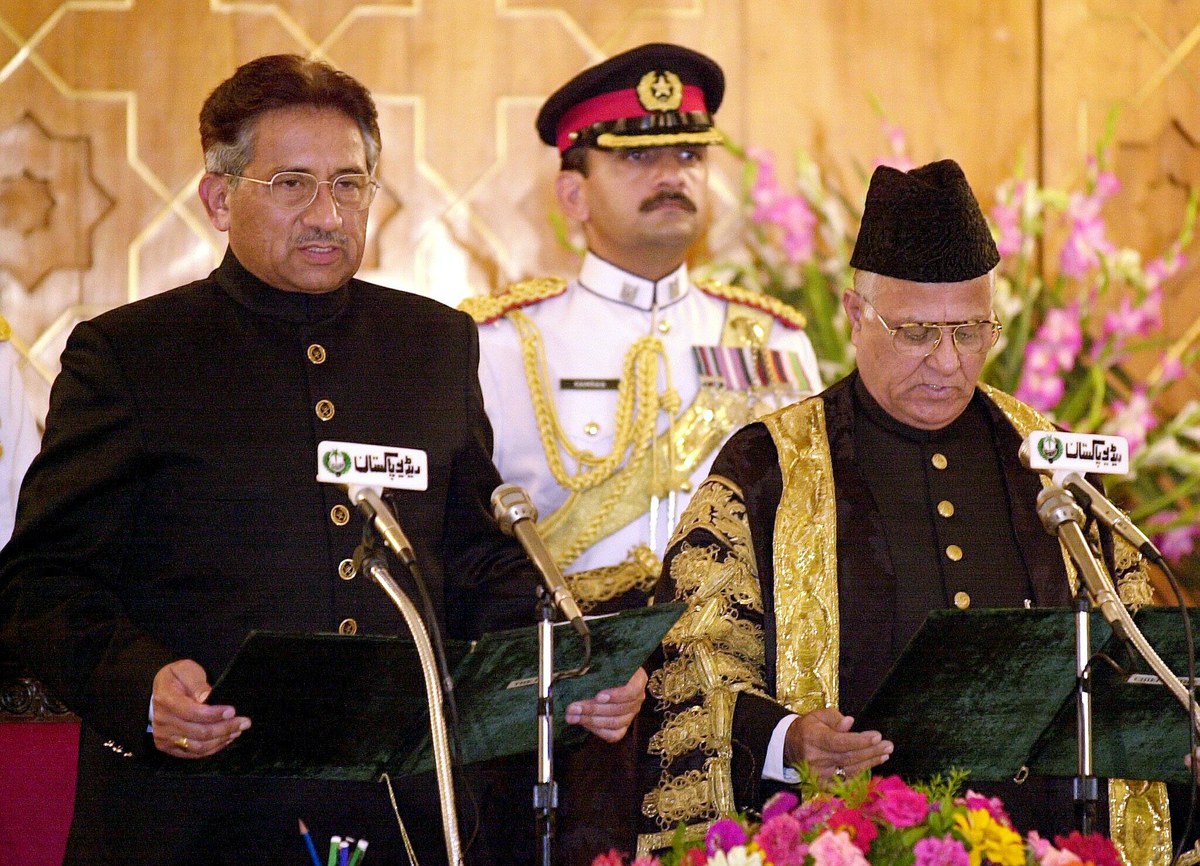
Pervez Musharraf takes oath for the office of President of Pakistan during a ceremony in Islamabad on June 20, 2001. Chief Justice Irshad Hassan Khan receives the oath from Musharraf. (AFP)
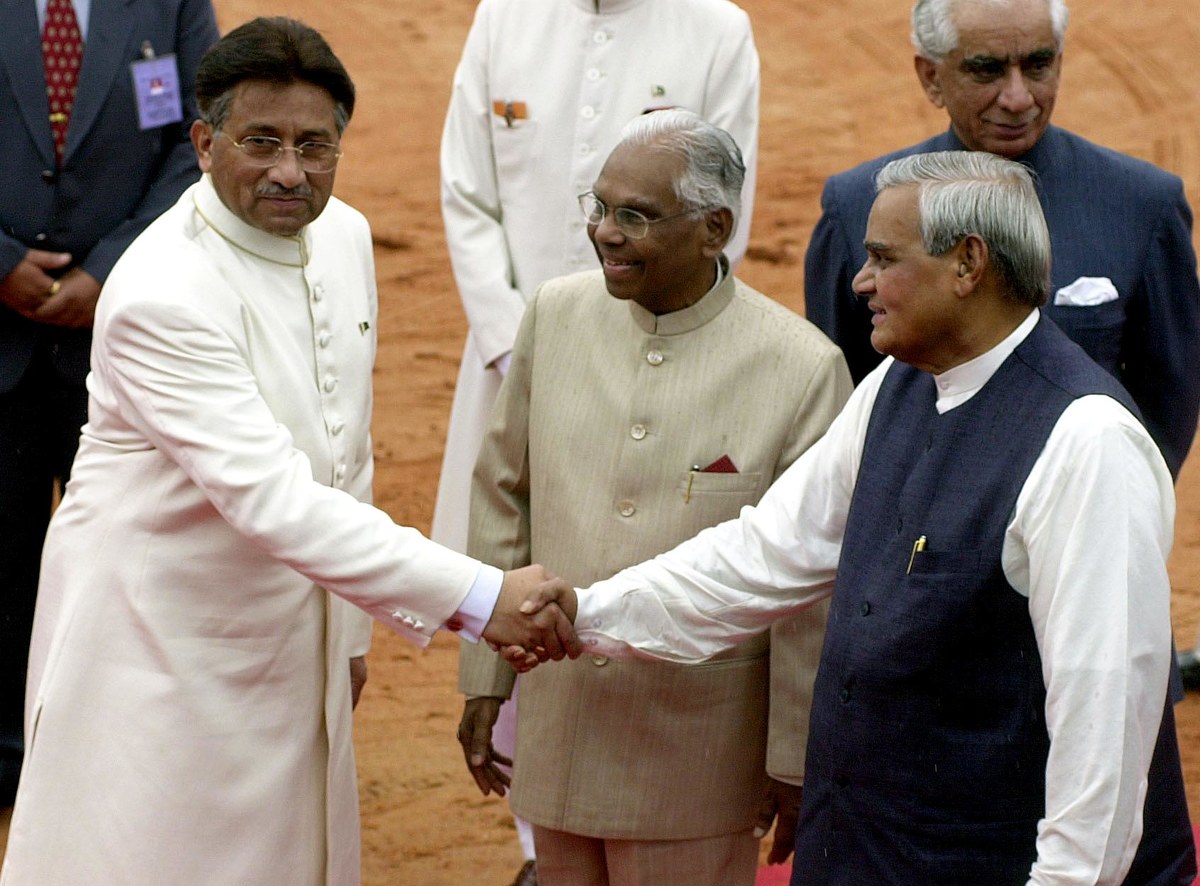
Then President Pervez Musharraf bids farewell to then Indian Prime Minister Atal Behari Vajpayee and then Indian President K.R. Narayanan at the end of an official welcoming ceremony in New Delhi, July 14, 2001.(AFP)
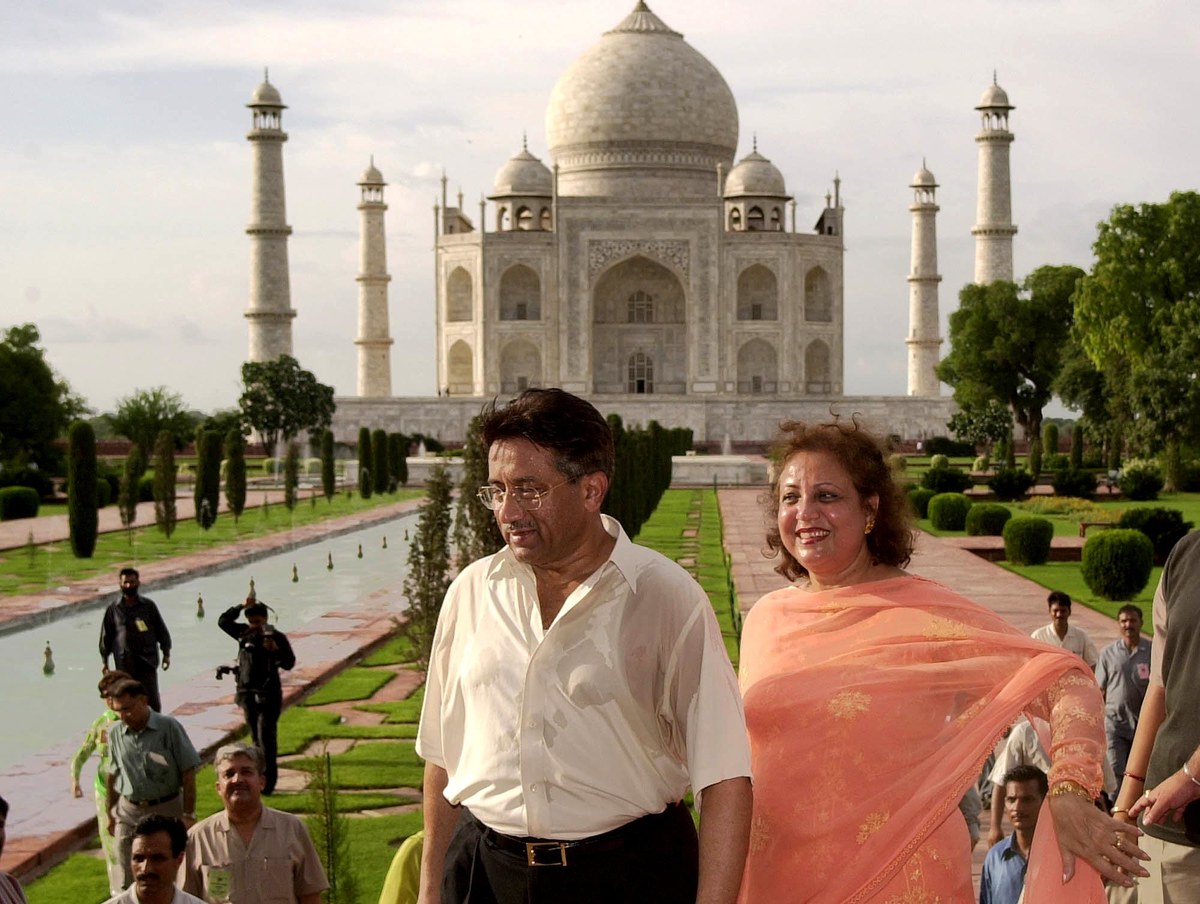
Pervez Musharraf and his wife leave the Taj Mahal in Agra on July 15, 2001, after the then Pakistani president's historic visit to India July 14-16, 2001. (AFP)
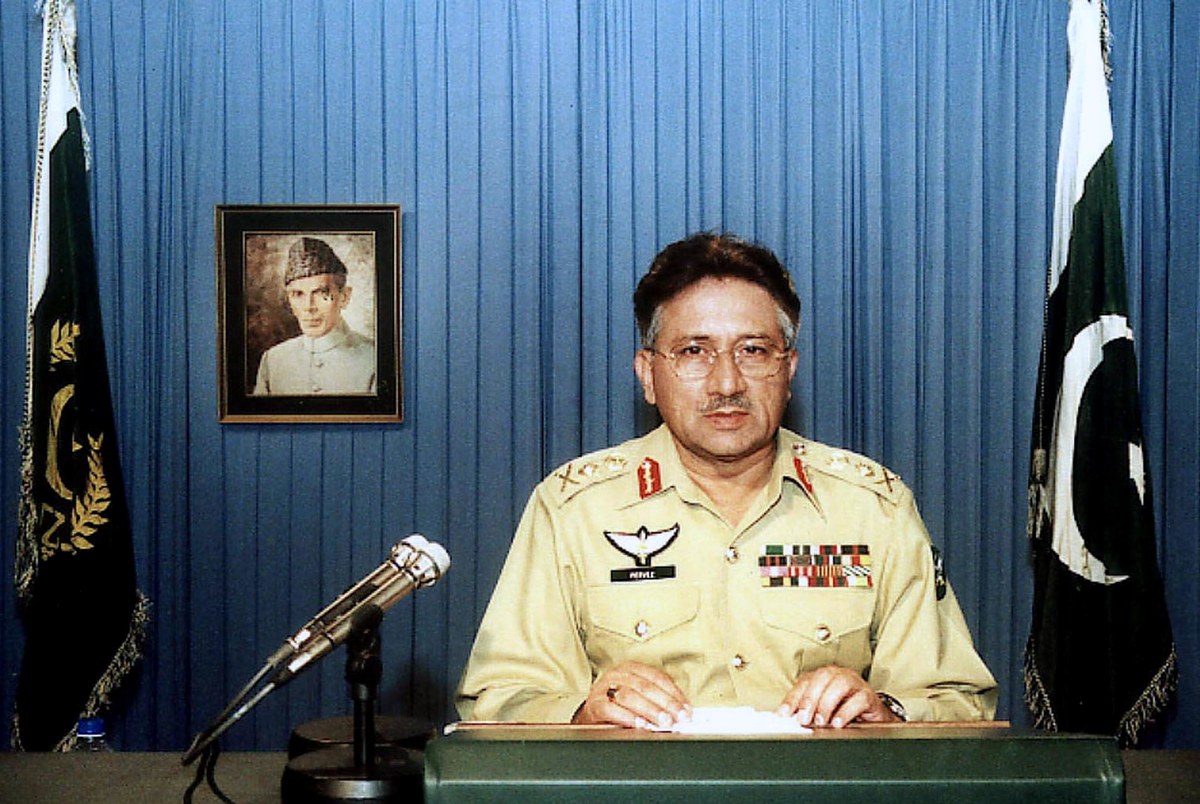
Gen. Pervez Musharraf addresses the nation in Islamabad, on Sept. 19, 2001. (AFP)
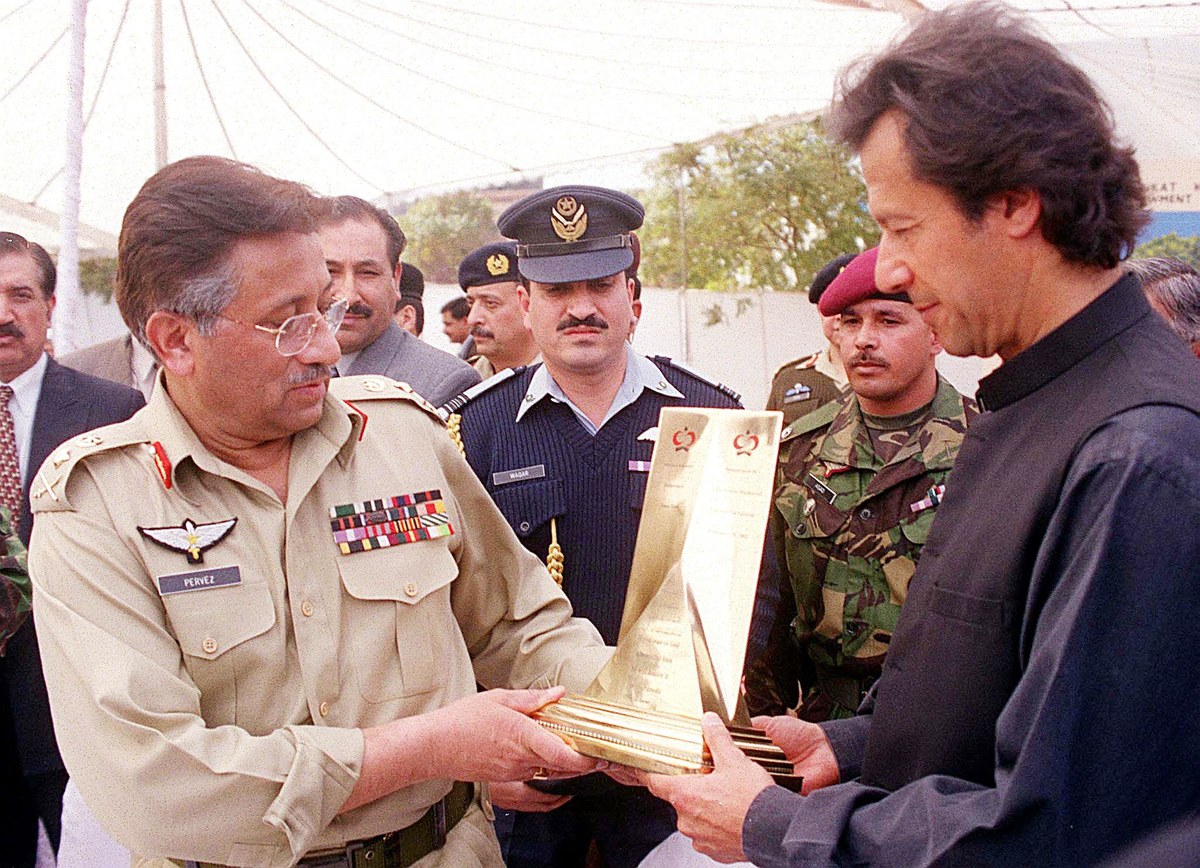
Imran Khan presents a crest of the Shaukat Khanum Memorial Cancer hospital he founded to then President Gen. Pervez Musharraf in Lahore, Feb. 19, 2002. Musharraf then announced a donation of $500,000. (AFP)
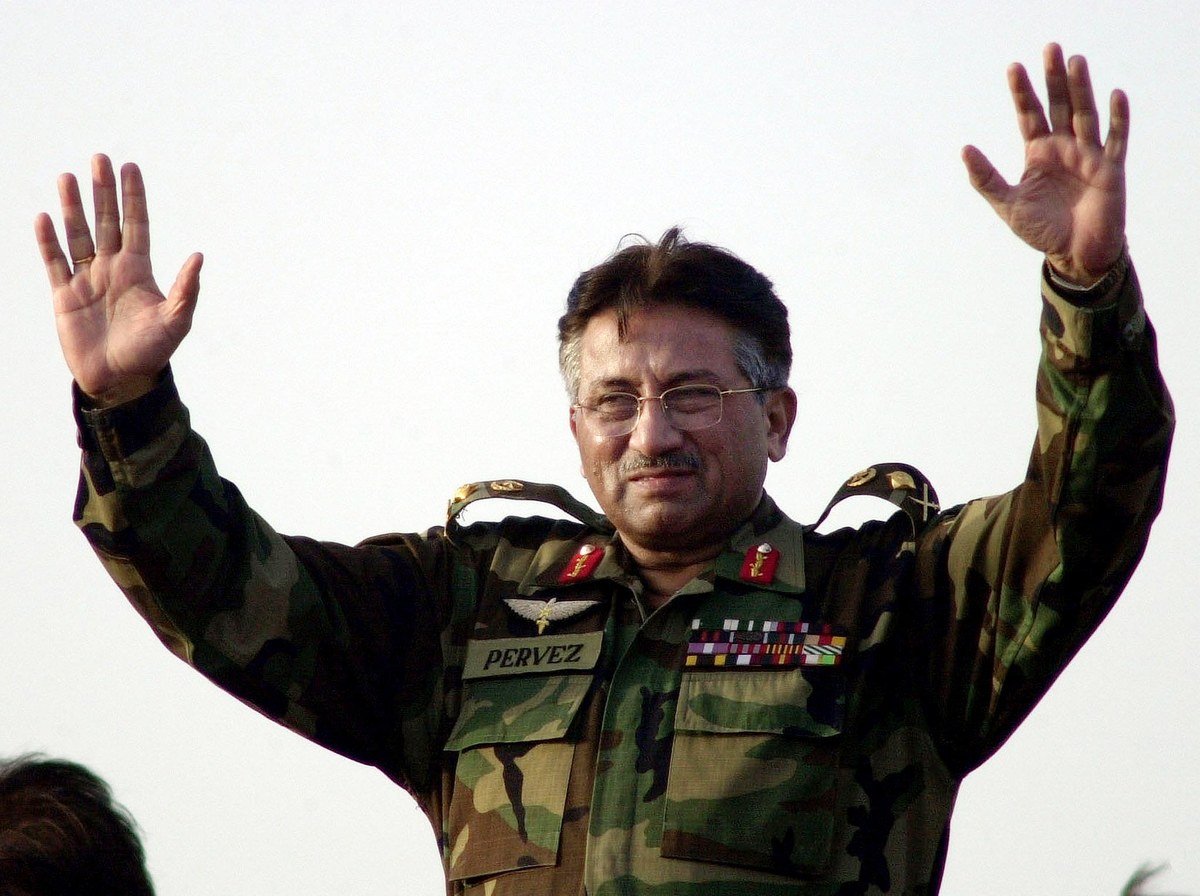
Still as president, Pervez Musharraf waves to his supporters during a mass rally in Lahore, April 9, 2002, as he launched a campaign to remain president for five years ahead of a national referendum later that month. (AFP)
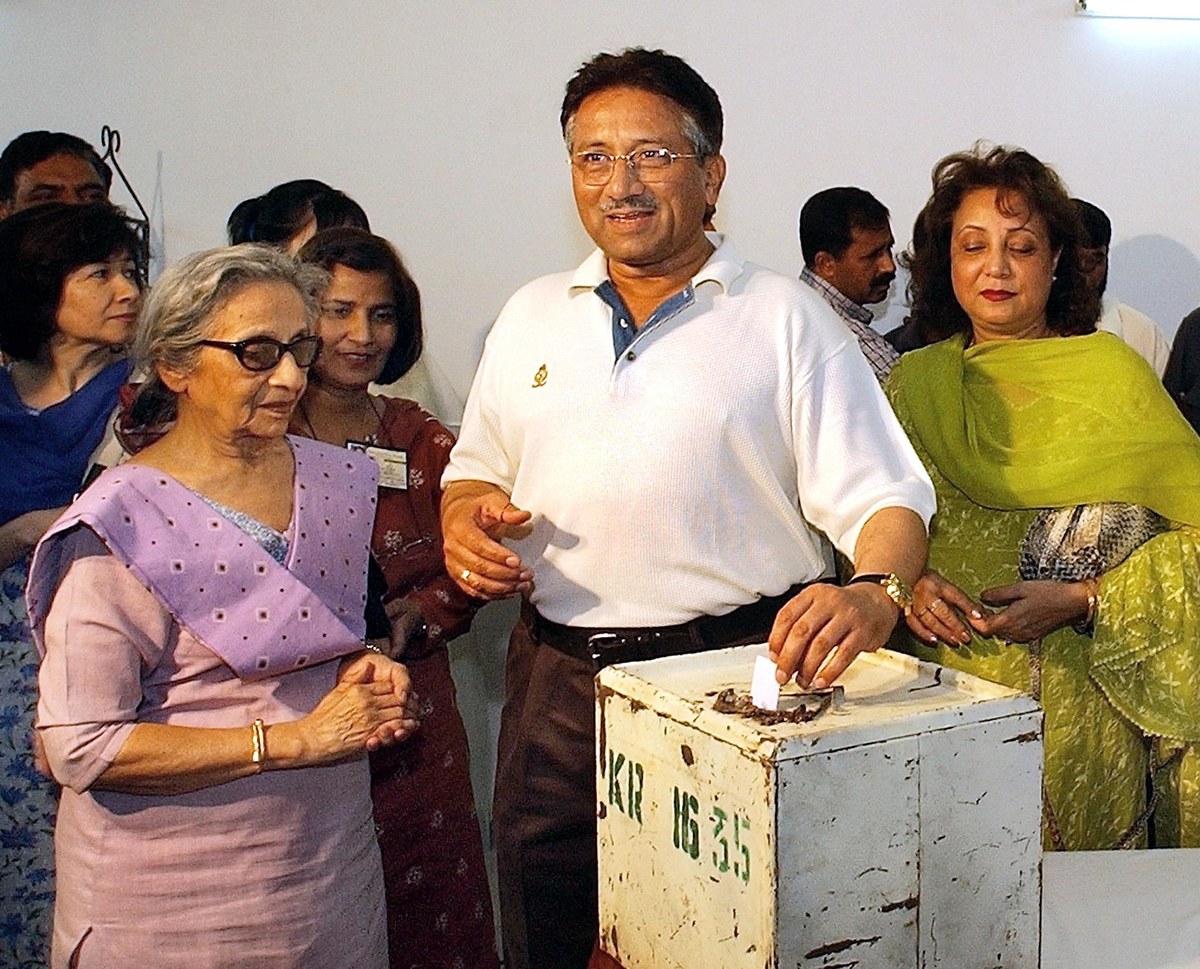
Pervez Musharraf casts his vote in the 2002 presidential referendum along with his wife Sehba Pervez and mother Zarin Musharrafuddin in Rawalpindi city, April 30, 2002. (AFP)
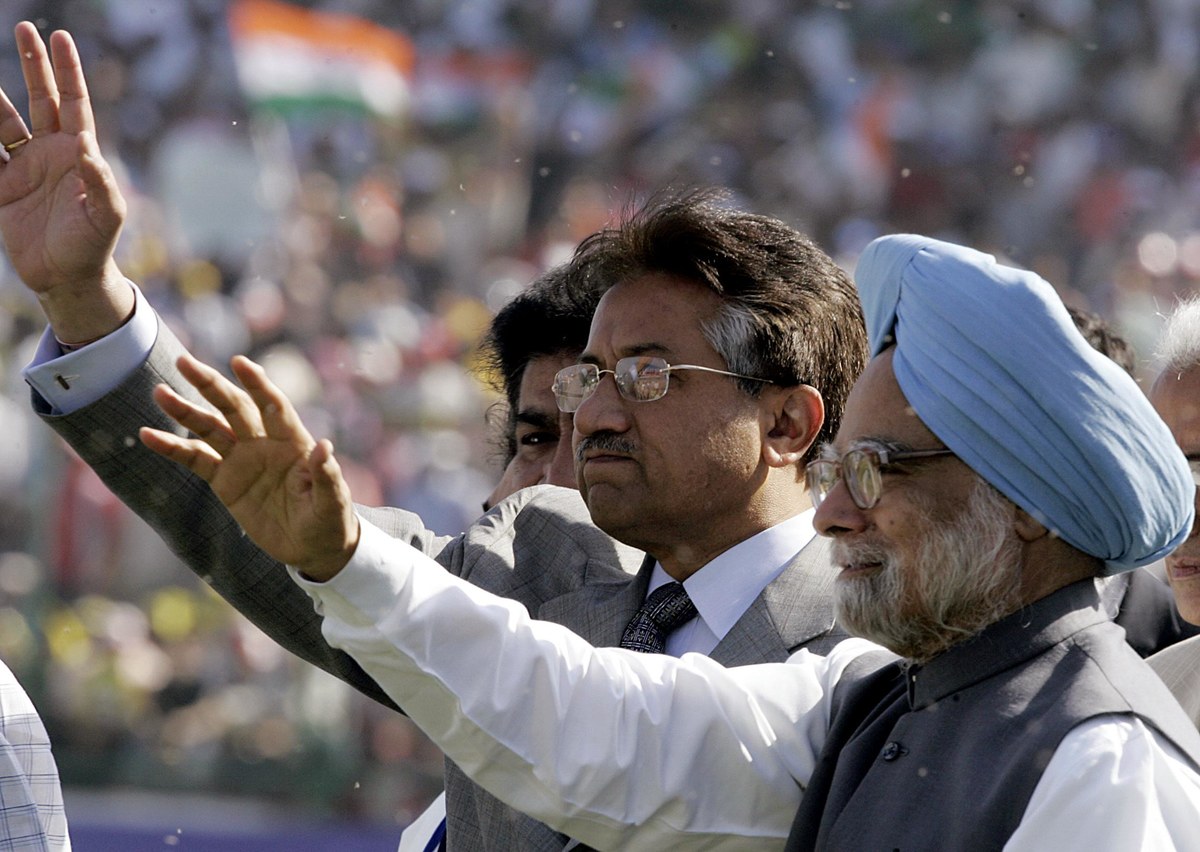
Then Pakistani President Pervez Musharraf and then Indian Prime Minister Manmohan Singh salute the crowd while arriving on the pitch for the final one day international between India and Pakistan cricket teams at Feroz Shah Kotla stadium in New Delhi, April 17, 2005. (AFP)
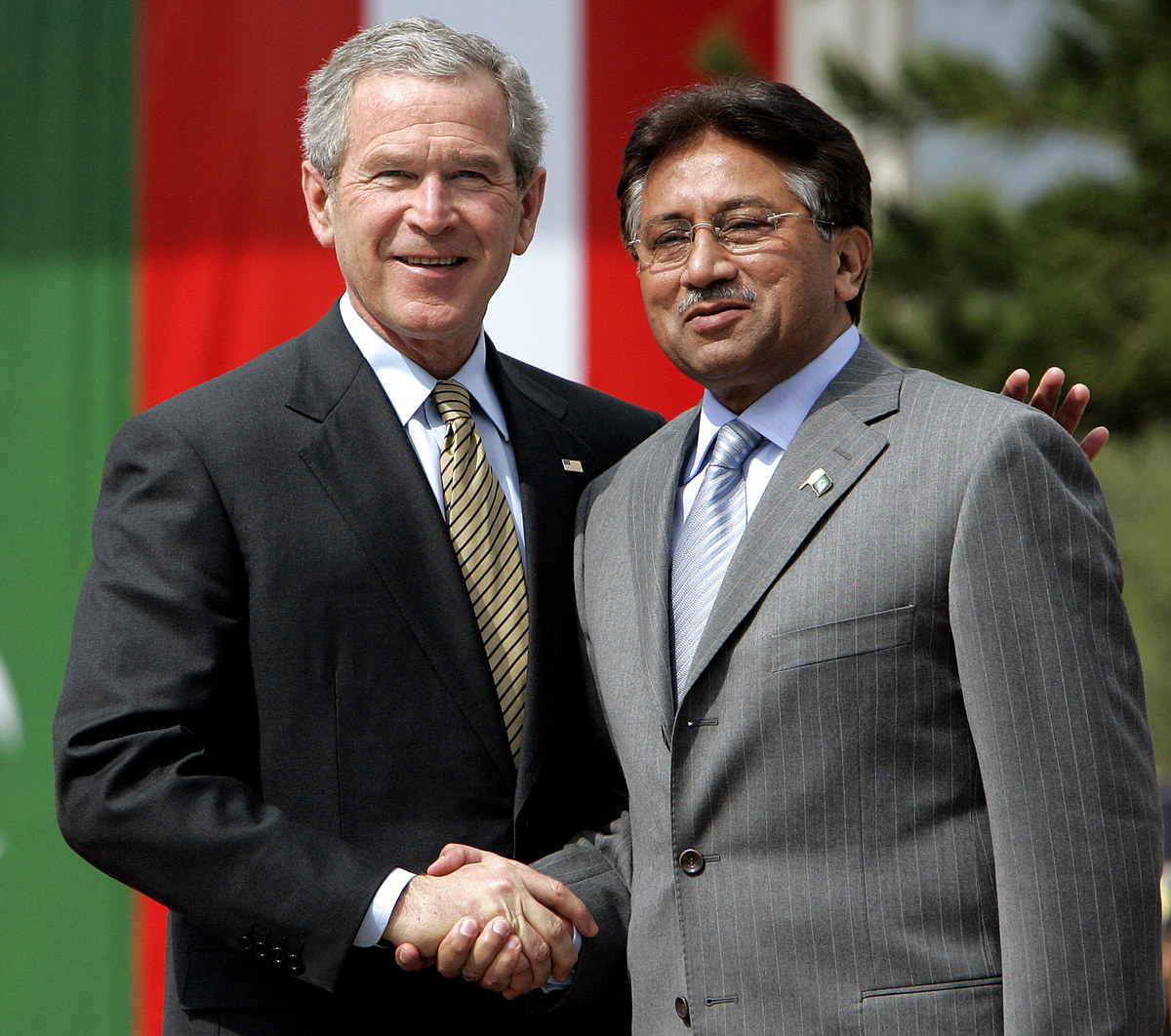
Then US President George W. Bush and then Pakistani President Pervez Musharraf shake hands after a press conference following a bilateral meeting at the Presidential Palace in Islamabad, March 4, 2006. (AFP)
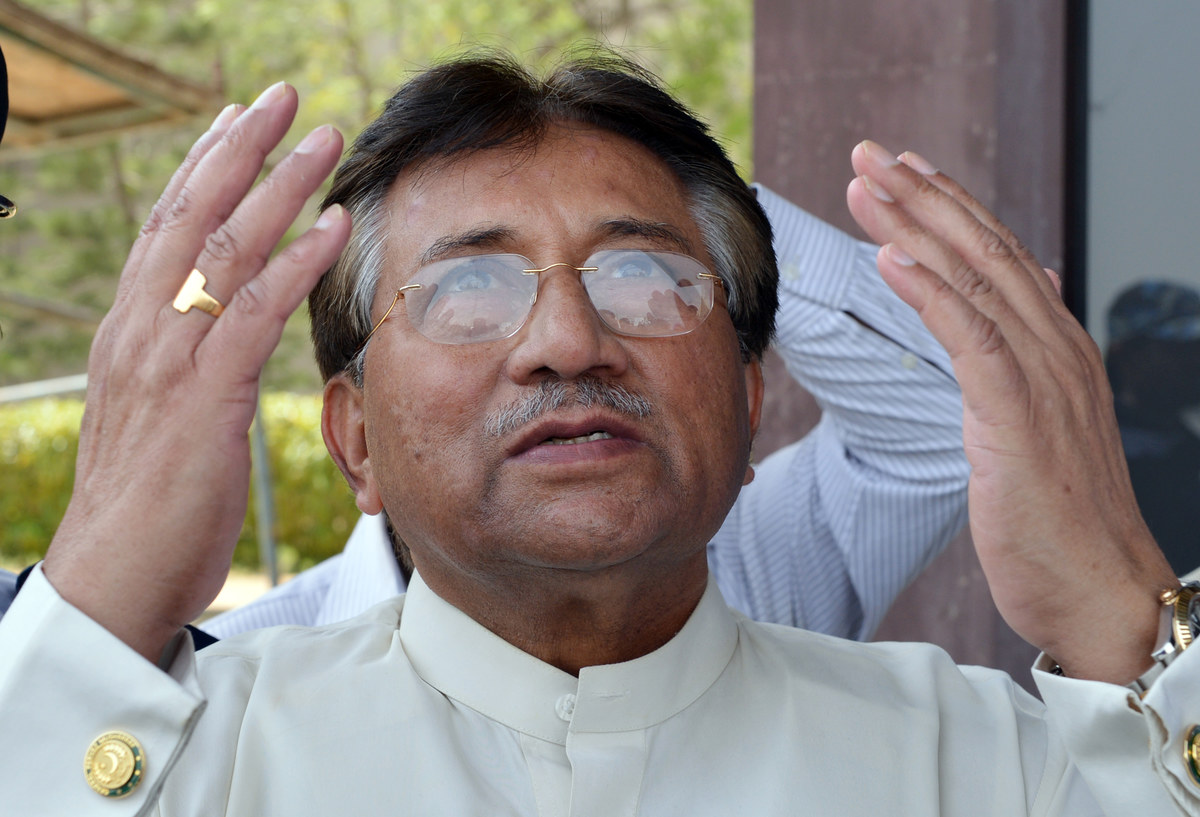
Pervez Musharraf prays after he arrived at Karachi International Airport from Dubai on March 24, 2013. The former military ruler returned home after more than four years in exile, defying a Taliban death threat to contest the 2013 general election. (AFP)
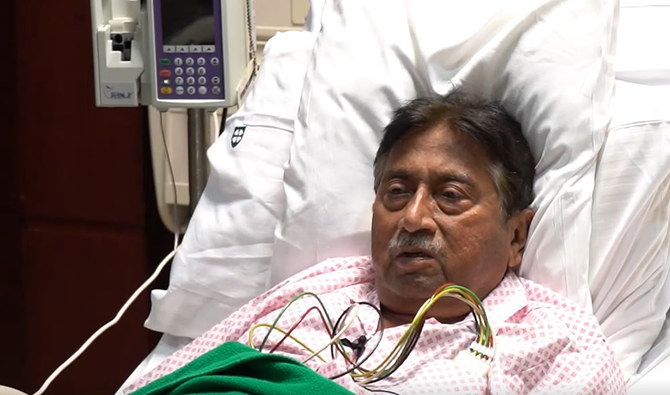
Ailing Pervez Musharraf speaks from his hospital bed in Dubai on Dec. 3, 2019. (Screengrab from Musharraf's video message)


