

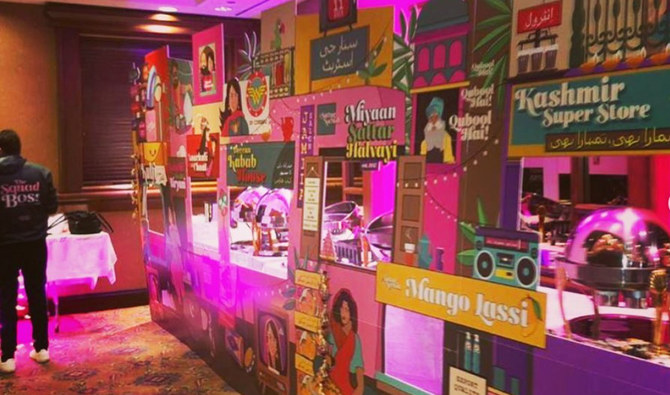

ISLAMABAD: When a bride in Lahore decided to throw a pre-wedding dholki in March, she wanted it to be like an outdoors carnival. And she had it. The decor featured tambourines with illustrations depicting the couple, customized boards for playing ludo, party poppers, dhols and street-food imagery. Her vision was brought to life by The Social Squad, a young company which has already gained international renown for organizing showy and bold events.
Two years ago, entrepreneur Fahd Nassr joined forces with Ayesha Haroon, a trained illustrator responsible for the signature graphics the duo have become known for, and created The Social Squad.
The company is “about communicative decor with social experiences,” Nassr told Arab News. “We wanted to create events that inspire and encourage those attending to socialize and interact with the event.”
Wedding event decor usually operates on some similar themes depending on the time of year. The Social Squad aims to focus more on newly weds, on what they are passionate about.
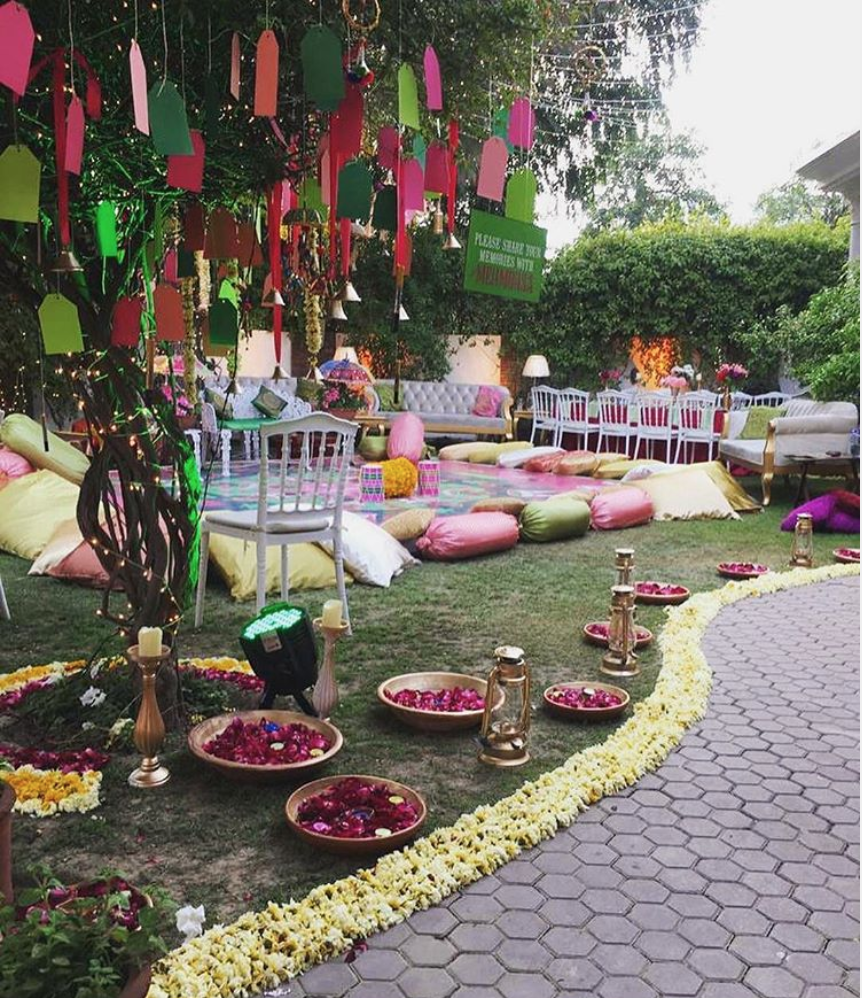
A grand dholki by The Social Squad incorporates traditional cultural touches and modern imagery, April 1, 2019. (Photo courtesy: The Social Squad)
“This is what differs us from the existing wedding decor landscape, because a lot of planners are doing a lot of good work, no doubt on that, but I think they are very limited. No one is dabbling in personalization or really getting into the story of the people they are working with,” Nassr said, as he explained how the personal feel can be achieved.
“We ask why is this event taking place? I’m not just talking about weddings, even if you talk about an XYZ corporate event, we will not just produce something around them as we see it, we will go into the story of what it is we are trying to convey.”
The Social Squad also aims at fusing traditional South Asian themes with the modern. “It’s how we also tie in the social aspect of our vision by making these recognizable favorites social media friendly,” Nassr said.
It takes between two and six months to produce their client’s vision, depending on the event’s requirements.
“It is a conversation-based operation, and we personally get quite involved. Our team takes care of the execution, but with the clients. It is intimate – me, Ayesha and them. We hear the whole story out what they do, how they are, their memories, we look at their pictures. From their we build our combined story.”
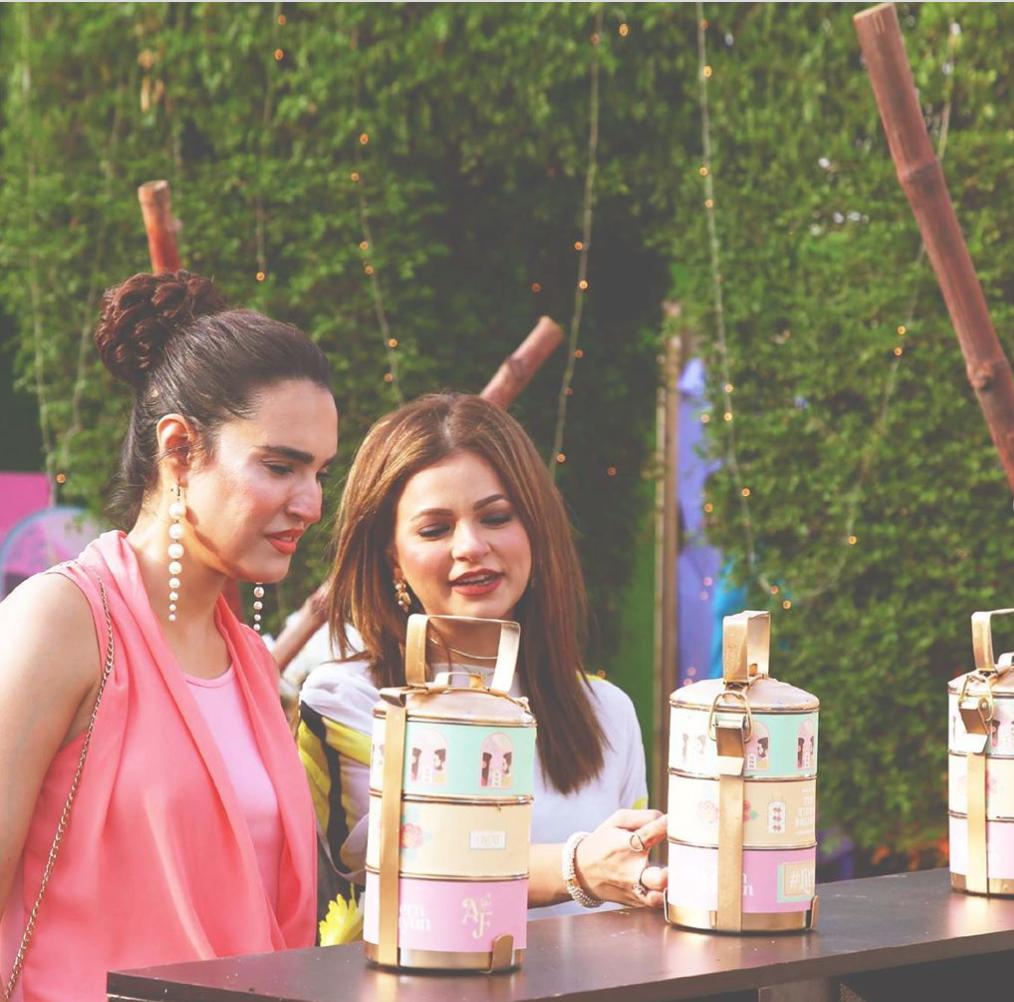
Guests take their whimsical tiffin boxes at the wedding of Fahd Nassr and Ayesha Haroon on Nov. 21, 2019. (Photo courtesy: The Social Squad)
Nassr and Haroon, who themselves tied the knot in November, dubbed their own event #TheSquadWedding and managed to make everyone happy – themselves, their families and guests. But lots of hard work was behind it.
“It was also a great way to showcase to others what we could do. And when we saw the venue, when we entered as bride and groom, it was a totally different experience. It was not like a fairy tale,” Nassr said laughing. “It was a fun but ultimately difficult task. But this is what we do, so we tackled it head on.”
The Social Squad is based in Karachi, but has thrown events across Pakistan, the US, and plans to grow further. Their new business is launching soon to make eye-catching, highly Instagrammable event props available for purchase.


