

ISLAMABAD: Pakistan government's move to seek access to the actionable bank account information of its taxpayers in the UAE might have hit a snag, international law experts said on Tuesday.
Pakistan believes its nationals are allegedly hiding behind UAE residence permits (iqama) to conceal their wealth and other tax-related information.
On Monday, the government expressed its regrets over non-cooperation from the UAE with regard to the assets obtained by its citizens in the Emirates with ill-gotten money.
However, experts argue that authorities cannot force the UAE to share information on the movable and immovable assets purchased by Pakistani nationals who hold Emirati residence permits.
“It is the sole prerogative of the UAE government to share or refuse (to share) the sought information,” barrister Omer Malik, international law expert, told Arab News. “The UAE government may violate the right to privacy of an iqama holder if it opts to share his assets and tax-related information with Pakistan.”
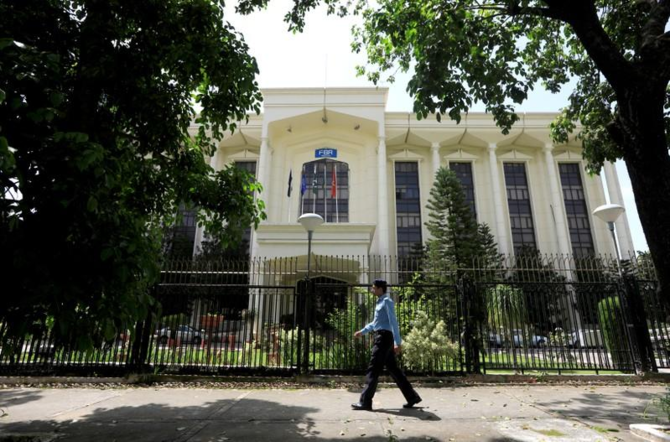
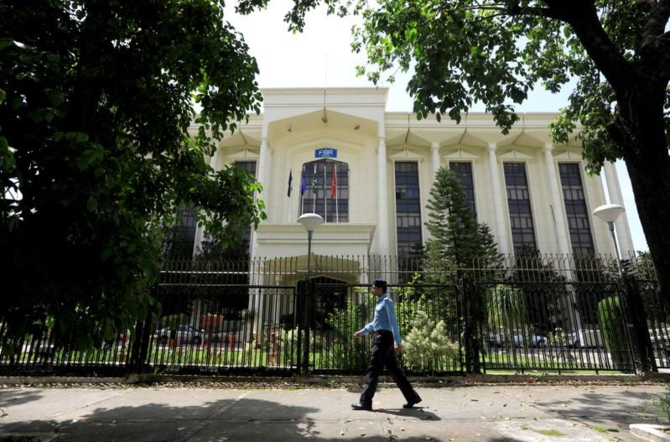
In a letter to the UAE Ministry of Finance, Pakistan's Federal Board of Revenue (FBR) had accused “delinquent tax residents” of having “siphoned off funds out of Pakistan” and “circumventing” the OECD (Organization for Economic Co-operation and Development) common reporting standard (CRS) regarding financial account information, which includes periodic exchange of taxpayer information.
The FBR asked the UAE Ministry of Finance to provide information on “all those Pakistanis” who had sought the UAE iqama under Residence by Investment (RBI) schemes
Malik suggested that Pakistani tax authorities do their homework before seeking information from the UAE.
“Our government will never be able to get any actionable information if it continues seeking details of its nationals in bulk,” he said. “Our tax officials should track a certain number of individuals, and then seek information about them.”
Pakistan became a member of the OECD in 2016.
Under the CRS mechanism, Pakistan received information of some 3,620 accounts of its nationals in the UAE in August, but said that “the number of material accounts with a substantial balance is negligible.”
Dubai real estate market data shows that Pakistanis were among the top 10 foreign investors in property in the UAE in 2018. Pakistani authorities suspect that its nationals who hold the UAE iqama have been using it to hide their illegal wealth in the Emirates.
“No country including the UAE will share any actionable information and evidence of money-laundering or tax evasion with Pakistan until bilateral agreements for the purpose are signed,” Habibullah Khan, Supreme Court advocate and expert on international tax laws, told Arab News.
He said that it would be “almost impossible” for the government to prosecute people based on information gathered from other countries. “It is a futile exercise, but our politicians do it to play with the galleries,” he said.
The FBR has requested the UAE “to provide a well-laid-out roadmap” on obtaining the information on iqama holders. However, the UAE “has not responded to all earlier written requests of FBR in this regard,” it said in a statement.


