

Pakistan’s ‘Lion King’ rears 11 big cats at Peshawar home

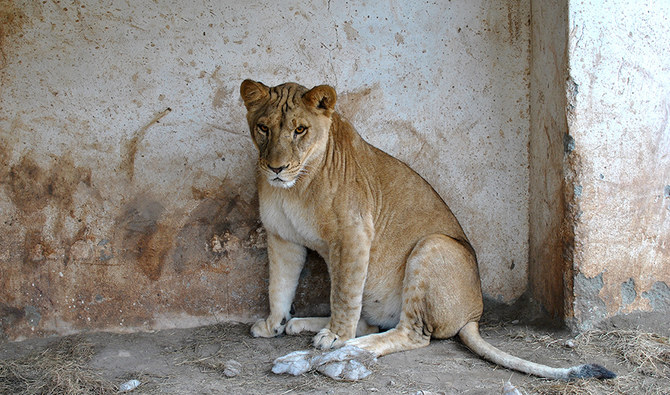
Pictured here is Gul's African lion, Maily. (AN Photo by Saba Rehman)
Short Url
Updated 10 December 2019
Follow

Pakistan’s ‘Lion King’ rears 11 big cats at Peshawar home

  • Arab Gul says there is a separate place to house each one of his cherished pets
  • They include two white lions which are a rare breed in the world

Peshawar: There’s a Mufasa and a Simba, but it’s 50-year-old Arab Gul who is the undisputed ‘lion king’ of the Muslim Town in Peshawar, capital of Pakistan’s Khyber Pakhtunkhwa province.
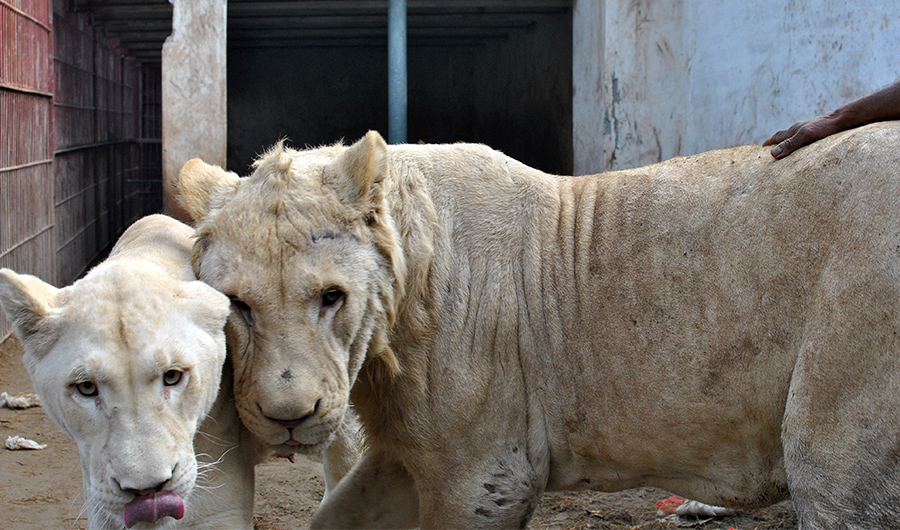


Both Mufasa and Simba are unique because they are a rare breed of white lions. Only a few are found in Lahore, Pakistan, but except for Gul, there's no one else who keeps them at home. (AN Photo by Saba Rehman)

With three lions currently in Islamabad for training, Gul has a total of 11 big cats under his care.
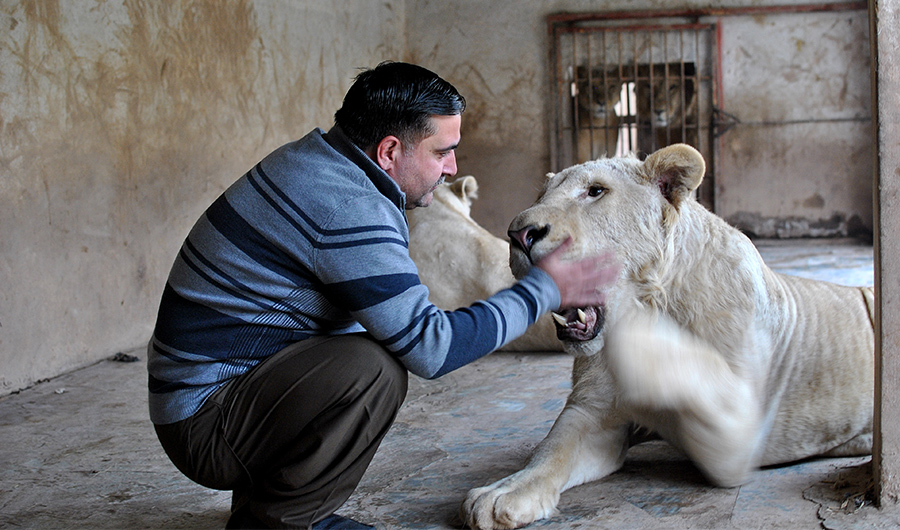


Arab Gul, who said he grew fond of lions from a very early age, is seen here interacting with his pets during a routine morning visit at his home in Peshawar on Monday. (AN Photo by Saba Rehman)

It’s a love, he says, which he’s nurtured from childhood.

“I started rearing them four years ago with two white lions who were imported from Sri Lanka. White lions are a rare breed in the world. In Pakistan, two of them – Mufasa (male) and Simba (female) – are with me. A dealer imported them from Sri Lanka. Later, I bought them from him,” he said.
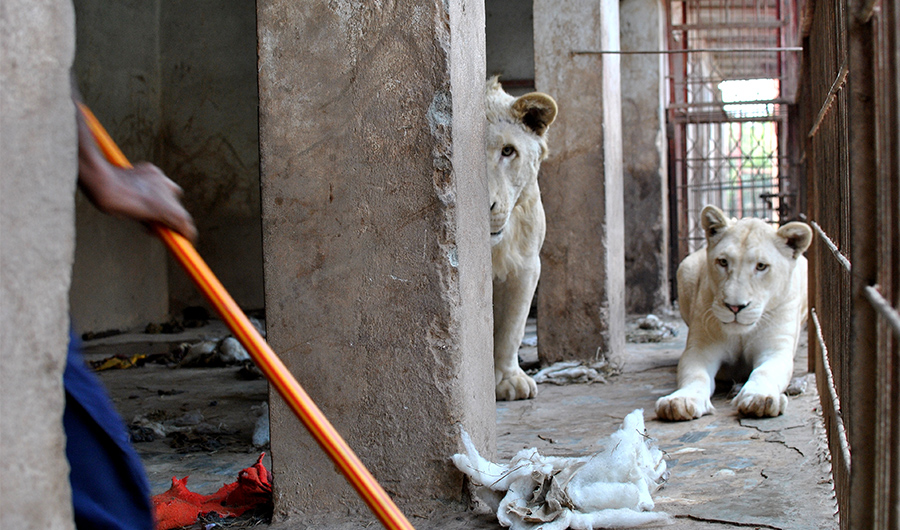


The two white lions seen here, Mufasa and Simba, were imported from Sri Lanka, and have three cubs. (AN Photo by Saba Rehman)

White lions are a rare breed in Pakistan, too, with only a few in Lahore. However, unlike Gul, no one keeps them at home.

That, however, doesn’t seem to bother residents of his locality who treat Gul like a celebrity for keeping unique pets at home.

Located along Dilazak road on the outskirts of Peshawar, his residence in Muslim Town is spread over an area of 0.375 acres and houses a separate place for each of the lions.

Feeding his “family members,” however, is no piece of cake, Gul says.
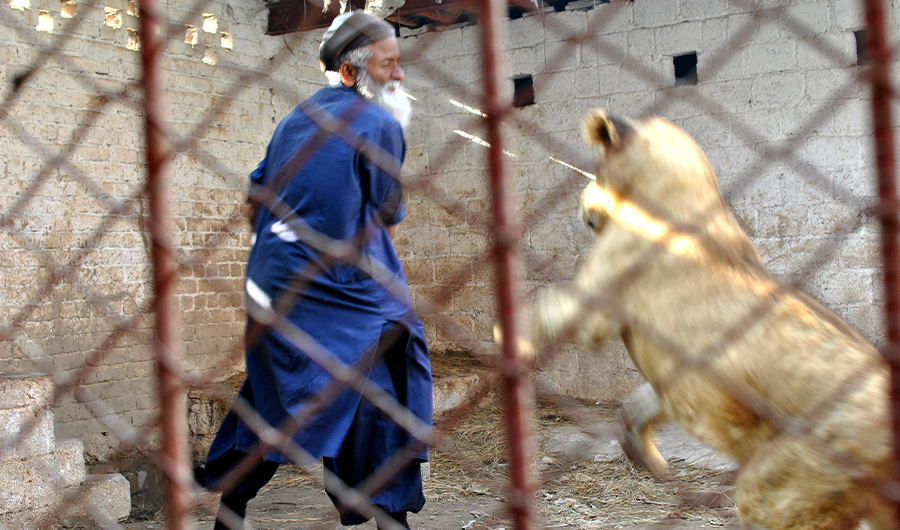


Enhaj Khan is one of the caretakers of the lions. (AN Photo by Saba Rehman)

“In one week, we give them beef for four days and chicken for two, with a one day break. Each lion consumes about six kgs of beef and 10 kgs of chicken, in addition to one liter of milk on a daily basis,” he said.

After their scheduled meals, the lions are unchained for two hours every day for a walk in the residential lawns.

EnHajj Khan, one of Gul’s employees, is responsible for the lions’ care and said he’s never been afraid of taking care of the “king of the jungle.”
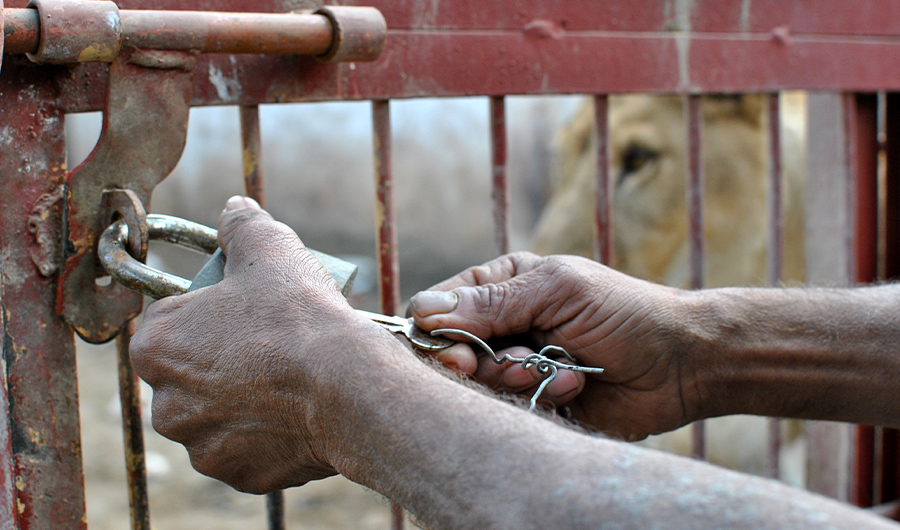


At Arab Gul’s home in Peshawar, there is a separate place for every lion which is secured from outside. (AN Photo by Saba Rehman)

“I am working here from the past four years. I haven’t received any training but take care of them on my own,” Khan, 60, said, adding that’s it wonderful to see people visiting the house to see the lions for free.

Gul says he’s unperturbed by the flow of visitors who usually visit at noon.

“CCTV cameras ensure the animals’ security and I keep watch on my phones,” he said.


US, Pakistan launch joint counterterrorism exercise to boost interoperability, share expertise

Updated 5 sec ago
Follow

US, Pakistan launch joint counterterrorism exercise to boost interoperability, share expertise

  • Pakistan, US have maintained multifaceted relations for decades, encompassing security, economic engagement and people-to-people ties
  • Both sides have sought to stabilize ties by focusing on areas of mutual interest such as regional stability, trade and counterterrorism

ISLAMABAD: Pakistan and the United States (US) launched the 13th edition of their bilateral joint counterterrorism exercise, Inspired Gambit 2026, to boost interoperability and share counterterrorism expertise, the Pakistani military said on Saturday.

The two-week-long exercise involves contingents from Pakistani and US armies. Officials from both sides attended the opening ceremony at the National Counter Terrorism Centre in Pabbi in northwest Pakistan, according to the Inter-Services Public Relations (ISPR), the Pakistani military's media wing.

It is aimed at enhancing mutual understanding and interoperability through the sharing of counter-terrorism experiences, while further refining tactics, techniques, and procedures essential for effective CT operations.

"Emphasis is being laid on marksmanship skills during urban warfare, as well as on understanding each other’s operational doctrines and best practices," the ISPR said in a statement.

"Such joint training exercises are of vital importance in addressing evolving security challenges, improving professional military standards, and strengthening the capacity of both forces to operate in complex counter-terrorism environments."

Pakistan and the US have maintained multifaceted relations for decades, encompassing security cooperation, economic engagement and people-to-people ties. While the partnership has experienced periods of strain, particularly over regional security dynamics in South Asia and Afghanistan, both sides have continued to engage through institutional mechanisms, including military-to-military contacts, counterterrorism cooperation and high-level diplomatic dialogues.

In recent years, Islamabad and Washington have sought to stabilize ties by focusing on areas of mutual interest such as regional stability, trade, counterterrorism and climate resilience. Defense collaboration, including joint exercises and training programs, remains a key component of their relationship.

"Inspired Gambit–2026 reflects the continued commitment of Pakistan and the United States towards collaborative efforts for peace and stability," the ISPR added.