

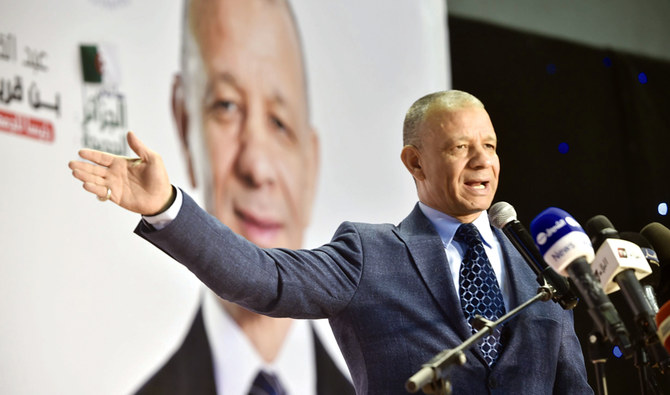

ALGIERS: Algeria’s first-ever presidential debate seems to have failed to persuade the country’s pro-democracy protesters to take part in next week’s election.
The five candidates recited their platforms instead of sparring over ideas in the Friday night debate — and they did not even look at each other.
Members of Algeria’s 10-month-old protest movement shrugged off the exercise as a farce. They pushed out long-serving President Abdelaziz Bouteflika earlier this year, and now want a whole new political system. They oppose the election altogether because it is organized by Algeria’s power structure, and they see the candidates as part of a corrupt and out-of-touch elite.
Students plan new protests Tuesday ahead of the first round of the election Thursday.
In the debate, the candidates — including former Prime Ministers Ali Benflis and Abdelmadjid Tebboune — responded to the same questions posed by four journalists.
The questions concerned their political and economic plans, unemployment, Algerians who risk their lives to migrate to Europe, education, health and foreign policy.
“We saw five candidates answering like automatons ... as if it were an oral examination,” said journalism professor Djamel Mouafia.
Other commentators called it a missed opportunity for Algeria’s leadership to show they’re trying to be more transparent and democratic.
Criticism exploded on social media, notably from protesters.
“Before promising to defend freedoms, the candidates should have first denounced the mass arrest of protesters of the people’s movement,” activist Hirak Abdelmadjid Benkaci wrote on his Facebook page.
The candidates had kind words for the peaceful movement, without directly addressing its demands for wholesale change.
Benflis said he chose to seek the presidency “knowing that all conditions are not met.”
“But if I am elected, my top priority would be to engage in a dialogue with the opponents of the presidential election. They have the right to have a point of view contrary to mine, but we must come together to reflect on political reforms,” according to the former prime minister.


