


ISLAMABAD: While elsewhere December is a holiday season, in Pakistan it is a time when couples are tying the knot. Arab News asked some of Pakistan’s top fashion designers to share their most memorable bridal designs. Take a look what Sania Maskatiya, Hussain Rehar, Mahgul Rashid and Kamiar Rokni have picked from their collections.
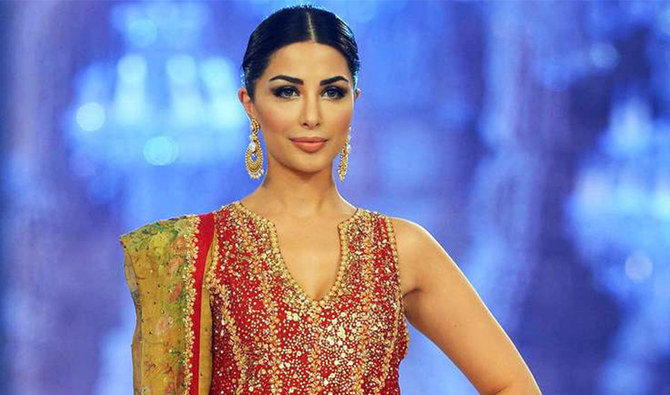
Sania Maskatiya chose a dress in her signature hues. “The color palette is quintessential Sania Maskatiya,” she said, “a subtle touch of maroon oak that sets off the rose and gold.”
“This bridal dress is a classic example of creating the perfect mix between contemporary reduction and traditional fantasy,” Maskatiya said, adding that the rich-colored jamawar lehenga “gives the outfit depth with varying textures.”

Sania Maskatiya's bridal piece unites the contemporary and the traditional. (Photo courtesy: Sania Maskatiya)
Hussain Rehar’s design philosophy is based on moments that conjoin the past with the present. “My work revolves around the embodiment, the fusion of contemporary ingenuity and traditional craftsmanship,” he said, picking for Arab News an item from his latest bridal collection, Fatehpur.
“My recent bridal collection, Fatehpur, holds a special place in my heart as it reflects my life’s journey and how I have evolved both as a person and as a designer. It is based on my ancestral village that lies in the very heart of Punjab,” Rehar explained, while highlighting the Punjabi folklore motifs that adorn the gown.
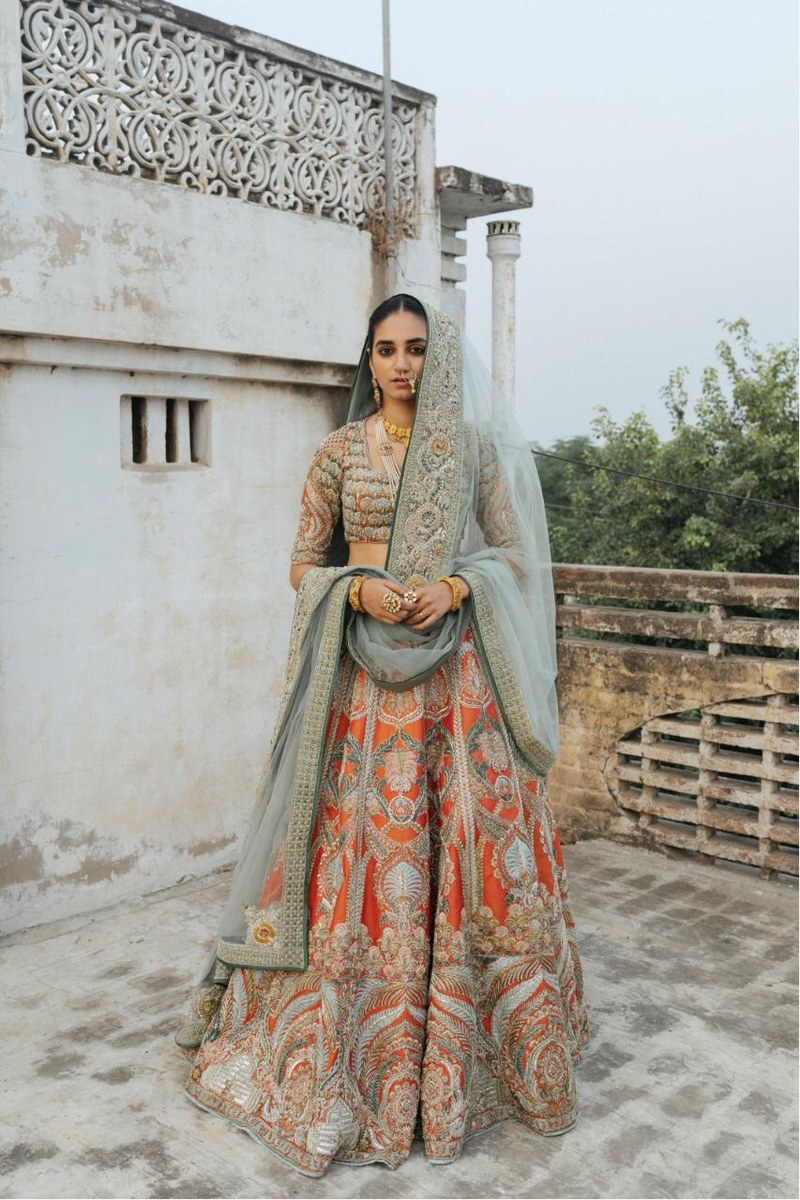
Hussain Rehar's favorite bridal gown is adorned with Punjabi folklore motifs. (Photo courtesy: Hussain Rehar)
The orange bridal set is to him “an escape into a world where time is linked with colors and imagination.”
Mahgul Rashid, the designer behind the brand Mahgul, chose a dress that has a special meaning to her, as it was designed for very close to her heart.
“The emotions involved in making something for someone who you’ve known your whole life is a unique driving force in terms of creativity,” Rashid said, and while she believes all bridal pieces are made with love, “this particular one was more than just that, I had to make sure I do justice to a relationship through making a piece and making it memorable.”
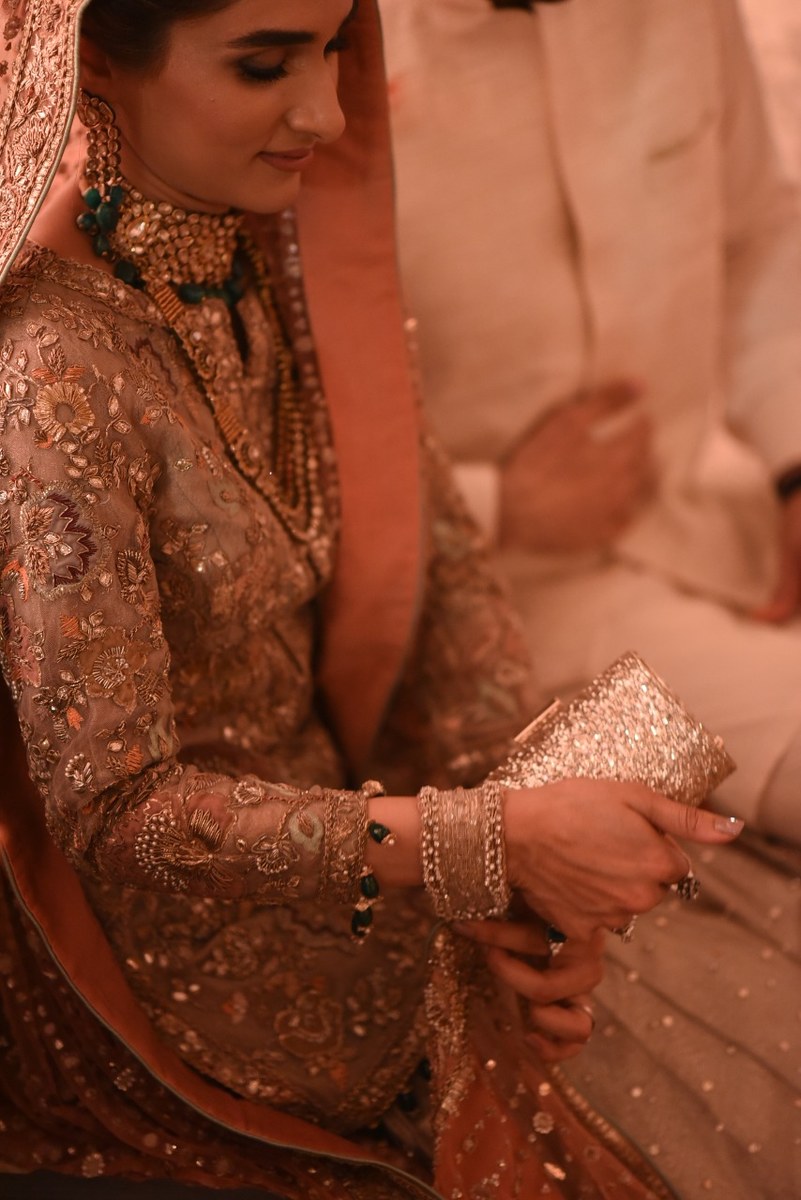
Mahgul Rashid's special bridal design for a dear friend. (Photo courtesy: Mahgul Rashid)
Kamiar Rokni shared a design that was inspired by a beautiful hall in the Golistan palace complex in Tehran. From the color palette to the embellishment and motifs, the gown is part of the designer’s exploration of his own roots and family history.
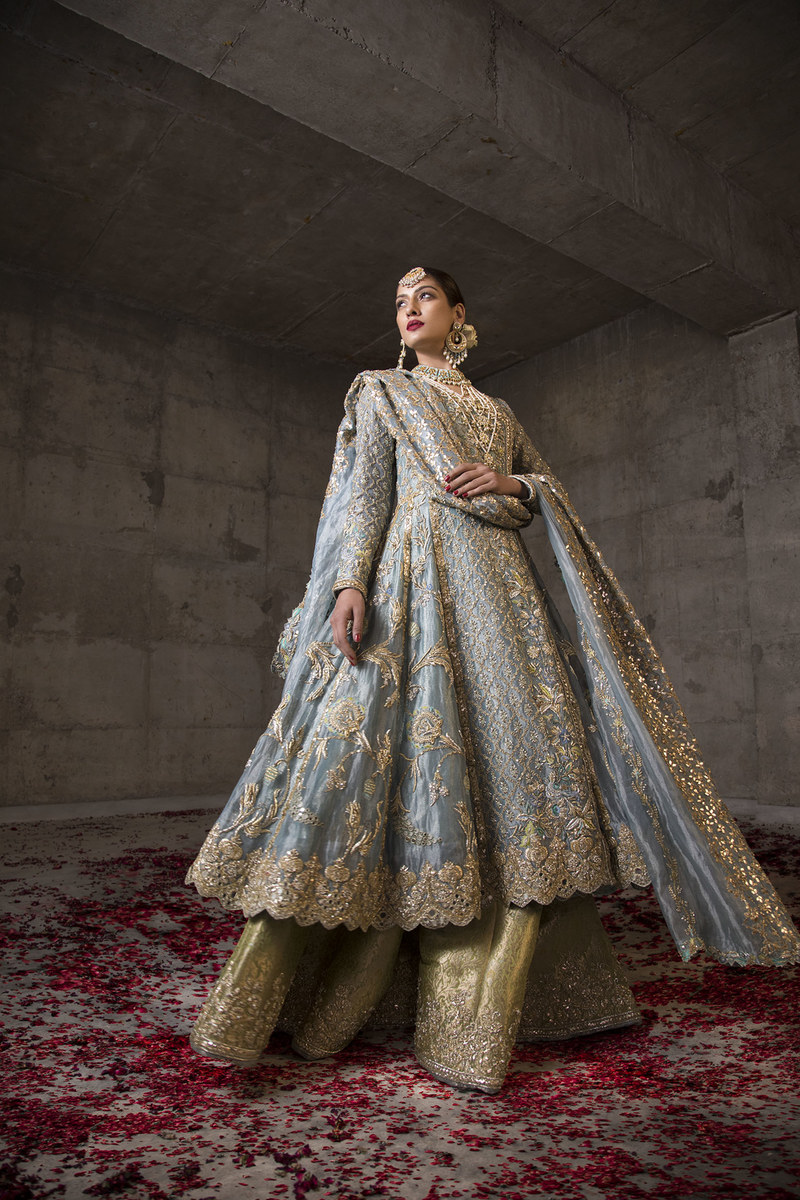
Kamiar Rokni's gown was inspired by the Golistan palace complex in Tehran, Iran. (Photo courtesy: Kamiar Rokni)
“I have recently been exploring my Persian heritage and this piece embodies that journey,” he said.


