MOSCOW: Russian state nuclear company Rosatom has suspended work on revamping a factory at Iran's Fordow nuclear complex due to an issue with uranium compatibility, Rosatom's nuclear fuel cycle unit TVEL said on Thursday.
"Uranium enrichment and the production of stable isotopes cannot be carried out in the same room," TVEL said in a statement, adding that it was "technologically impossible" to implement the project at this time.
In November, the United States said it would cease waiving punitive sanctions related to the Fordow plant from Dec. 15 - a move Russia condemned - after Tehran resumed uranium enrichment at the underground site in contravention of a nuclear deal it signed with world powers in 2015.
European countries have tried to salvage the nonproliferation agreement, which requires Iran to restrain its enrichment program, but Tehran has increasingly distanced itself from the accord since the United States withdrew last year.
TVEL said specialists have been working on a project since 2017 to modify centrifuge cascades to produce two stable isotopes that can be used for medicinal purposes. But it said their efforts have been thwarted by traces of uranium in the air and on the equipment.
"To resume this work, we must stop and dismantle the cascades, where uranium enrichment takes place and thoroughly clean the premises and equipment," said TVEL, which specialises in uranium mining and production of nuclear fuel.
"Until these conditions are met, works on the project from the Russian side are suspended."
TVEL said the Iranian side had been informed of its decision.


![]()

Russia suspends revamp work at Iran’s Fordow nuclear plant
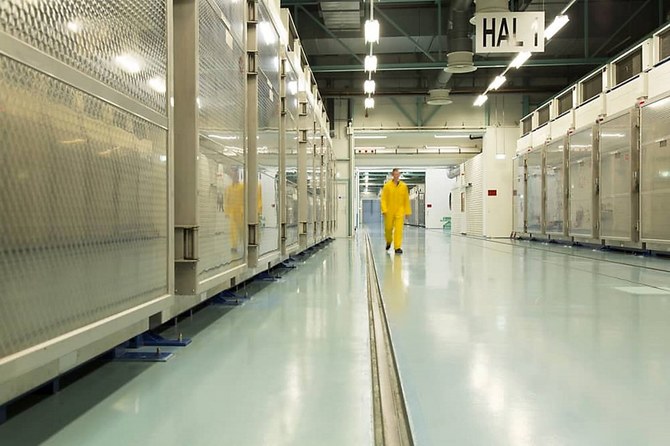
Russia suspends revamp work at Iran’s Fordow nuclear plant
- "Uranium enrichment and the production of stable isotopes cannot be carried out in the same room," TVEL said
- European countries have tried to salvage the nonproliferation agreement but Tehran has increasingly distanced itself from the accord since the US withdrew


Latest updates


© 2026 SAUDI RESEARCH & PUBLISHING COMPANY, All Rights Reserved And subject to Terms of Use Agreement.