

Arab News/YouGov study for the Arab Strategy Forum to cast light on how Arabs view religion and politics

1 / 2
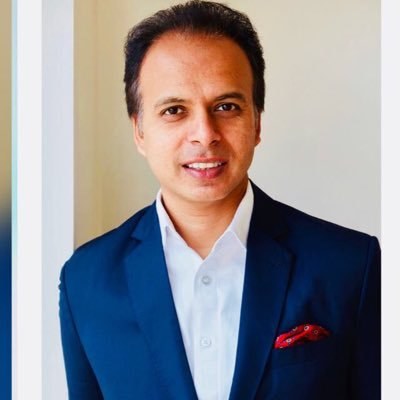
Omar Saif Ghobash is attending the Forum. (Twitter)
2 / 2
British writer Ed Hussain is also attending the event in Dubai. (Twitter)
Short Url
Updated 12 October 2020
Follow

Arab News/YouGov study for the Arab Strategy Forum to cast light on how Arabs view religion and politics

  • The Arab Strategy Forum returns for its 12th edition in Dubai on December 9 and features 18 keynote speakers
  • The report called Mosque and State: How Arabs See The Future will be launched at the Forum and shed light on areas of clear consensus among respondents

Arabs’ feelings on how religion and politics should mix in the region are to be revealed in exclusive research carried out by the Arab News in partnership with YouGov and the Arab Strategy Forum.

A landmark event, the Arab Strategy Forum returns for its 12th edition in Dubai on December 9 and features 18 keynote speakers such as former US Vice President Dick Cheney, and former Foreign Minister of the People’s Republic of China, Li Zhaoxing. The event’s theme this year is ‘Forecasting the Next Decade’.

Held under the patronage of His Highness Sheikh Mohammed bin Rashid Al Maktoum, Vice President, Prime Minister and Ruler of Dubai, at Ritz Carlton DIFC, the annual event explores the major social, political and economic factors that will shape the Arab world in the coming years.

As part of the forum, Omar Saif Ghobash, Assistant Minister for Cultural Affairs at the Ministry of Foreign Affairs and International Cooperation and British writer Ed Hussein will take part in a panel, moderated by Faisal Abbas, Editor in Chief of Arab News, to address the future of Islamism in the Next Decade.

In partnership with the Arab Strategy Forum, Arab News commissioned a survey of the views and concerns of Arabs, what they believe are top problems for their countries, what is driving conflict in the region, and what is the intersection between religion and politics in their lives.

For the study, YouGov interviewed thousands of Arabic speakers across 18 countries of the Middle East and North Africa (MENA) region. The report called Mosque and State: How Arabs See The Future will be launched at the Forum and shed light on areas of clear consensus among respondents.

The report will be discussed during the panel session, and will include how respondents feel about religion and politics, including what they see in the future for groups such as Hamas, the Muslim Brotherhood, ISIS/Daesh, Al Qaeda, the Taliban and Hezbollah.


Alexandria bids farewell to historic tram in latest urban upheaval

Updated 7 sec ago
Follow

Alexandria bids farewell to historic tram in latest urban upheaval

  • For over 160 years, the tram has cut through Alexandria’s heart, in an 11-kilometer stretch that includes many of the city’s schools and main universities

ALEXANDRIA, Egypt: Along Egypt’s Mediterranean coast, the oldest tram in Africa and the Middle East rumbles for a final few weeks before its removal — the latest urban upheaval Alexandrians say is hollowing out their city’s identity.
Government plans to replace the colorful streetcars on one of the city’s routes with a partially elevated light rail line have angered Alexandrians, for whom the 163-year-old track is “heritage, not just a means of transport,” local urban researcher Nahla Saleh told AFP.
Inaugurated in 1863, the tram is one of the world’s oldest, and among only a few to operate double-decker cars.
In the 19th and 20th centuries, it helped the city become a bustling metropolis, home to sizable European diasporas and a distinct cosmopolitan culture.
Now, Egyptians young and old have flocked for farewell rides, before the streetcars come to a halt in April.
As one locomotive screeches into the old El-Raml Station, commuters and visitors crane their necks out of giant windows at the historic neo-Venetian buildings overhead.
“We’re not against progress,” psychologist and writer on culture Mona Lamloum told AFP.
She and other Alexandrians agree the tramway needs work: inside the hand-calligraphied blue exterior, grime covers every surface. Underfoot, the rubber flooring is torn and strewn with trash.
“We just have bad experiences of everything they call ‘progress’ becoming synonymous with destruction,” Lamloum said.
In recent years, development projects in Egypt’s second city have razed historic parks and — most egregiously to locals — privatised and obstructed much of its Mediterranean coastline.

- Heart of Alexandria -

For over 160 years, the tram has cut through Alexandria’s heart, in an 11-kilometer stretch that includes many of the city’s schools and main universities.
The new project, led by Egyptian and international companies including Systra, Hyundai and Hitachi, promises to double speed and triple capacity.
Over half of it will be elevated — a major concern for Alexandrians who fear the tree-lined track will be replaced by eyesore concrete stilts.
Ahead of the first phase of suspension, the transport ministry said the new project was the “only solution to the city’s traffic problems.”
Locals like Saleh and Lamloum disagree, saying government plans are making the city more car-dependent and worsening traffic.
Already, because so many students rely on the tram, the city has staggered school and university hours to pick up the slack of the partial shutdown.
“Traffic’s getting worse, people can’t get anywhere, when we’ve already lost the inner-city train,” said Saleh, referring to another project under construction for the past two years, the new Alexandria Metro Line.
“Besides, it being slow was always an advantage,” she added, making it safe for “the most vulnerable in society: children and the elderly.”
Retired science teacher Hisham Abdelwahab, 64, has been riding the tram since he was a child.
“I don’t want it to go fast, I like watching the world go by,” he told AFP on a station bench.
“Our parents never thought twice about sending us out on the tram alone. Now I have a car, I just like leaving it parked to come ride the tram.”
When the next streetcar rolls in, the upper deck fills with a gaggle of schoolgirls, squabbling over who gets the window seat closest to the sea breeze.

- The old tram and the sea -

“This tram is our heritage,” Abdelwahab said, his sentiment shared by those several decades younger.
Engineering student Mahmoud Bassam, 24, has visited Alexandria just to ride the streetcar “since our tram in Cairo was removed,” he told AFP.
With a controversial slew of bridges and widened streets completed in 2020, Cairo’s historic Heliopolis neighborhood lost its last tram tracks, along with many of its trees.
“Now the same is happening here,” Bassam lamented.
Many Alexandrians are feeling the loss, intermingled with their other most treasured heritage.
“It’s like the sea. We used to go for long scenic drives on the corniche, but now we’re losing both the sea and the tram,” Abdelwahab said.
Parallel to the tramway, much of Alexandria’s iconic corniche is now hidden behind overpasses, private businesses and beachside food courts.
By 2024, over half of the city’s Mediterranean coastline had disappeared from view, according to a study by the Human and the City for Social Research center.
Four-lane highways now dominate long stretches of the seaside, where the landmark sight of fishermen perched over the waves grows ever-rarer.
For many, the waterfront that Lebanese singer Fairouz immortalized in 1961 — crooning about “the coast of Alexandria, coast of love” — is no more.
“Now all you see is concrete,” said Lamloum.
Saleh calls it “short-sighted” that the city could lose its charm to sprawling concrete.
“Tourists used to love coming to see the tram and sit by the sea, why take away both?“