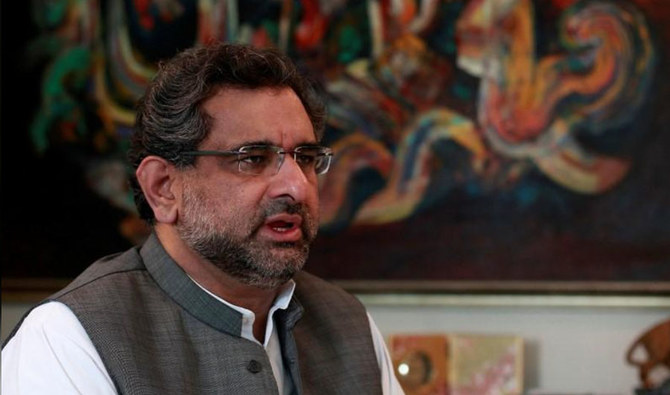

ISLAMABAD: Pakistan’s anti-graft body on Tuesday filed a reference against ten accused including former premier Shahid Khaqan Abbasi in a case involving a multibillion-rupee liquefied natural gas (LNG) import contract to Qatar.
The National Accountability Bureau (NAB) has submitted the reference in an accountability court in Islamabad. The other accused in the case include former finance minister Miftah Ismail and former Pakistan State Oil (PSO) managing-director, Sheikh Imranul Haq.
Abbasi and others are accused of illegally awarding the LNG contract to a private company on exorbitant rates. The company has received benefits of more than Rs21 billion between March 2015 and September of this year, according to the reference.
The reference says the national exchequer will suffer a loss of Rs47 billion by 2029 for the contract.
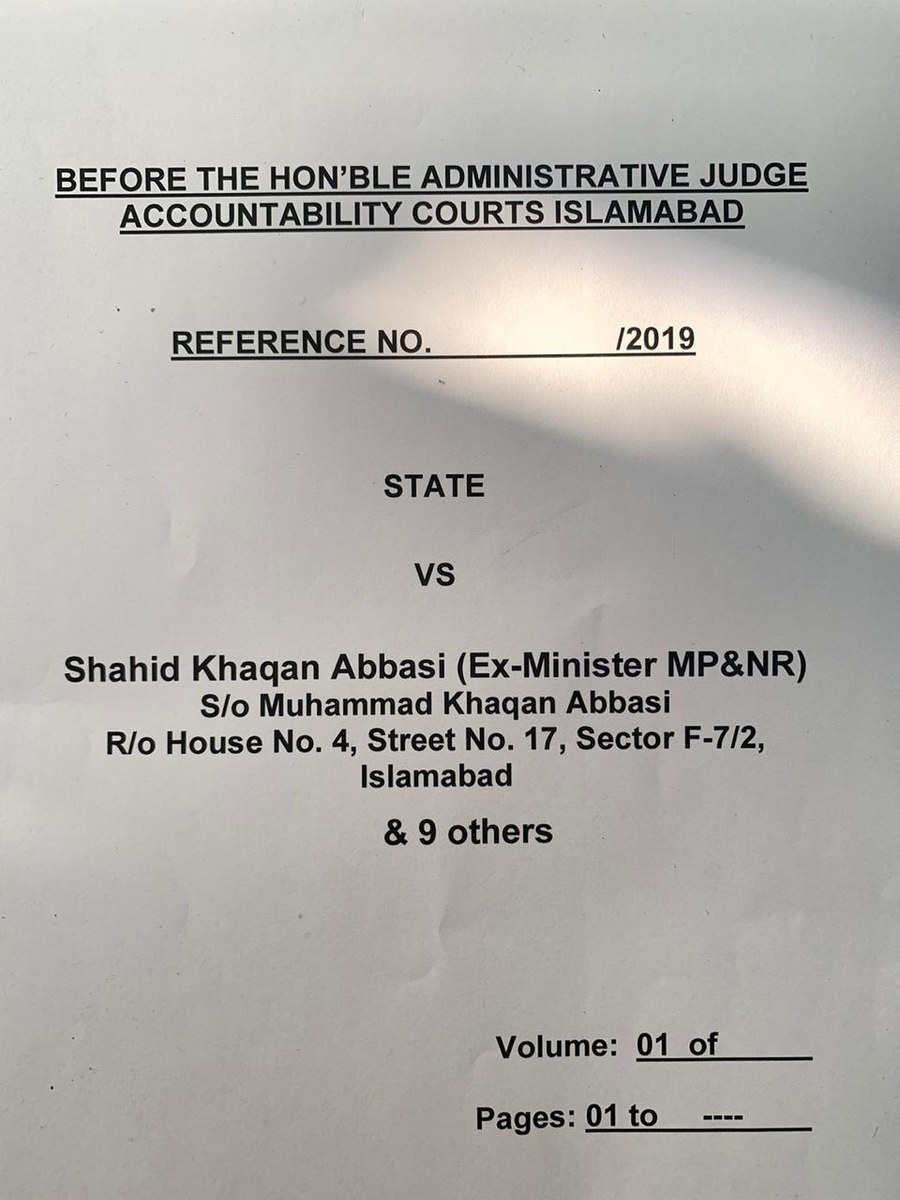
A reference submitted by the National Accountability Bureau (NAB) on Dec. 3 against 10 people allegedly involved in graft surrounding a multi-billion LNG contract with Qatar.
Pakistan is currently receiving a supply of 500 million cubic feet per day of LNG from Qatar under a 15-year agreement at 13.37 percent of Brent crude price. It is a government-to-government $16 billion agreement and the price can only be reviewed after 10 years of the contract. The deal with Qatar was finalized in 2015 for a period of 15 years.
Last year, the NAB ordered an inquiry into Abbasi, the opposition Pakistan Muslim League-Nawaz (PML-N) vice president, over the alleged misappropriation of funds in the import of LNG that the bureau says caused a huge loss to the national exchequer. He is also being investigated for allegedly granting a 15-year contract for an LNG terminal to a “favored” company. Abbasi rejects the allegations.

A reference submitted by the National Accountability Bureau (NAB) on Dec. 3 against 10 people allegedly involved in graft surrounding a multi-billion LNG contract with Qatar.
Both main accused persons – Abbasi and Ismail – have been in judicial custody for over four months in the case. The PSO managing-director obtained bail last Tuesday from the Islamabad High Court. Ismail was as an adviser to former Prime Minister Nawaz Sharif in 2017 and was later appointed a federal minister for finance for a month. He is considered to be a close aide of Shahid Khaqan Abbasi.
Abbasi has served as a federal minister for petroleum in the cabinet of ex-premier Sharif when he finalized an LNG import deal with Qatar. Abbasi then served for less than a year as prime minister following the resignation of Sharif in 2017.

A reference submitted by the National Accountability Bureau (NAB) on Dec. 3 against 10 people allegedly involved in graft surrounding a multi-billion LNG contract with Qatar.
Pakistan, a country of 208 million people, is running out of domestic gas and has turned to LNG imports to alleviate chronic energy shortages that have hindered its economy and led to a decade of electricity blackouts.
Imran Shafique, the former special prosecutor of NAB, said the accountability court would now deliver copies of the reference to each accused in a week or so, and then fix a date for a formal indictment of all the accused in the case to start the trial in a couple of weeks.
“The prosecution will present all documentary evidence and witnesses in the court to establish the case,” he told Arab News, “the accused will also be given a chance to prove their innocence.”
Shafique said the case would still take months to conclude as the trial of all the accused and verification of all the evidence was a lengthy process. “Even if the accused are convicted by the accountability court, they will have the opportunity to prove their innocence in superior courts,” he added.