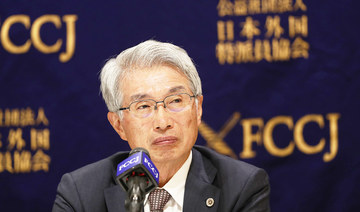
YOKOHAMA: Nissan Motor Co. chief executive Makoto Uchida said on Monday that he would work to improve the automaker’s financial performance and co-operate closely with alliance partner Renault SA, while maintaining Nissan’s independence.
Uchida became CEO of Nissan on Dec. 1, as Japan’s No. 2 car maker tries to recover from a profit slump and draw a line under a year of turmoil after the Carlos Ghosn scandal.
Nissan is betting that bringing new blood into its executive ranks will help to get the company back on track financially after years of aggressive expansion in the United States and other regions pummeled overall profitability.
The new executive team, which also includes CFO Stephen Ma and COO Ashwani Gupta, took the helm this month, a year after former chairman Ghosn was arrested on financial misconduct charges in Japan.
Known for his straight-talking manner and relentless focus on cost control, Uchida is Nissan’s third CEO since September, when Hiroto Saikawa, a protege of Ghosn, was forced to resign after he admitted to being improperly overpaid.
Uchida, 53, replaced Yasuhiro Yamauchi, a company veteran and former COO who stepped down as interim CEO at the end of November.
A big task lies ahead of him and his team. Nissan is bracing for its lowest annual profit in 11 years and has slashed its dividend by 65 percent. Its struggles come at a time when car companies desperately need scale to keep up with sweeping technological changes like electric vehicles and ride-hailing.
Earnings have been undercut, particularly in the United States, a key market, by years of heavy discounts and low-margin sales to rental firms as part of a strategy to raise market share, which has cheapened Nissan’s brand image.
Uchida must also salvage ties with Renault. Since Ghosn’s ouster as chairman of both companies, Nissan and Renault have squabbled over the selection of Nissan’s board members and executives, as well a proposed tie-up between Renault and Fiat Chrysler (FCA) earlier this year, which ultimately failed.
Renault, which holds a 43.4 percent stake in Nissan after it saved the Japanese automaker from financial ruin two decades ago, has for years been pursuing closer ties with its bigger partner, only to be rebuffed by Nissan.
Nissan is implementing a global recovery plan under which it will axe nearly one-tenth of its workforce and cut global vehicle production by 10 percent through 2023 to rein in costs which it has said ballooned when Ghosn was CEO.


New Nissan CEO pledges better performance, cooperation with Renault

New Nissan CEO pledges better performance, cooperation with Renault
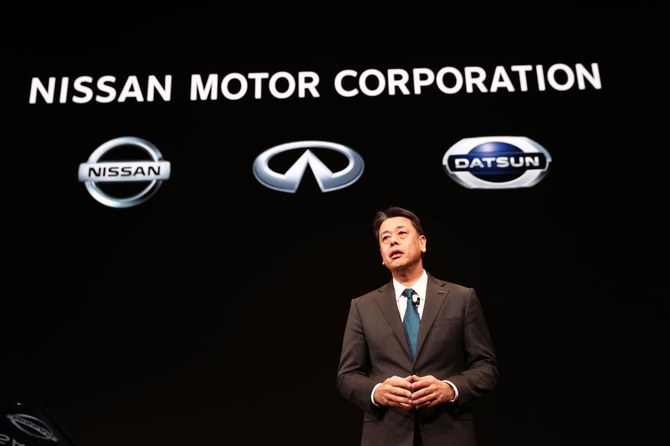
- Known for his straight-talking manner and relentless focus on cost control, Makoto Uchida is Nissan’s third CEO since September
- Nissan is bracing for its lowest annual profit in 11 years and has slashed its dividend by 65 percent

Pakistan ‘high priority' economic opportunity for us, Saudi top minister says in Islamabad
- 50-member Saudi delegation with representatives from 30 companies in Pakistan for investment conference
- 125 Pakistani companies negotiating with Saudi companies visiting Pakistan, petroleum minister says
ISLAMABAD: Pakistan is a “high-priority economic investment and business opportunity” for Saudi Arabia, the Kingdom’s Assistant Minister of Investment Ibrahim Al-Mubarak said on Monday, as a two-day Pak-Saudi investment conference kicked off in Islamabad with a focus on business-to-business engagements.
A 50-member delegation led by Al-Mubarak arrived in Pakistan on Sunday, comprising some 30 Saudi companies from the fields of IT, telecoms, energy, aviation, construction, mining exploration, agriculture and human resource development.
“To the Saudi government and Saudi companies, Pakistan is considered a high-priority economic investment and business opportunity,” Al-Mubarak said as he addressed the investment summit.
“We believe in the great potential of Pakistan's economy, demographics and talent as well as location and natural resources.”
Al-Mubarak said this was his second visit to Pakistan in two weeks and many influential leaders from globally renowned Saudi companies were part of his delegation.
“Today, we want to connect you [Pakistan] all to Saudi companies who desire to continue building their international presence, for Saudi Arabia's ambitions do not stop at our borders and we would like to see Pakistan as one of our leading international partners,” the Saudi official added.
“So, this gathering provides a wonderful opportunity for them [Saudi companies] to develop a deeper understanding of the great opportunities available for investment in Pakistan and to learn about related regulations, requirements, and incentives.”
Addressing a press conference in Islamabad, Petroleum Minister Dr Musadik Malik said 125 Pakistani companies were negotiating with the Saudi companies who were visiting Pakistan.
“First, there were government-to-government agreements during the visit of the Saudi foreign minister [last month] and now there will be business-to-business agreements,” he said.
“To facilitate the visiting Saudi companies, the Pakistani commerce ministry has affiliated one focal person with each Saudi company.”
Minister for Commerce Jam Kamal Khan said Pakistani and Saudi companies were discussing joint ventures and collaboration in diverse sectors.
“This delegation includes high officials of more than 32 Saudi companies … Saudi businessmen will invest in Pakistan in different stages,” Khan said at the press conference.
“Pakistani companies are present here, in the energy sector, in the food sector, in the construction sector, in the renewable section, in the ports and shipping section, and the IT services and general services.”
He said the visit by the Saudi delegation was “just the beginning” and now a Pakistani delegation would visit the Kingdom “to move forward towards the implementation phase.”
INVESTMENT PUSH
Pakistan and Saudi Arabia have been closely working in recent weeks to increase bilateral trade and investment deals, with Crown Prince Mohammed bin Salman last month reaffirming the Kingdom’s commitment to expedite an investment package of $5 billion.
The Saudi business delegation’s visit comes on the heels of one by Sharif to Riyadh from Apr. 27-30 to attend a special two-day meeting of the World Economic Forum.
On the sidelines of the WEF conference, the Pakistani PM met and discussed bilateral investment and economic partnerships with the crown prince and the Saudi ministers of finance, industries, investment, energy, climate, and economy and planning, the adviser of the Saudi-Pakistan Supreme Coordination Council and the presidents of the Saudi central bank and Islamic Development Bank.
This was Sharif’s second meeting with the crown prince in a month. Before that he also met him when he traveled to the Kingdom on April 6-8. The Saudi foreign minister was also in Pakistan last month, a trip during which Pakistan pitched projects worth at least $20 billion to Riyadh.
Pakistan and Saudi Arabia enjoy strong trade, defense and cultural ties. The Kingdom is home to over 2.7 million Pakistani expatriates and serves as a top source of remittances to the cash-strapped South Asian country. During the first half of the current financial year, bilateral trade between Pakistan and Saudi Arabia was recorded at $2.482 billion, with Pakistan’s exports of $262.58 million and Saudi exports of $2.219 billion.
Saudi Arabia has often come to Pakistan’s aid in the past, regularly providing it oil on deferred payments and offering direct financial support to help stabilize its economy and shore up forex reserves.
As things stand, Pakistan desperately needs to shore up its foreign reserves and is in talks with the International Monetary Fund (IMF) for a new bailout deal, for which it needs to signal that it can continue to meet requirements for foreign financing which has been a key demand in previous loan packages.
Last year Pakistan set up the Special Investment Facilitation Council, a body consisting of Pakistani civilian and military leaders and specially tasked to promote investment in Pakistan. The council is so far focusing on investments in the energy, agriculture, mining, information technology and aviation sectors and specifically targeting Gulf nations.
Saudi domestic tourism records steady growth in Q1 2024
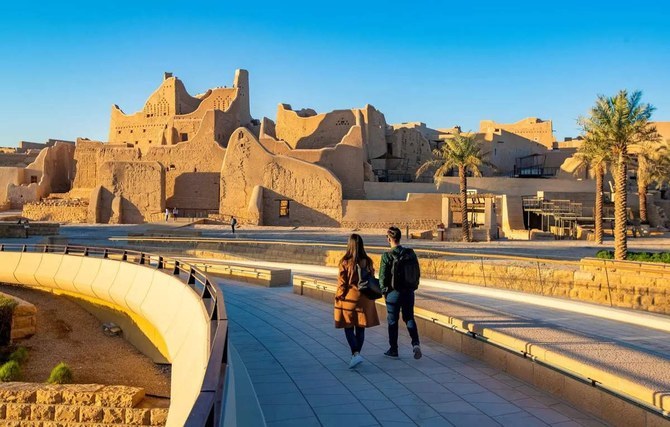
RIYADH: Domestic tourism in Saudi Arabia witnessed steady growth during the first four months of 2024, an industry report showed.
The report, based on the data extracted from Almosafer’s consumer travel platforms, showed that 53 percent of the total bookings accounted for local tourist destinations.
The top domestic destinations were Makkah, Riyadh, Jeddah, Alkhobar, and Abha while people also showed keen interest in visiting AlUla, Tabuk, and Hail.
The sustained interest in domestic tourism showcases the success of government and private sector initiatives to boost local tourism, resulting in a 29 percent increase in total domestic booking volume across Almosafer channels.
Flights saw a 27 percent increase compared to the same period last year while hotel bookings rose by nearly double at 40 percent in the same duration.
With Saudi Arabia’s tourism sector booming, travelers are keen to make the most of their breaks as they focus on in-destination experiences.
The addition of more flight routes, an increase in capacity, and the opening of new airports in the Kingdom has led to more affordable flight options on low-cost carriers, while Saudi travelers are willing to spend on luxury stays with 51 percent of hotel bookings on the platform being for 5-star properties and experiences, they are taking advantage of budget-friendly flight options.
Data showed an overall jump from 55 percent in 2023 to 62 percent among travelers opting to fly low-cost this year.
Internationally this year 46 percent of total bookings were done for low-cost carriers compared to 44 percent in 2023.
In terms of international destinations, Dubai, Doha, Manama, Cairo, and Istanbul remain the top favorites among Saudis. At the same time, there has been a significant shift of focus toward South Asia and the Far East with Tokyo, Singapore, and Bangkok increasingly seeing more footfall from Saudi travelers.
European capitals including Madrid and Amsterdam are also emerging as trending destinations for bookings made in the first four months of 2024.
It is worth noting that the Kingdom hosted 27.4 million international and 79.3 million domestic tourists in 2023, witnessing 65 percent and 2 percent growth compared with 2022, respectively.
The tourism sector has become important to the national economy, as spending on tourism by domestic and international tourists exceeded SR250 billion ($66.7 billion) in 2023. The sector is set to contribute 10 percent to the non-oil gross domestic product and create 1 million job opportunities by 2030. This spending represented more than 4 percent of the Kingdom’s GDP and 7 percent of the non-oil GDP, highlighting the significance of the tourism sector to the Kingdom’s economy.
According to a World Tourism Barometer report released in January 2024, Saudi Arabia topped UN Tourism’s ranking for the growth of international tourist arrivals in 2023 compared with 2019 among large destinations, achieving a 56 percent increase in international tourist arrivals.
Additionally, the report indicated that Saudi Arabia recorded a remarkable tourism recovery rate of 156 percent in international tourist arrivals in 2023 compared with 2019.
These notable achievements have positioned the Kingdom as a leader in the Middle East’s global tourism recovery. It was the only region to surpass pre-COVID-19 pandemic levels, with a 122 percent recovery rate in international tourist arrivals in 2023 compared with 2019.

Saudi private sector employment reaches 11.27m in April: official data
RIYADH: Saudi Arabia’s private sector has created more job opportunities, with the total number of employees reaching 11.27 million workers in April, official data showed.
According to the Saudi National Labor Observatory report, there was a net increase in citizen employment for April, with 18,535 individuals newly joining the private sector workforce.
Among these figures, there are over 2.35 million Saudi nationals, comprising more than 970,200 female workers and over 1.38 million male employees.
On the other hand, NLO data showed that the total number of residents employed in the private sector exceeded 8.91 million individuals, comprising over 8.55 million male workers and only 364,900 female employees.
The report provides an overview of the Saudi private sector, highlighting a dynamic workforce of over 9.9 million male workers and more than 1.3 million female workers, representing diverse nationalities and playing integral roles in sector operations.
In February, the total number of employees in the Saudi private sector reached 11.1 million, marking a 0.9 percent increase from the previous month, according to an NLO release.
The national observatory report revealed that out of the total, 2.3 million were Saudi nationals, while 8.8 million were residents of the Kingdom belonging to different nationalities.
That data reflected a positive trend in the employment industry as the private sector continues to expand its workforce, creating opportunities for Saudi citizens.
Moreover, an analysis of the Saudi national workforce revealed that while 961,690 employees were females, 1.4 million were males.
Meanwhile, among the 8.8 million non-Saudi workers, 348,892 were women, while 8.4 million were men.
In February alone, the net growth in jobs for Saudi nationals as well as residents stood at 26,694, indicating a steady increase in employment within the private sector.
Saudi Arabia’s economic diversification efforts have transformed the Kingdom into a hub for employment opportunities, propelled by bold giga-projects such as NEOM, which attract fresh talent into the construction sector.
NLO, a governmental organization, is tasked with monitoring and analyzing labor market trends and dynamics in the country. It serves as a crucial resource for policymakers, researchers, and stakeholders interested in understanding and addressing issues related to employment, workforce development, and labor market regulations.

Saudi Arabia’s NHC signs deal with Chinese company to boost building materials supply
RIYADH: Saudi Arabia’s building materials supply is set to get a boost with the signing of a deal between the National Housing Co. and a leading Chinese construction firm.
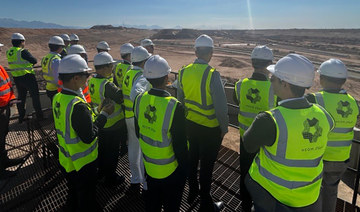
The agreement with China’s CITIC Construction Group seeks to establish an industrial city and logistic zones for building materials, comprising 12 factories, with the objective of securing supply chains for the NHC’s housing projects.
NHC CEO Mohammad Albuty finalized the deal during the official visit of Minister of Municipal and Rural Affairs and Housing Majid Al-Hogail to China.
In a statement, the NHC said the agreement with the Chinese construction group are part of its efforts to secure supply chains for its housing projects and ensure their timely completion and high quality.
The Saudi company said the deal entails the construction of 12 factories specializing in building materials, harnessing Chinese expertise, and involving local factories to uplift business standards.
It added that the deal also aims to draw top-tier service providers across various sectors of the company, its subsidiaries, and other projects.
The company pointed out that the agreement is expected to maximize the economic and developmental impact of the real estate sector in the Kingdom, develop housing projects, enhance their quality, and promote national transformation in the construction sector through these industrial cities and logistic zones.
The statement also highlighted that this collaboration will facilitate the expansion of small and medium factories in the Kingdom, establish direct production lines for the company’s projects, and foster the growth of the local industry. Additionally, it will create numerous job opportunities in the sector.
The company said the agreement strengthen the comprehensive strategic partnership between Saudi Arabia and China, established during the Chinese president’s visit to the Kingdom in December 2022.

IMF forecasts $14bn increase in Egypt’s foreign cash revenue
RIYADH: Egypt’s foreign cash revenue is projected to surge by $13.7 billion from five key sources this year, a 14.6 percent increase over last year, according to the International Monetary Fund.
This surge is largely due to investments in the Ras Al Hikma City development deal recently signed by the government with ADQ Holdings, as reported by CNBC Arabia.
The IMF projected that foreign cash inflows from these five sources for the fiscal year 2023-2024 will total around $107.3 billion, compared to about $93.6 billion in 2022-2023.
These sources encompass proceeds from commodity exports, tourism revenues, Suez Canal revenues, as well as private transfers and net foreign direct investment.
Despite expectations of an increase in foreign cash revenue from these sources this year, the IMF anticipates inflows to decrease again in the next fiscal year, dropping below the levels of the previous year to approximately $91.2 billion.
The fund forecasts foreign cash inflows from commodity exports to decline to $33.2 billion during the current fiscal year, compared to $39.6 billion last year, reflecting a decrease of about 16.2 percent, with an expected increase to $35.6 billion next year.
It also predicts a decline in Egypt’s tourism revenues during 2023-2024 to around $12 billion, compared to $13.6 billion in 2022-2023, reflecting a decrease of about 11.8 percent, with an increase to around $12.6 billion in 2024-2025.
Furthermore, the financial agency expects a decline in Suez Canal revenues during the current fiscal year to $6.8 billion, compared to $8.8 billion last year, marking a decrease of about 22.7 percent, with an anticipated increase to around $10 billion next year.
As for net private transfers from abroad, they are anticipated to increase to around $23.1 billion during 2023-2024, compared to about $21.9 billion during 2022-2023, reflecting a 5.5 percent increase, and continuing to rise to $24.6 billion in 2024-2025.
Similarly, net foreign direct investment inflows are projected to surge during the current year to around $32.2 billion, compared to $9.7 billion in the previous fiscal year, marking a 232 percent increase, and then decline next year to $8.4 billion.