CAIRO/GENEVA/BERLIN: A shortage of banknotes is gripping Gaza, fueling criminal gangs and profiteering, after Israel has blocked imports of cash and most banks in the enclave have been damaged or destroyed during the war, according to residents, aid workers and banking sources.
After more than 7 months of Israeli bombardment, just a handful of ATMs remain operational in the strip, most of the them in the southern city of Rafah, where some 1.4 million Palestinians are sheltering. The Israel Defense Forces (IDF) has ordered civilians to evacuate parts of the southern city, sparking fears of a looming offensive. Its tanks entered residential districts there on Tuesday.
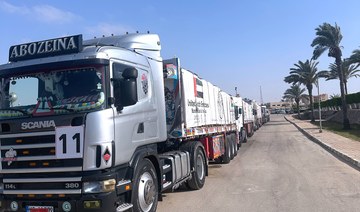
Supplies of basic goods had returned to some markets in April and early May for the first time in months after Israel ceded to international pressure to let in more aid trucks amid famine warnings.
But residents and aid workers say that many people haven’t had the cash to purchase them. Now residents say Israel’s offensive in Rafah has dried up supplies again and stoked prices.
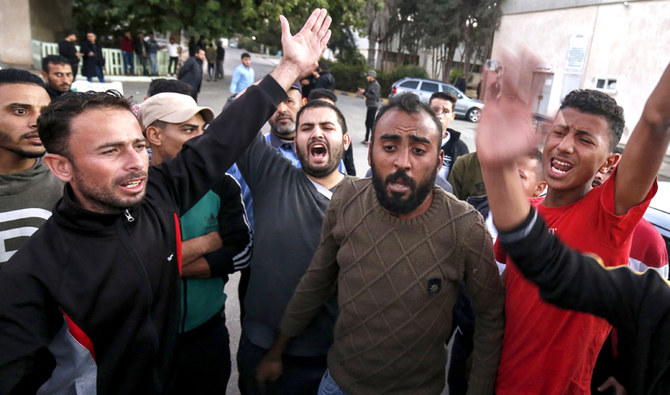
Hundreds, sometimes thousands, of desperate people crowd outside ATMs, often waiting days for access. Armed gangs sometimes demand a fee to provide priority access, exploiting the absence of Palestinian police, three Western aid workers and seven residents told Reuters.
Abu Ahmed, 45, a resident of Rafah, said he had waited for as long as seven days and became so frustrated that he turned for help to gang members, who are sometimes armed with knives and guns.
“I paid 300 shekels ($80) of my salary to one of them for accessing the ATM and getting my cash,” said Abu Ahmed, who asked that his last name not be used for fear of reprisals. He earns 3,500 shekels per month as a public servant.
The three Western aid workers described the gangs as improvised groups that have sprung up across the Strip up as desperation has grown.
As of May 13, only 5 branches and 7 ATMs remain operational in the strip, primarily in Rafah, according to the Palestine Economic Policy Research Institute, a non-profit organization headquartered in the West Bank. Before the war, Gaza had 56 bank branches and 91 ATMs.
The conflict erupted after an Oct. 7 attack on Israel by Palestinian Islamist militant group Hamas, in which some 1,200 people were killed and more than 250 taken hostage. Israel’s assault on Gaza, aimed at destroying Hamas and returning the hostages, has killed at least 35,000 Palestinians, according to Gaza’s health ministry.
The Palestinian economy runs on the Israeli shekel. Gaza’s financial system is almost completely dependent on Israel, which must approve major transfers and the movement of cash into the enclave, bankers said.
Israel has blocked cash imports to Gaza since the start of the war in October, according to the Palestine Monetary Authority (PMA) and the Association of Banks in Palestine (ABP), a non-profit based in the West Bank city of Ramallah.
Adnan Alfaleet, the Gaza district manager of Palestine Islamic Bank, which operates the biggest Islamic banking network in the Palestinian Territories, said his bank has no cash left in Gaza.
“We reached the point of complete lack of liquidity now. It can’t get worse,” he said.
The Israeli central bank did not respond to questions about whether transfers had been blocked. It said there were no Israeli banks in Gaza and shekels had circulated there in the past because of trade with and Palestinian workers in Israel.
COGAT, an Israeli Defense Ministry agency tasked with coordinating aid deliveries into the Palestinian territories, did not respond to Reuters’ questions.
POLICE KILLED
Ismail Al-Thawabta, the director of the Hamas-run government media office, said the Palestinian police were trying to protect ATM machines, despite coming under fire from Israeli forces.
A Hamas official, who declined to be named, said police were keeping a low profile and only making surprise raids or patrols at certain locations after officers had been targeted in Israeli strikes.
In February, the top US diplomat involved in humanitarian assistance to Gaza said Israeli forces had killed Palestinian police protecting a UN convoy.
The IDF did not respond to a request for comment on whether its forces have targeted police officers. Reuters could not determine how many police officers have been killed during the war.
Residents said some merchants are profiteering from the shortage. Some money exchange store owners, who can cash Western Union transfers, and even some pharmacists who have credit card machines, were charging heft commissions for access to money, according to two sources.
Azmi Radwan, a union representative of the UN agency for Palestinian refugees UNRWA, said some merchants were charging its staff in Gaza City and the north commission of 20 percent or 30 percent to cash their salaries for them, in the absence of banks.
“This is very dangerous,” he said. “A quarter of the salary that is supposed to feed one’s children is going to these merchants.”
UNRWA employs roughly 13,000 people in Gaza.
Sometimes money changers, after deducting a fee, will then say there are no shekels available and make payments in dollars at an unfavorable exchange rate, according to resident Abu Muhey, who also asked not to be identified by his full name for security reasons.
STUCK IN VAULTS
Meanwhile, hundreds of millions of shekels are stranded inside bank vaults in northern Gaza due to a lack of armored vehicles and fear of looting, according to three UN and banking sources.
Bashar Odeh Yasin, director general of Association of Banks in Palestine (ABP), said the situation remains too unsafe for bank employees or international bodies to transfer the money.
“There’s a real problem in transferring cash from northern Gaza to the south and in bringing in cash from outside the Gaza Strip,” he said.
The number of bank notes in circulation has been further diminished by wear and tear as well as people taking them out when they leave, residents said.
Essential goods such as medicine remain chronically scarce in the enclave, which is also plagued by lengthy power shortages and lack of fuel.
The World Food Programme warned in April of the risk of famine in northern parts of Gaza. Israel this week opened a third crossing to allow more humanitarian aid into the north, but it has shut two checkpoints in the south, including the vital Rafah crossing into Egypt, halting aid deliveries there.
Monday saw fierce fighting in north and south Gaza. Efforts by Egyptian, Qatari and US mediators to secure a ceasefire have so far failed.
“There’s more food, which is provided, but there is definitely a lack of cash for people to buy it,” said Rik Peeperkorn, the World Health Organization’s (WHO) representative to the Palestinian territory.
Many people were trading canned food or other aid for items they were missing, or selling them for cash, residents told Reuters.
Aya, a resident of Gaza City who was displaced first to Rafah and then central Gaza by Israeli operations, received ten blankets in aid packages. As her family already had some, she sold 8 of the blankets to buy her sisters and brothers chocolate and Nescafe, she said.
“Despite the misery, I tried to make them feel happy,” she said.