

Saudi student reflects on ‘Silk Road’ at China Youth Dialogue Forum

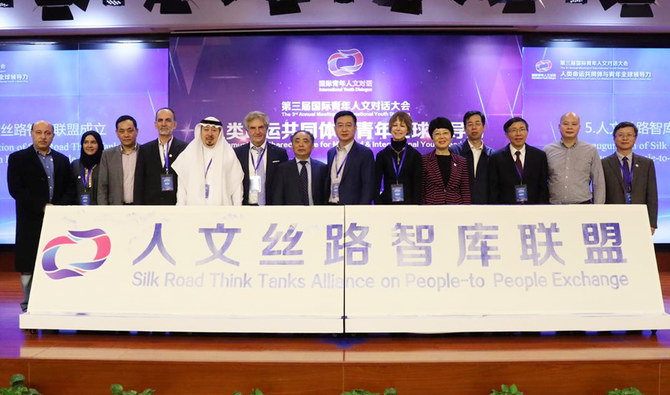
The ‘Silk Road’ initiative includes more than 60 countries in Asia, Europe and Africa, covering a population of 4.4 billion. (Photo/Supplied)
Updated 17 November 2019
Follow

Saudi student reflects on ‘Silk Road’ at China Youth Dialogue Forum

  • The Kingdom is considered China’s primary economic partner in the region, with yearly trade worth $70 billion

JEDDAH: A Saudi female student attracted more than 300 experts, specialists and others from 60 countries to her talk at the yearly International Youth Dialogue Forum, which began on Saturday.
The forum, in the Chinese capital Beijing, is being held as part of the “Silk Road” initiative, part of Saudi Vision 2030’s partnership with the Chinese government to revive historical trade routes for the modern era.
Miraz Ahmed Badris, a student at King Abdul Aziz University, spoke with the participants of the “Modern Culture for Young Saudi Women” forum, and shed light on the fast-moving changes and developments in young Saudi women’s ambitions, in line with Saudi Vision 2030.
She also highlighted the support of King Salman and Crown Prince Mohammed bin Salman’s government of Saudi women, and how the “Silk Road” initiative would contribute to fulfilling these aspirations and desired goals.

HIGHLIGHT

Miraz Ahmed Badris, a student at King Abdul Aziz University, spoke with the participants of the ‘Modern Culture for Young Saudi Women’ forum, and shed light on the fast-moving changes and developments in young Saudi women’s ambitions, in line with Saudi Vision 2030. 

Badris was invited by the Chinese government and the Academy of International Trade and Economic Cooperation for the “Silk Road” initiative in China, to be the only Arab and Saudi from the Middle East to express Arab women’s point of view. The “Silk Road” initiative includes more than 60 countries in Asia, Europe and Africa, covering a population of 4.4 billion, or 63 percent of the world population, with a combined economy of $21 trillion, or 29 percent of today’s global economy.
The Kingdom is considered China’s primary economic partner in the region, with yearly trade worth $70 billion.
Economic growth and resilience at heart of 2nd AlUla Emerging Market Economies Conference

Updated 03 February 2026
Follow

Economic growth and resilience at heart of 2nd AlUla Emerging Market Economies Conference

  • Event on Feb. 8 and 9 will bring together ministers, governors of central banks, policymakers, economic experts and international financial institutions
  • Emerging-market economies a ‘pivotal element’ in global economic system due to effect they have on growth and stability, says Saudi Finance Minister Mohammed Al-Jadaan

RIYADH: The second annual AlUla Conference for Emerging Market Economies, which Saudi Arabia will host next week, offers a platform to exchange views on global developments and discuss policies and reforms that support inclusive growth and strengthen economic resilience, the Kingdom’s finance minister said.

The event on Feb. 8 and 9 will bring together finance ministers, governors of central banks and policymakers, alongside economic experts and representatives of international financial institutions.

Organized by the Saudi Ministry of Finance in partnership with the International Monetary Fund, it takes place as emerging-market economies face mounting challenges amid rapid global economic change.

Finance Minister Mohammed Al-Jadaan said the decision to host the conference reflects Saudi Arabia’s ongoing commitment to efforts that support global financial and economic stability, and highlights the growing influence of emerging economies on worldwide growth.

Emerging-market economies represent a “pivotal element” in the global economic system due to the direct impact they have on economic growth and stability, he added.

“The AlUla Conference for Emerging Market Economies provides a unique platform for exchanging views on global economic developments, and discussing policies and reforms that will support inclusive growth and enhance economic resilience, in light of broader international cooperation that contributes to confronting common challenges,” Al-Jadaan said.

Kristalina Georgieva, managing director of the IMF, said the event would help emerging economies deal with growing uncertainty driven by technological change, demographic shifts and geopolitical tensions.

“The AlUla conference provides a vital platform for emerging economies to discuss how they can navigate the risks and embrace the opportunities ahead,” she said.

“In these times of sweeping transformations in the global economy, policymakers face a more challenging and uncertain environment. Countries should work together to strengthen resilience through sound macroeconomic and financial policies.”