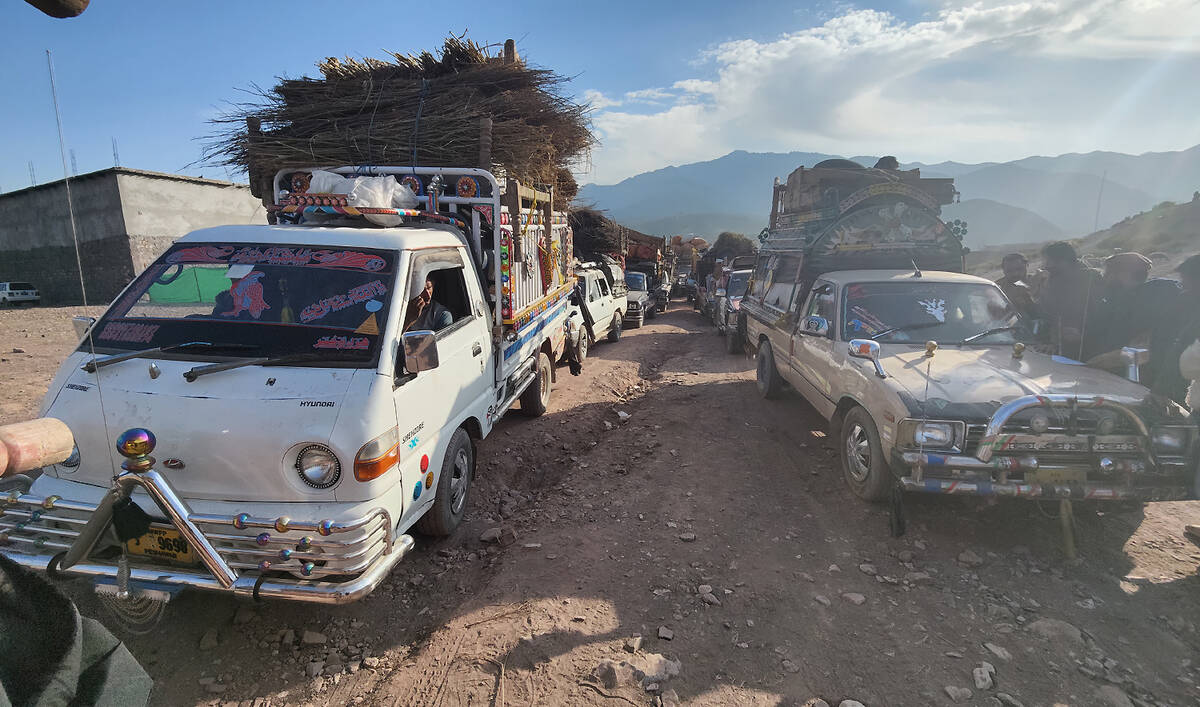
ISLAMABAD: The anti-government protest has cost Islamabad’s Metro bus service about Rs43 million since it was suspended 12 days ago, Arab News investigation revealed on Wednesday.
The signal-free Metro bus corridor, which connects the cities of Rawalpindi and Islamabad, was suspended on October 31, the day tens of thousands of political workers belonging to the rightwing Jamiat-e-Ulema-e-Islam-F (JUI-F) party arrived in the federal capital demanding Prime Minister Imran Khan’s resignation.
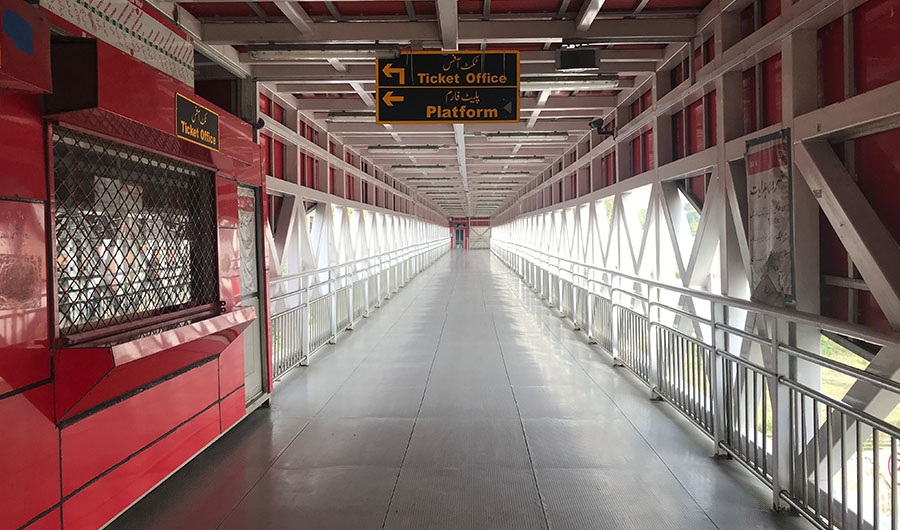
The Metro bus service has remained closed since the anti-government protesters belonging to the Jamiat-e-Ulama-e-Islam (JUI-F) party arrived in Islamabad 12 days ago. Picture taken on November 13, 2019. (AN Photo by Nazar ul Islam)
Since then, the bus service lost Rs3.6 million in revenue on a daily basis.
“On a normal weekday, we get about 120,000-130,000 passengers,” Shamila Mohsin, manager operations of the Punjab Mass Transit Authority for Rawalpindi and Islamabad, told Arab News. “Our tickets are priced at Rs.30. So you can do the math.”
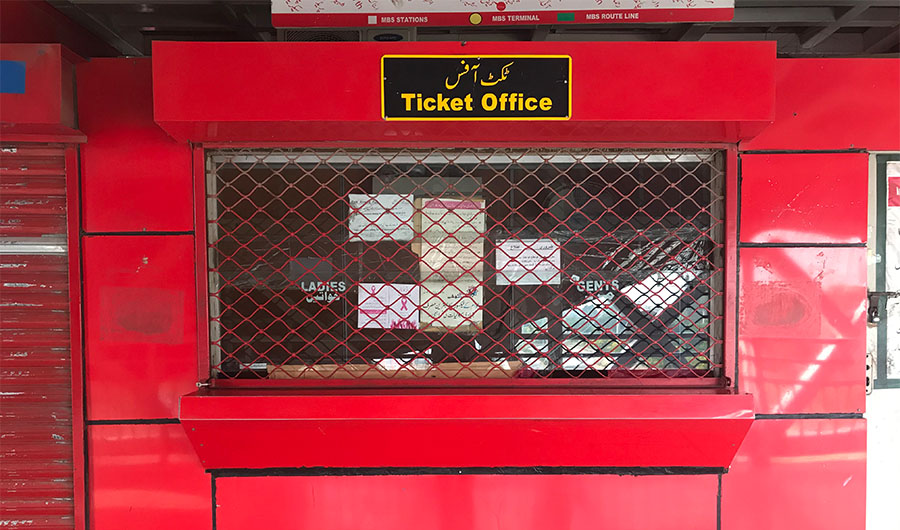
The Metro bus service has remained closed since the anti-government protesters belonging to the Jamiat-e-Ulama-e-Islam (JUI-F) party arrived in Islamabad 12 days ago. Picture taken on November 13, 2019. (AN Photo by Nazar ul Islam)
For the last two weeks, Mohsin added, several protesters were camped outside the central bus depot, where 68 buses were parked and maintained. “It has been very difficult for people to commute between the two cities. I also use the same service to get to my office every day.”
Nadia Kanwal, a school teacher, has been traveling on the bus since it was first inaugurated in 2015. She calls the Metro service a “blessing for women” since there is a separate compartment for them in each bus to protect them against harassment. “But now that it has been suspended, I hitch a ride on private vans which is quite a hassle,” she said. “The rates are really high and the seats are limited.”
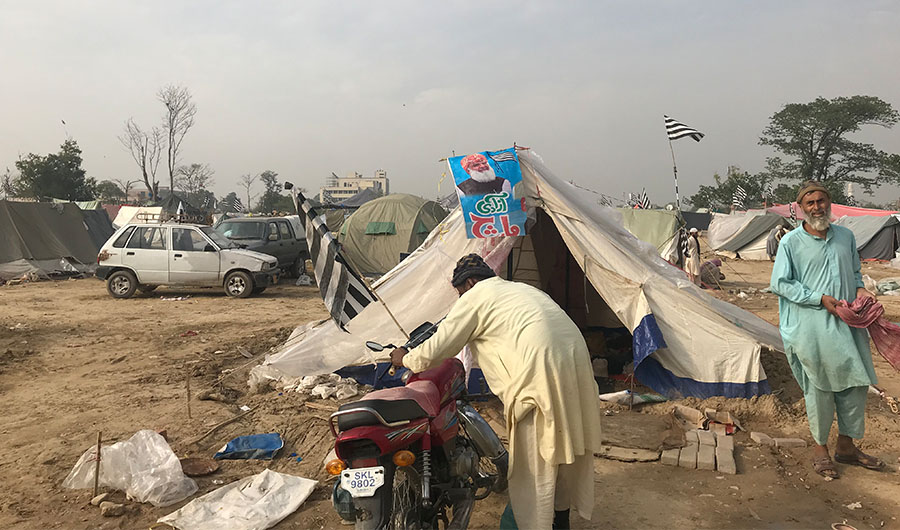
Protesters have camped outside the Metro Bus Depot in Islamabad, making it difficult for the authorities to resume the public transportation service and facilitate commuters in the twin cities. Picture taken on November 13, 2019. (AN Photo by Nazar ul Islam)
Separately, the JUI-F protesters insist they will not leave until their leaders tell them to.
Abdullah Jan, a party worker, arrived in the city on October 31 from Quetta and pitched his tent outside the bus depot.

Protesters have camped outside the Metro Bus Depot in Islamabad, making it difficult for the authorities to resume the public transportation service and facilitate commuters in the twin cities. Picture taken on November 13, 2019. (AN Photo by Nazar ul Islam)
“The government should not blame us for shutting down the bus service,” he says while washing his clothes on the road. “We have stayed in one place, right here, since day one. In fact, we would have loved to take a ride on the Metro bus and explore the twin cities.”
Until now there is no clear timeline on when the service will resume. On Wednesday, Islamabad’s deputy commissioner tweeted a picture of the route of the Metro bus service. “Buses can’t enter the depot for fueling/maintenance without passing through the crowd,” he wrote in his post. “The company that runs the operation is not willing to take the risk. We apologize for the inconvenience but there is no alternative.”
The venue of rally, metro depot and Itwar bazar are side by side. Busses cant enter the depot for fueling/maintenance without passing through the crowd. The Company who runs the operation is not willing to take the risk. We apologize for inconvenience but there is no alternative. pic.twitter.com/1M7ii61Fk9
— Deputy Commissioner Islamabad (@dcislamabad) November 12, 2019
Mohsin told Arab News that the government would have to foot the bill ultimately and make up for the revenue losses.
“All of the Metro’s work is outsourced to other companies, such as running the buses, security, waste management and operating the elevators. The contractors will need to be paid at the end of the month, whether the buses have remained operational or not.”