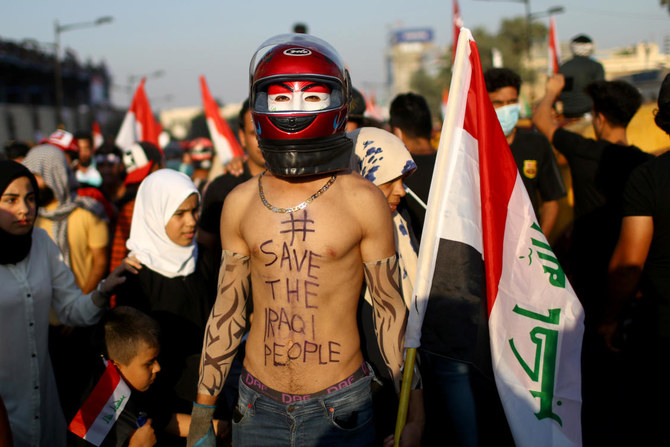
BAGDHADAD: The United Nations chief Antonio Guterres denounced as “disturbing” reports that Iraqi security forces have fired live ammunition at anti-government protesters in Baghdad, as mass rallies continued to rock the capital and southern Iraq.
The demonstrations broke out on October 1 in anger over corruption and unemployment but have morphed into demands that the entire ruling system be upended.
The violence has left nearly 280 dead, with security forces resuming their use of live rounds on Monday after nearly two weeks of using volleys of tear gas, but no firearms, to push back protesters.
Secretary General Antonio Guterres expressed his “serious concern over the rising number of deaths and injuries during the ongoing demonstrations in Iraq.”
“Reports of the continued use of live ammunition against demonstrators are disturbing,” he said in a statement Wednesday.
He called for all acts of violence to be investigated “seriously” and renewed his appeal for “meaningful dialogue between the government and demonstrators.”
In Baghdad, protesters had been concentrated in Tahrir Square but have increasingly spilled over onto nearby bridges leading to the western bank of the Tigris.
For days, they have faced off against security forces on the Al-Jumhuriyah bridge, which links them to the Green Zone where government offices and embassies are based.
They then spread to Al-Sinek, which ends near the Iranian embassy, and Al-Ahrar, near other government buildings.
A group of protesters Wednesday tried to cross a fourth bridge, Al-Shuhada, but were met with live rounds from security forces, an AFP correspondent said.
Several protesters were wounded.
“The riot police hit us with batons on our heads and we threw rocks at them,” said Mahmoud, a 20-year-old protester being treated by medics after trying to cross Al-Shuhada bridge.
“But then they started firing live rounds on people.”
Even the tear gas usage has been deadly, however, with medics and rights group Amnesty International saying security forces appeared to be firing the canisters directly at protesters.
A spokesman for Prime Minister Adel Abdel Mahdi said security forces were instructed to use force if protesters got close to important government buildings including the central bank.
On Wednesday, at least four people died of wounds sustained in earlier protests, medical sources told AFP.
Oil-rich Iraq is OPEC’s second biggest producer, but one in five people live in poverty and youth unemployment stands at 25 percent, according to the World Bank.


![]()

UN chief condemns live fire at Iraqi protesters as ‘disturbing’
UN chief condemns live fire at Iraqi protesters as ‘disturbing’
- In Baghdad, protesters had been concentrated in Tahrir Square but have increasingly spilled over onto nearby bridges leading to the western bank of the Tigris
- A group of protesters Wednesday tried to cross a fourth bridge, Al-Shuhada, but were met with live rounds from security forces
Latest updates



© 2026 SAUDI RESEARCH & PUBLISHING COMPANY, All Rights Reserved And subject to Terms of Use Agreement.