

Bahrain’s Maki: Innovative Japanese cuisine with a personal touch

Maki at Bahrain’s World Trade Center offers Japanese food with a distinct twist. (Supplied)
Updated 01 November 2019
Follow

Bahrain’s Maki: Innovative Japanese cuisine with a personal touch

MANAMA: The first thing we noticed on walking into Maki was the décor. It’s cool without being intimidating —brushed concrete floors and metal accessories. The second was that there was an impressive number of full tables for a Wednesday night — always a good sign.

We were led to a window table and, as if by magic, our server produced mini towelettes — the pre-compressed kind onto which she poured a little water and we watched them expand. Not rocket science, but an amusing touch to set the tone.

I thought it a little odd when she carefully unwrapped our chopsticks but her actions were soon explained when she returned moments later with the wrappers folded into origami shapes to form chopstick rests. I’m a sucker for personal touches and this small offering put a smile on my face.
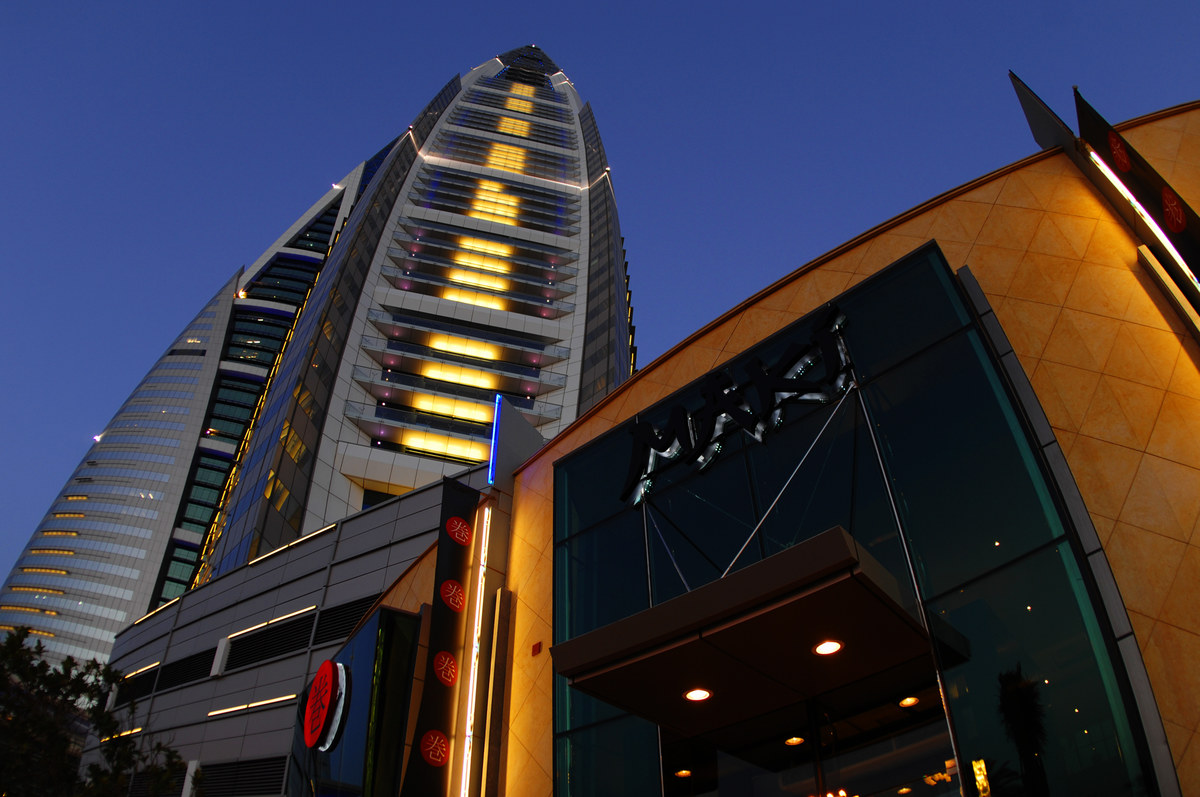


Maki is located at Bahrain’s World Trade Center. (Supplied)

She was also extremely knowledgeable about the menu, no small task since the brothers who own the restaurant are constantly coming up with new items in a Japanese-fusion style.

Our first dish was the Chef Chopped Salad — tuna, salmon, avocado, iceberg lettuce, tobiko and crispy tempura with rocket, peanut wasabi and the Maki special salad dressing. Definitely big enough for two, this not only looked great but also presented a surprising flavor combination.

The crunchy texture of the tempura coupled with the unmistakable taste of the fish roe gave a distinctly Japanese feel, with the peanut wasabi providing sufficient kick to counteract any over-fishiness (if such a thing exists). Plenty of rocket and a slathering of the tangy, piquant house dressing satisfied a craving for greens.
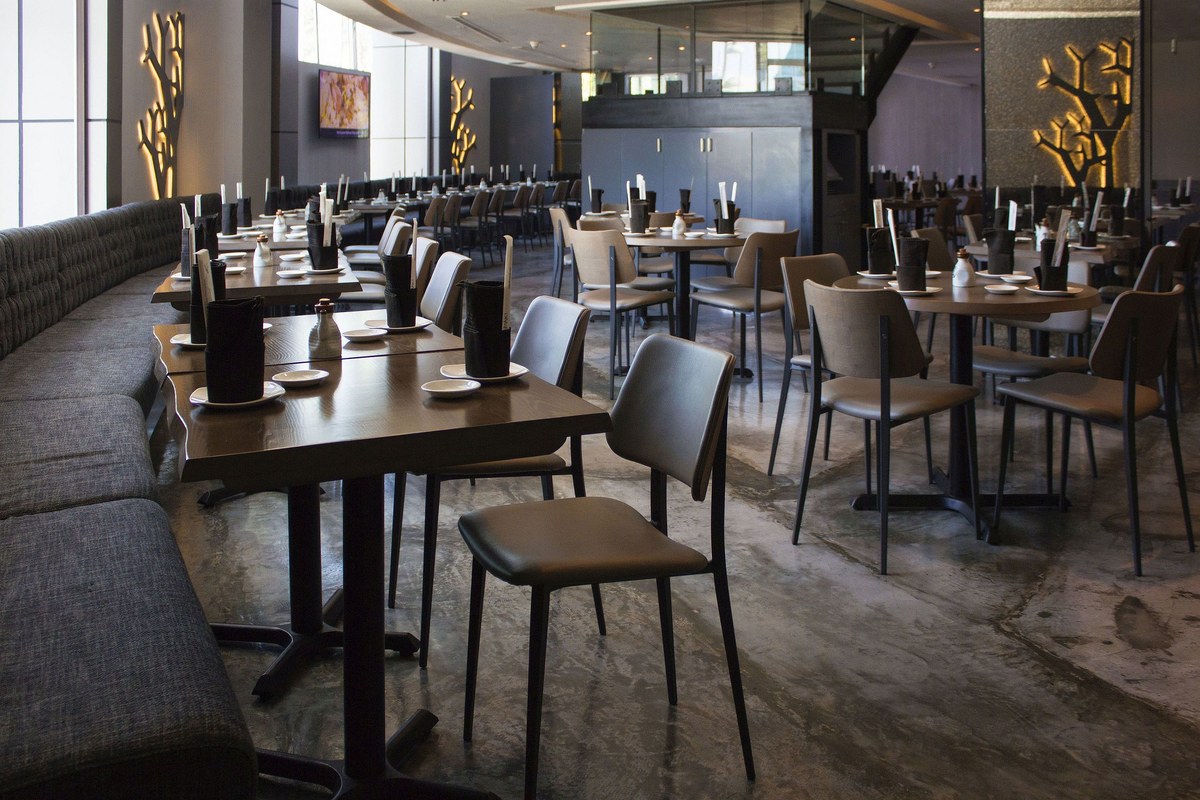


The restaurant is not intimidating —brushed concrete floors and metal accessories. (Supplied)

Next up was one of the evening’s standout dishes, Tempura Prawn Tacos. Yep, there’s that fusion thing going on. Along with the prawns and tempura, the star of the dish was Japanese guacamole — it’s like regular guac, but with the addition of shiso leaf, ginger and wasabi paste. When tucked into a crisp, warm taco shell and topped with Maki’s signature sauce, it makes for a dish that’s really hard to beat. I certainly wouldn’t think of Japanese cuisine as comfort food, but this comes close to qualifying.

The Spicy Real Crab Sushi that followed was the second standout. Mixed with carrot, cucumber, spring onion and crispy tempura, the crab was deliciously fresh, sweet and melt-on-the-tongue tender, perfectly complemented by the sweet-and-spicy sauce and the rich tang of the nori. To be honest, I could quite happily have stopped at this point a very happy women.

However, in the interests of research, we had also ordered the Shakira Sashimi — slices of raw tuna served in a special citrus sauce topped with sesame and spring onion. My guest found the sauce a little overpowering and salty, but I was delighted to find such obviously fresh tuna with not even a tinge of fishy smell and a perfect mouth-pleasing texture.
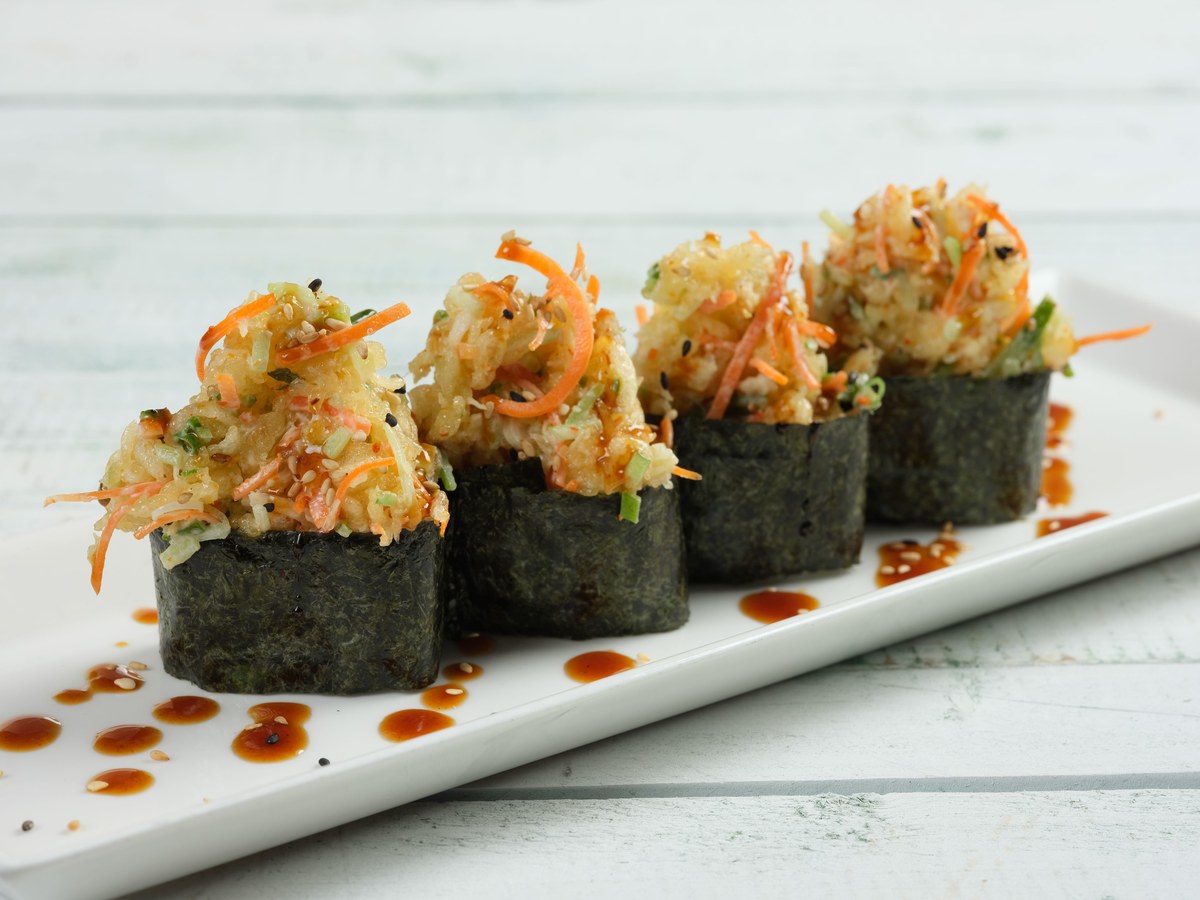


Spicy Real Crab Sushi was mixed with carrot, cucumber, spring onion and crispy tempura. (Supplied)

Our last savory dish was the Athari Maki, which is perhaps best described as Mediterranean. The restaurant owners are Lebanese and one of them is crazy for the high-quality olives and olive oil produced on the family farm. This Maki is testament to that, with a specially created olive wrap replacing the usual nori. It’s super thin, emphatic in flavor and the perfect accompaniment to the other ingredients, which include salmon, filo prawn tempura and black truffle pearls. Together they present a flavor combination you won’t find anywhere else with the pearls bursting on your tongue in a wake-up call to the taste buds before the rest of the sensations hit.

We finished with an extremely photogenic dessert, the Kone-Afa Vanilla Ice Cream – another of Maki’s exclusive creations. I adore sweet vermicelli, from which the cone is made, so this was another standout for me, made even better by the addition of yuzu blossom syrup that gave the ice-cream filling a hint of the tropics and sat perfectly with the fresh raspberry sauce and pistachio-flake topping.


OPINION: Saudi Arabia’s cultural continuum: from heritage to contemporary AlUla

Updated 12 February 2026
Follow

OPINION: Saudi Arabia’s cultural continuum: from heritage to contemporary AlUla

  • The director of arts & creative industries at the Royal Commission for AlUla writes about the Kingdom’s cultural growth

AlUla: Saudi Arabia’s relationship with culture isa long and rich. It doesn’t begin with modern museums or contemporary installations, but in the woven textiles of nomadic encampments, traditional jewellery and ceramics, and of course palm‑frond weaving traditions. For centuries, Saudi artisans have worked with materials drawn directly from their environment creating objects that are functional, but also expressions of identity and artistry.

Many of these traditions have been recognised internationally, with crafts such as Al-Sadu weaving inscribed on UNESCO’s Intangible Cultural Heritage list.

Sadu weaving. (Getty Images)

This grounding in landscapes, resources, and collective history means Saudi Arabia’s current cultural momentum is not sudden, but the natural result of decades — even centuries — of groundwork. From the preservation of heritage sites and, areas, some of which have been transformed into world-renowned art districts, to, the creation of institutions devoted to craft, the stage has been set for a moment where contemporary creativity can move forward with confidence, because it is deeply rooted.

AlUla, with its 7,000 years of human history, offers one of the clearest views into this continuum. Millennia-old inscriptions at Dadan and Jabal Ikmah stand alongside restored mudbrick homes in Old Town and UNESCO-listed Hegra. In the present, initiatives like Madrasat Addeera carry forward AlUla’s craft traditions through design residencies and material research. And, each winter, the AlUla Arts Festival knots these threads together, creating a season in which heritage and contemporary practice meet.

Hamad Alhomiedan, the director of arts & creative industries at the Royal Commission for AlUla. (Supplied)

This year, that dialogue began in the open desert with Desert X AlUla 2026. Now in its fourth edition, the exhibition feels like the pinnacle of the current moment where contemporary art, heritage, and forward-thinking meet without boundaries. The theme of Desert X AlUla 2026 was “Space Without Measure,” inspired by the work of Lebanese-American artist and writer Kahlil Gibran[HA1] [MJ2] . The theme invited artists to respond to the horizons of AlUla’s landscape and interpret its wonder through their perspective.

Works by Saudi and international figures converse directly with nature: Mohammed Al-Saleem’s modernist sculptures bring in celestial-inspired geometry; Maria Magdalena Campos-Pons translates the colour of AlUla’s sunsets; Agnes Denes “Living Pyramid” turns the oasis into a vertical landscape of indigenous plants, . The 11 artists of this year’s edition were able to capture AlUla’s essence while creating monumental works that speak directly to our relationship with the environment. 

Artist Performance at Desert X AlUla 2026 by Maria Magdelena Compos Pons and Kamaal Malak. (Courtesy of Arts AlUla and AlUla Moments)

In AlJadidah Arts District, “Material Witness: Celebrating Design From Within,” features heritage craft and material research from Madrasat Addeera alongside work by regional and international designers, showing how they translate heritage materials into contemporary forms.[HA3] [MJ4] 

Music adds another element of vitality, filling the streets of AlJadidah Arts District, with performances supported by AlUla Music Hub, featuring local musicians.

The opening of “Arduna,” the first exhibition presented byof the AlUla Contemporary Art Museum, co-curated with France’s Centre Pompidou, adds another layer to this conversation. Featuring Saudi, regional, and international artists, from Picasso and Kandinsky to Etel Adnan, Ayman Zedani and Manal AlDowayan, the [HA5] [MJ6] exhibition signals the emergence of a global institution rooted in the heritage and environment of AlUla, placing local voices in context with world masters.

Each activation in this year’s AlUla Arts Festival is part of the same Saudi cultural continuum, . This is why the Kingdom’s cultural rise feels different from rapid developments elsewhere. The scale of cultural infrastructure investment is extraordinary, but its deeper strength lies in how that investment connects to living traditions and landscapes.

The journey is only accelerating. Rooted in heritage yet open to the world, the Kingdom’s cultural future is being shaped not by sudden inspiration, but by our traditions and history meeting the imagination and creative voices of our present.