ISTANBUL: The Turkish military released 18 Syrian government soldiers captured in northeastern Syria by its forces, the Syrian Observatory for Human Rights said Thursday.
Turkish Defense Minister Hulusi Akar said earlier that the soldiers were captured during Turkish reconnaissance operations southeast of Ras Al-Ayn but didn’t say when.
Turkey agreed to a cease-fire brokered by Russia in which Kurdish fighters would withdraw 30 kilometers (19 miles) away from the Turkish border. As part of the deal, Syrian government forces would take positions along the frontier.
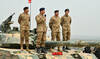
Akar spoke during a visit to Turkish troops at the border with Syria. His comments were carried on the official ministry website.
A Syrian Kurdish official said the soldiers were captured Tuesday during an intense battle between Syrian government forces and Turkey-backed fighters. Kurdish fighters were fighting alongside the Syrian troops. The official spoke on condition of anonymity because he was not authorized to brief reporters.
In another sign of the changing battleground, US forces said the first batch of mechanized armored vehicles arrived in southeast Syria on Thursday, where they are to take part in securing oil fields and fighting remnants of Daesh. US-led Coalition spokesman Col. Myles Caggins said the first batch of Bradley armored infantry carriers arrived in Deir Ezzor Province and will provide infantry with maneuverability and firepower. He said the deployment is “de-conflicted” with other forces operating in the region.
The province is home to some of Syria’s largest oil fields. It is also where Daesh militants continue to wage an insurgency and where they lost their last territory in March.
US President Donald Trump ordered the troop withdrawal from the north ahead of a Turkish military offensive there earlier this month. He said he wanted out of America’s “endless wars” but would leave US troops in the region to secure oil facilities.
Turkey is pushing to have Kurdish fighters moved away from its borders. Ankara views the Syrian Kurdish fighters as an extension of the decades-long Kurdish insurgency in southeastern Turkey. But Washington has partnered with those Kurdish-led forces to fight Daesh over the last five years, putting in a difficult spot between its NATO ally and battleground partners.
The Kurdish forces leaned on Russia and the Syrian government to protect them against the advancing Turkish forces. But Turkey seized a stretch of land across the border before the US negotiated an initial cease-fire.
Turkey has offered financial and logistical backing for the Syrian opposition that worked to bring the government of President Bashar Assad down. Ankara has also carried out three military operations into Syria and now controls territory in northwest and northeast Syria to push Daesh militants and Kurdish fighters away from its borders.
Turkey then agreed to a cease-fire brokered by Russia on Oct. 22, under which Kurdish fighters would withdraw to 30 kilometers (19 miles) away from the Turkish border. Under the deal, Syrian government forces would take positions along the frontier and joint Turkish-Russian patrols are due to begin Friday.
But the truce has been marred by accusation of violations from both sides.
For days now, Turkey-allied fighters have been fighting Kurdish forces near Abu Rasein, a village between Ras Al-Ayn and Tal Tamr, despite the deployment of Syrian government forces. Syrian state media also reported some government soldiers clashed with the Turkey-backed forces.
The Kurdish official said the Syrian government soldiers were captured in the area. He said the forces then withdrew after their soldiers were captured.
A war monitor group, the Syrian Observatory for Human Rights, also reported that Syrian troops pulled out from the Tal Tamr area on Wednesday, amid a Turkish-backed advance with air cover. The area is home to Syria’s dwindling Christian Assyrian community. The commander of the Kurdish-led Syrian Democratic Forces, Mazloum Abdi, warned that Turkey-backed fighters began entering Christian villages and are attempting to break into the main town.
The Syrian withdrawal left empty the border post in Darbasiyeh, west of Ras Al-Ayn, which Kurdish forces had handed over just days before, according to the Rojava Information Center, an activist group. Later on Thursday, the Observatory said government and Kurdish forces were deploying into the town of Tal Tamr.
Separately, a car bomb went off in a town administered by Turkey-backed forces in northwestern Syria, killing at least eight people.
Turkey’s official Anadolu news agency said another 14 people were wounded in the attack in a vegetable market in Afrin. It said the explosives were packed into a refrigerator truck.
Turkish-led forces captured Afrin from Syrian Kurdish fighters early last year. The area is controlled by Syrian fighters allied with Turkey, who have been accused by rights groups of seizing land and property . The area sees sporadic attacks and other violence.
Syria’s state-run SANA news agency also reported the attack, saying nine people were killed and 20 wounded. It said the blast ignited a nearby patrol station and caused damage to surrounding homes and shops.
No one has claimed the attack.


![]()

Turkey releases 18 Syrian soldiers captured in Syria

Turkey releases 18 Syrian soldiers captured in Syria
- The Syrian soldiers were released late on Thursday
- A Syrian Kurdish official said the soldiers were captured Tuesday during an intense battle between Syrian government forces and Turkey-backed fighters


Latest updates


Recommended



© 2026 SAUDI RESEARCH & PUBLISHING COMPANY, All Rights Reserved And subject to Terms of Use Agreement.