

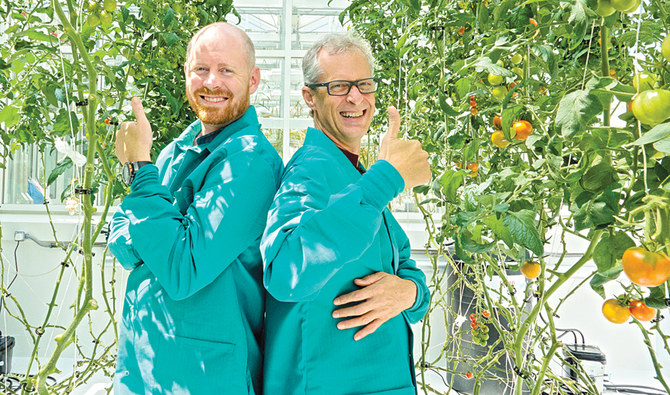
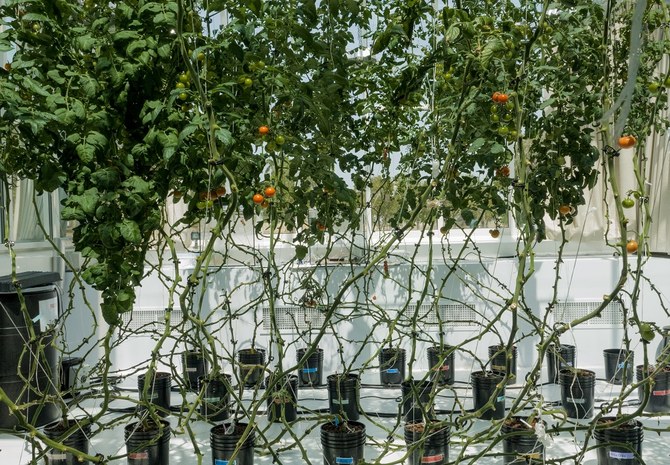

Red Sea Farms is a startup from King Abdullah University of Science and Technology (KAUST) that uses agricultural engineering to process seawater and deploy it in an economically sensible way to reduce the huge use of freshwater in agriculture.
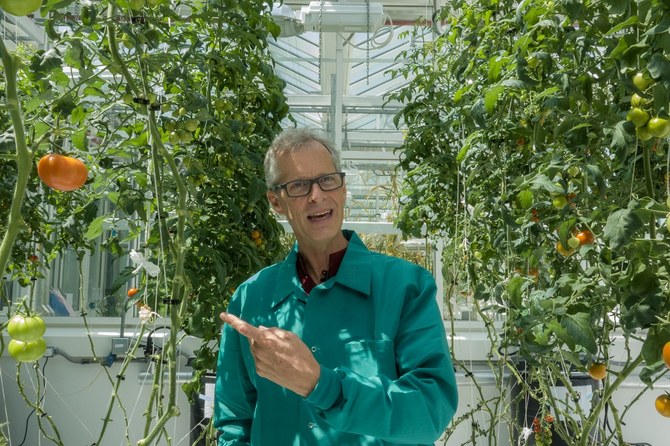
It was co-founded more than 18 months ago by professor of plant sciences at KAUST, Mark Tester, who is also the head of the food sector at NEOM, and agricultural engineer Dr. Ryan Lefers.
Lefers explained that the company uses saltwater to cool its greenhouse, which saves a lot of freshwater. “Based on the models we’ve run, we can save up to 90 percent of freshwater by using saltwater in its place. Also, we don’t have to desalinate the water, so we’re saving a lot of energy,” he told Arab News. “Thanks to the work of my co-founder, Prof. Mark Tester, and his group, we have plants that are being developed to grow using saltwater for irrigation,” he said.
Lefers is passionate about making an impact in the world.
“What gets me up in the morning is thinking about how we can solve some of the big problems that the world faces, and a big problem right now is how are we going to feed everyone in light of diminishing resources. One of those is freshwater,” he explained.
He added humans use about 70-80 percent of our freshwater for agriculture, and in Saudi Arabia the figure is higher, despite limited supplies — much has to be generated from seawater. “What I’m really excited about is contributing to somehow breaking food free from its dependency on freshwater.”
Tester said the problem the Middle East faces is a lack of water and its sustainability.
“Sure, we’ve got wonderful farms in places like Tabuk, for example, but it’s not sustainable in the long term because it’s using groundwater which is being extracted at a much higher rate than it is being replenished,” Tester said.
“We need to reduce our use of freshwater in Saudi Arabia and the whole region. By substituting a large fraction of our freshwater consumed for agriculture with sea or other salty water, we can really reduce our freshwater use in this region, and that’s a pretty good contribution.”
Tester highlighted how KAUST provided the perfect environment for researchers to pursue their passion.
“It all starts with research and curiosity, and this is very important. Places like KAUST enable us to do research because we’re interested in understanding the basis, the mechanisms for processes and applying that research,” he said.
“For me, I love understanding — and I must have been a very annoying child, always asking ‘why’ — and KAUST enables us to ask those questions, but in a way that the answers are going to be useful for the Kingdom and the region. That really is fantastic for me.”
He added that Red Sea Farms was a classic type of collaboration between two very different areas of KAUST activities — plant science and of engineering.
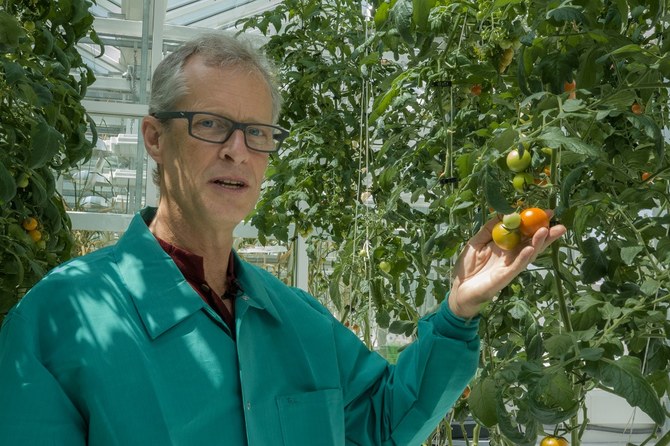
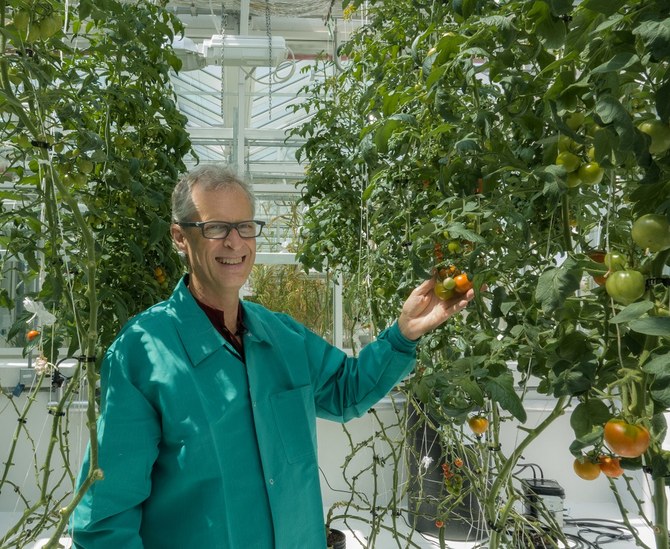
“I have huge respect for the engineering done by Ryan because it is going to make a huge impact. One amazing side benefit from our research — which, I must admit, we didn’t predict — is that when you grow tomatoes in this brackish water they taste better. So we’re able to deliver high quality, tasty and more nutritious tomatoes for the Kingdom.”
Red Sea Farms use hydroponic farming to grow their crops.
“What we have is a system where the plants are being physically supported by the clay beads, but the water is coming up and then flooding and draining away.”
He explained that water was pumped from storage tanks into the plants, which then drained back into the tanks.
“I call this type of approach we’re taking ‘beyond organic’. A lot of the organic rules in Europe say: ‘If it’s not in soil then it’s not organic.’ For me, what’s much more important is not to define something as organic or not, but to calculate whether what we are doing —and I say calculate — is sustainable. What we are doing has to be more sustainable for the planet. Because it’s our responsibility to leave the planet in a better condition for our children than when we found it,” said Tester.


