

Cairo film retrospective celebrates Egypt’s Ihsan Abdel Quddous

Updated 26 October 2019
Follow

Cairo film retrospective celebrates Egypt’s Ihsan Abdel Quddous

CAIRO: A film retrospective celebrating the centennial of the late Egyptian writer Ihsan Abdel Quddous is currently running at Cairo’s art-house cinema Zawya. The retrospective opened Oct. 18 with a screening of 1972’s “Empire of M” and features 14 of the 49 films written by Quddous, or adapted from his literary works. It runs until Nov. 1.

According to the organizer’s notes, Quddous “played an integral role in shaping the Egyptian cinematic and literary memory. It proved a challenge to program a retrospective that would encompass and rightfully represent his wide body of work.”



Ihsan Abdel Quddous. (Courtesy: The Abdel Quddous family)

Highlights include “I Am Free” (1959), “Don’t Put Out the Sun” (1961), “The Black Sunglasses” (1963), “The Thin Thread”(1971), “The Dancer and the Politician” (1990), and “The Dancer and the Drummer” (1984). The latter will be screened in the presence of Egyptian actress Nabila Ebeid, who starred in several films written by Quddous.
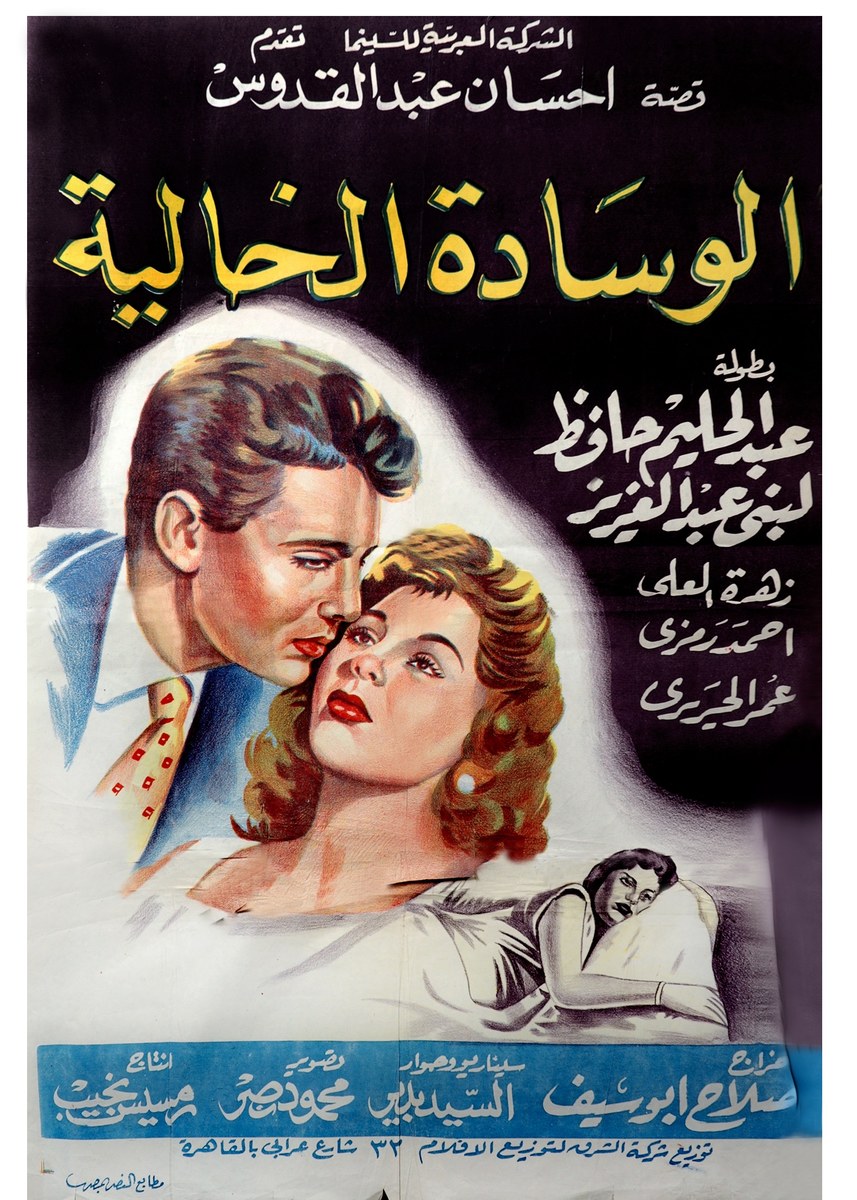


A film poster for ‘The Empty Pillow.’ (Courtesy: The Abdel Quddous family)

The aim of the retrospective was to curate a program that “depicts the variety characterizing the adaptations of Abdel Quddous’ work, spanning different stages and time periods,” said Nawara Shoukry, head of cinema at Zawya. “We created a wish list, then approached distributors and copyright owners.”

Shoukry added that the Abdel Quddous family provided original film posters, on show at the cinema in parallel to the screenings.
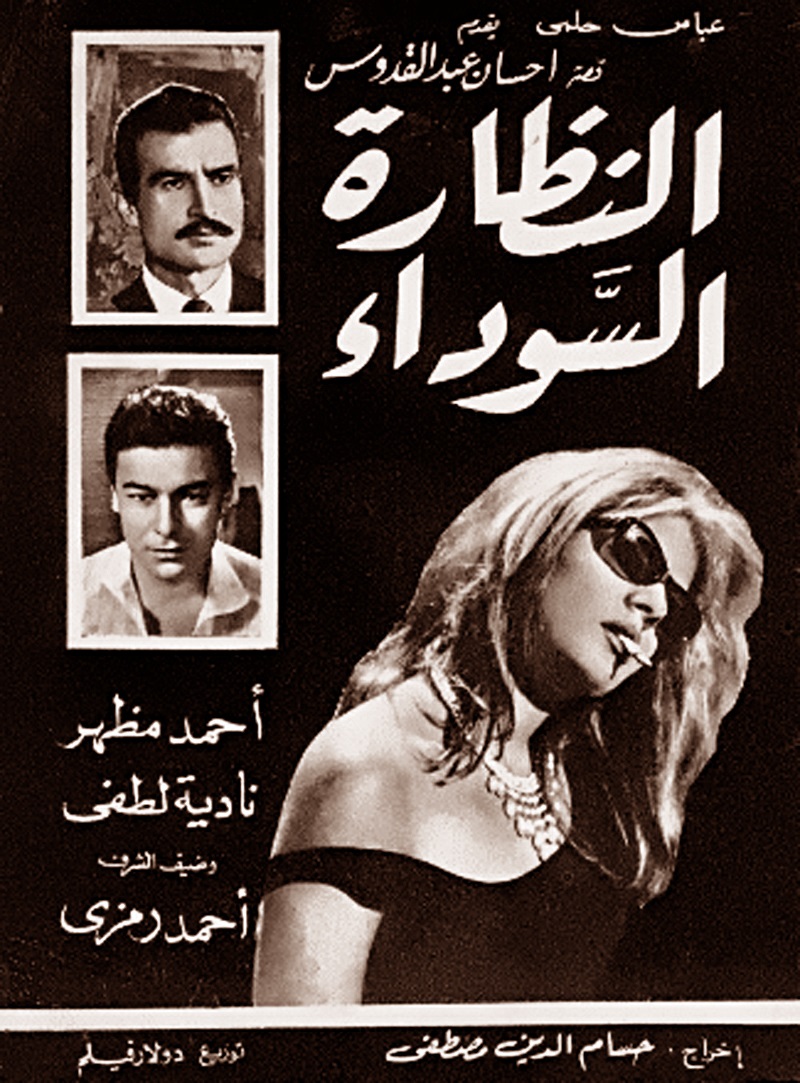


A film poster for ‘The Black Sunglasses.’ (Courtesy: The Abdel Quddous family)

Abdel Quddous’ grandson, journalist Sharif Abdel Kouddous, spoke at the event on opening night. “Unfortunately, he died when I was still in school, before I developed my own ideas and views in politics and in life, and before I became a journalist,” he said, praising his grandfather’s “prolific writings” and “the extent of their impact on Egyptian and Arab society.”   

“I always imagine how much I would have learnt from him and benefitted from talking to him and from his experience,” he said. “His journalism was always independent and against the regime. This freedom has had a direct influence on me.”


Lebanese filmmaker turns archival footage into a love letter to Beirut

Updated 28 February 2026
Follow

Lebanese filmmaker turns archival footage into a love letter to Beirut

LONDON: Lebanese filmmaker Lana Daher’s debut feature “Do You Love Me” is a love letter of sorts to Beirut, composed entirely of archival material spanning seven decades across film, television, home videos and photography.

The film premiered at the 82nd Venice International Film Festival in September and has since traveled to several regional and international festivals.

Pink Smoke (2020) by Ben Hubbard. (Supplied)

With minimal dialogue, the film relies heavily on image and sound to reconstruct Lebanon’s fragmented history.

“By resisting voiceover and autobiography, I feel like I had to trust the image and the shared emotional landscape of these archives to carry the meaning,” Daher said.

A Suspended Life (Ghazal el-Banat) (1985) by Jocelyne Saab. (Supplied)

She explained that in a city like Beirut “where trauma is rarely private,” the socio-political context becomes the atmosphere of the film, with personal memory expanding into a collective experience — “a shared terrain of emotional history.”

Daher said: “By using the accumulated visual representations of Beirut, I was, in a way, rewriting my own representation of home through images that already existed."

Whispers (1980) by Maroun Bagdadi. (Supplied)

Daher, with editor Qutaiba Barhamji, steered clear of long sequences, preferring individual shots that allowed them to “reassemble meaning” while maintaining the integrity of their own work and respecting the original material, she explained.

The film does not feature a voice-over, an intentional decision that influenced the use of sound, music, and silence.

The Boombox (1995) by Fouad Elkoury. (Supplied)

“By resisting the urge to fill every space with dialogue or score, we created room for discomfort,” Daher said, adding that silence allows the audience to sit with the image and enter its emotional space rather than being guided too explicitly.

 The film was a labor of love, challenging Daher personally and professionally.

“When you draw from personal memory, you’re not just directing scenes, you’re revisiting parts of yourself and your childhood,” she said. “There’s vulnerability in that.”