KABUL: Afghan Foreign Minister Salahuddin Rabbani tendered his resignation on Wednesday following differences with President Ashraf Ghani, who Rabbani accused of sidelining him.
His departure may not affect Ashraf’s already weak government because Rabbani was disqualified from office by Parliament three years ago, and served as acting minister on the basis of an order by the president.
Rabbani is an ally of Chief Executive Dr. Abdullah Abdullah, who shares power with Ghani and is the president’s election rival.
Rabbani’s resignation comes weeks ahead of the possible formation of a new government if an election winner is announced.
“During my time, the working environment in the National Unity Government was not good from the start,” he wrote in his resignation letter.
“I witnessed parallel structures being created and have seen essential institutions — key pillars of the system — pushed to the side.”
The presidential palace had no immediate comment about Rabbani’s resignation or his allegations, which according to his supporters include being barred from attending conferences and events overseas that fall under his remit.
Part of Rabbani’s differences with Ghani surfaced openly earlier this month when Rabbani’s office welcomed Pakistani efforts regarding the Afghan peace process, which included a warm reception in Islamabad to a visiting Taliban delegation. The Afghan presidential palace openly opposed Pakistan’s warm welcome of the delegation.


Afghan foreign minister tenders resignation
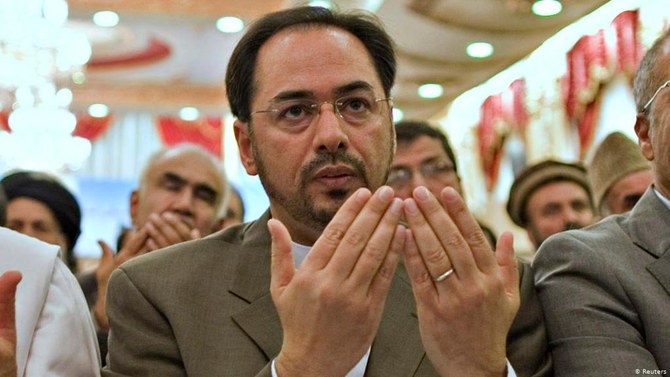
Afghan foreign minister tenders resignation

- Rabbani’s resignation came following differences with President Ashraf Ghani
- The presidential palace has not yet commented on Rabbani’s resignation news

With murals, Indian artist transforms slums into ‘walls of learning’
- Rouble Nagi won the $1 million Global Teacher Prize at Dubai summit last week
- Her foundation set up 800 learning centers across more than 100 slums, villages
New Delhi: It was about a decade ago that Rouble Nagi began painting the walls of Mumbai’s slums with art and colors, turning the neglected spaces where India’s low-income communities live into vibrancy.
What started as a project of beautification quickly transformed into a mission of education through art, one that seeks to reach the most marginalized children in India.
Together with a team of locals, volunteers and residents, Nagi started painting the slums with interactive murals, which she calls the “Living Walls of Learning,” as an alternative way to educate children.
“The ‘Living Walls of Learning’ is our answer to the lack of infrastructure within the education pillar. In these communities, traditional schools are often physically distant or psychologically intimidating. We solve this by turning the slum itself into a classroom,” Nagi told Arab News.
An estimated 236 million people, or nearly half of India’s urban population, lived in slums in 2020, according to World Bank data.
“The abandoned, broken or dilapidated walls (are transformed) into open-air classrooms using interactive murals created by the students themselves. These aren’t just paintings; they are visual curricula teaching literacy, numeracy, science and social responsibility,” she said, adding that the initiative “treats education as a living, breathing part of daily life.”
Her Rouble Nagi Art Foundation has established more than 800 learning centers across more than 100 slums and villages in India, as the slum transformation initiative expanded beyond Mumbai and now includes parts of Maharashtra, the country’s second-most populous state.
“These centers provide safe spaces for children to begin structured learning, receive remedial education, emotional support, and creative enrichment,” Nagi said.
Over the years, RNAF said that it had helped bring more than one million children into formal education and reduced dropout rates by more than 50 percent, with the help of more than 600 trained educators.
Last week, the 40-year-old Indian artist and educator became the 10th recipient of the $1 million Global Teacher Prize, which she accepted at the World Governments Summit in Dubai.
Nagi plans on using the money to build an institute that offers free vocational training and digital literacy.
“This project aims to equip (marginalized children and young people) with practical skills for employment and self-reliance, helping transform their life chances,” she said.
She believes that strengthening pathways from informal learning spaces to formal schooling and skill-based education can create “sustainable, long-term educational opportunities” that “empower learners to break cycles of poverty and become active contributors” to their communities.
“For me, this award is not just personal; it is a validation of the work done by the entire Rouble Nagi Art Foundation team, our teachers, volunteers and the communities we work with,” she said.
“It shines a global spotlight on children who are often invisible to the formal education system and affirms that creativity, compassion and persistence can transform lives.”