

London-based high-tech company tackling online extremism

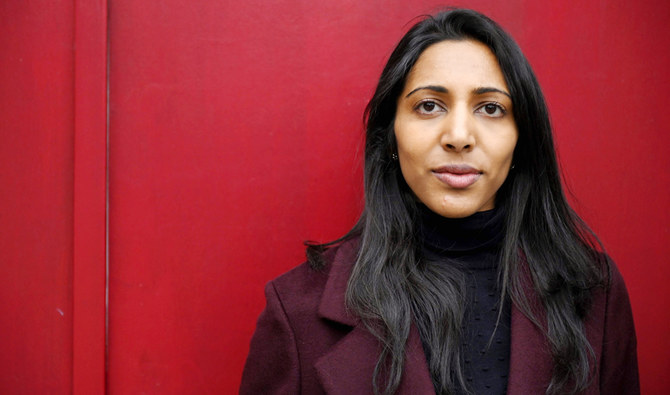
Vidhya Ramalingam, co-founder of Moonshot CVE. (AFP)
Updated 13 October 2019
Follow

London-based high-tech company tackling online extremism

  • Moonshot CVE employs 40 people working in 15 languages, including English, French and Arabic, on 76 projects in 28 countries, with clients ranging from governments to technology firms

LONDON: Vidhya Ramalingam believes it’s always possible to change, even for people deeply involved in the murky online world of extremism.

Her company Moonshot CVE has the ambitious aim of trying to get anyone tempted by violence back on the straight and narrow.

Over the last four years, the London-based startup has grown quietly but not anonymously, if a recent partnership deal with Facebook is anything to go by.

US national Ramalingam and the firm’s co-founder Ross Frenett previously worked as researchers into extremism and believe radical groups are often one step ahead when it comes to technology.

“There was a lot of recognition that terrorists were using the internet in creative ways, that they were reaching young audiences, that they were able to innovate,” she told AFP in an interview.

“Yet those of us that were trying to counter them simply were moving too slowly and had too many constraints to actually replicate those methods for counter-terrorism purposes.”

That led to the idea of a technology startup able to keep up with and fight against all forms of violent extremism to nationalists and even “incels.” But greater visibility has forced the company to take more security measures because of the sensitive nature of its work — and the potential for violence from the people it tracks.

The address of Moonshot CVE’s London offices is kept secret and most of its staff have no visible online presence.

Just to get into its premises in a nondescript building in the British capital, visitors have to pass through heavy armor-plated doors and a security check.

“We take precautions,” said Ramalingam. “We work on high-risk issues and we try and put as much into the public domain as possible.”

The startup’s name refers to the act of launching a rocket to the moon — and gives an indication of its stellar ambition. The CVE stands for countering violent extremism.

It employs 40 people working in 15 languages, including English, French and Arabic, on 76 projects in 28 countries, with clients ranging from governments to technology firms.

One project is a collaboration with the Canadian government against the far-right. Another works with the UN on online extremist content in Asia.

The company has also had a partnership for several years with Google, using online advertising to target people looking up violent extremism on the net.

The Facebook contract involves Moonshot analizing how effective the social network could be to “deradicalize” users looking up extremist content.

Gulf-EU value chain integration signals shift toward long-term economic partnership: GCC secretary general

Updated 5 sec ago
Follow

Gulf-EU value chain integration signals shift toward long-term economic partnership: GCC secretary general

RIYADH: Value chains between the Gulf and Europe are poised to become deeper and more resilient as economic ties shift beyond traditional trade toward long-term industrial and investment integration, according to the secretary general of the Gulf Cooperation Council.

Speaking on the sidelines of the World Governments Summit 2026 in Dubai, Jasem Al-Budaiwi said Gulf-European economic relations are shifting from simple commodity trade toward the joint development of sustainable value chains, reflecting a more strategic and lasting partnership.

His remarks were made during a dialogue session titled “The next investment and trade race,” held with Luigi Di Maio, the EU’s special representative for external affairs.

Al-Budaiwi said relations between the GCC and the EU are among the bloc’s most established partnerships, built on decades of institutional collaboration that began with the signing of the 1988 cooperation agreement.

He noted that the deal laid a solid foundation for political and economic dialogue and opened broad avenues for collaboration in trade, investment, and energy, as well as development and education.

The secretary general added that the partnership has undergone a qualitative shift in recent years, particularly following the adoption of the joint action program for the 2022–2027 period and the convening of the Gulf–European summit in Brussels.

Subsequent ministerial meetings, he said, have focused on implementing agreed outcomes, enhancing trade and investment cooperation, improving market access, and supporting supply chains and sustainable development.

According to Al-Budaiwi, merchandise trade between the two sides has reached around $197 billion, positioning the EU as one of the GCC’s most important trading partners.

He also pointed to the continued growth of European foreign direct investment into Gulf countries, which he said reflects the depth of economic interdependence and rising confidence in the Gulf business environment.

Looking ahead, Al-Budaiwi emphasized that the economic transformation across GCC states, driven by ambitious national visions, is creating broad opportunities for expanded cooperation with Europe. 

He highlighted clean energy, green hydrogen, and digital transformation, as well as artificial intelligence, smart infrastructure, and cybersecurity, as priority areas for future partnership.

He added that the success of Gulf-European cooperation should not be measured solely by trade volumes or investment flows, but by its ability to evolve into an integrated model based on trust, risk-sharing, and the joint creation of economic value, contributing to stability and growth in the global economy.

GCC–EU plans to build shared value chains look well-timed as trade policy volatility rises.

In recent weeks, Washington’s renewed push over Greenland has been tied to tariff threats against European countries, prompting the EU to keep a €93 billion ($109.7 billion) retaliation package on standby. 

At the same time, tighter US sanctions on Iran are increasing compliance risks for energy and shipping-related finance. Meanwhile, the World Trade Organization and UNCTAD warn that higher tariffs and ongoing uncertainty could weaken trade and investment across both regions in 2026.