

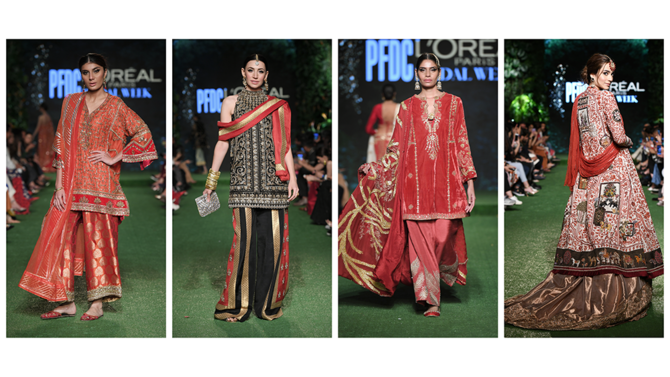

ISLAMABAD: It was a sneak peek into what to expect as Pakistan gears up for its wedding season this year.
And designers at Pakistan Fashion Design Council’s L’Oreal Paris Bridal Week 2019 (PLBW) left no stone unturned to ensure Pakistani brides are spoilt for choice.
Walking the ramps in Lahore from September 26th to 28th, they presented their wedding collections which had several hits and a few misses.
Here's our pick of the best from the week that was:
BURNT ORANGE
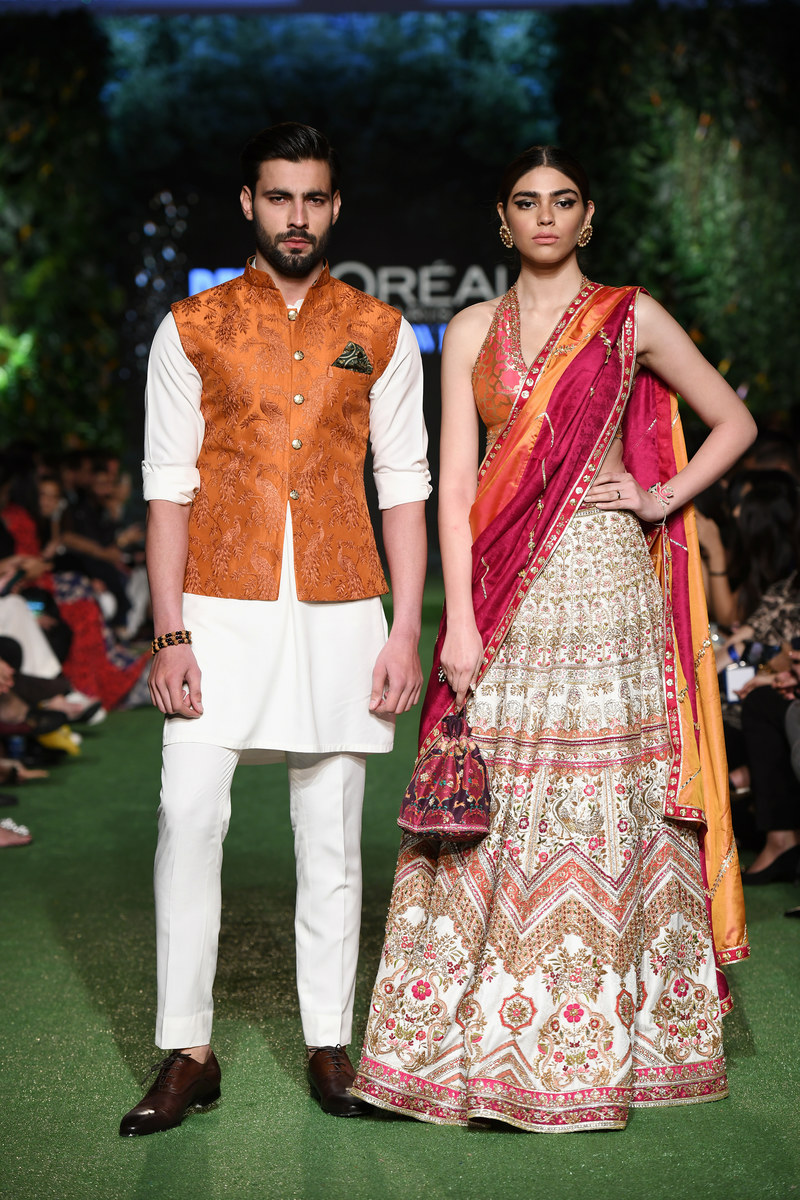
Sania Maskatiya's collection at PLBW has a number of orange outfits including for grooms wear in the form of accent pieces like vests and shawls. (Photo courtesy: Faisal Farooqui, Dragonfly)
Orange is making a comeback to the bridal world after being relegated to the cupboards in favour of metallics and traditional red for several years. A majority of designers were seen weaving it into their collections in variants of the colour.
Saturated but skewing away from neon (2016-2018), burnt orange dominated several ramps including those being represented by Misha Lakhani, HSY and Sania Maskatiya.
DUPATTA REMIX

On the first night of PLBW19 Nida Azwer's bridal collection includes a dupatta drape not commonly seen in women's collections. (Photo courtesy: Faisal Farooqui, Dragonfly)
Dupattas are not only here to stay but were seen making their presence felt like never before. From being incorporated in a unique look as was seen on Mahgul’s runway or cleverly reworked as was done by Kamiar Rokni, the dupatta's renaissance was done with a contemporary touch.
JACKETS

Nida Azwer's collections embraces jackets over ensembles with a number of garments from sarees and lehngas getting the jacket treatment. (Photo courtesy: Faisal Farooqui, Dragonfly)
If there is one item that dominated the runway it would be the jacket. Winter wedding season means colder venues and mostly useless heaters, and designers have created looks we all know and love such as lehenga-cholis, sarees, and gowns – all topped with jackets that elevate the final ensemble. HSY, Misha Lakhani and Nida Azwer built up the trend brilliantly by creating statement jackets that did not overpower the final look in any way.
PAINTED TOUCHES
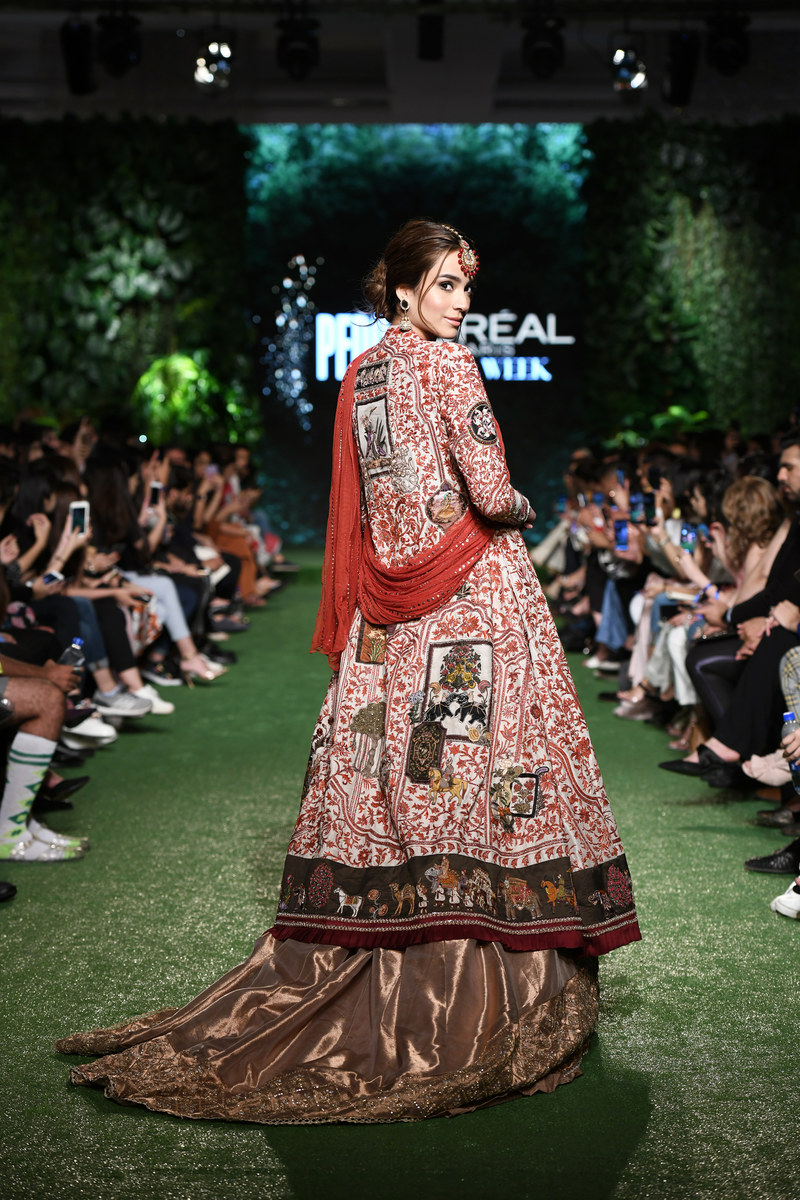
Nida Azwer's collection featuring embroidered images inspired by mughal paintings. (Photo courtesy: Faisal Farooqui, Dragonfly)
A micro-trend but one none the less was the incorporation of images on dupattas, shawls, lehngas and jackets as were seen in both Nida Azwer and Sania Maskatiya’s collections. Taking inspiration from the Mughal era is nothing new for designers, but bringing those mood-boards onto fabrics by using intricate embroidery and thread work is, with both the designers knocking it out of the park.
MIXED MATERIALS
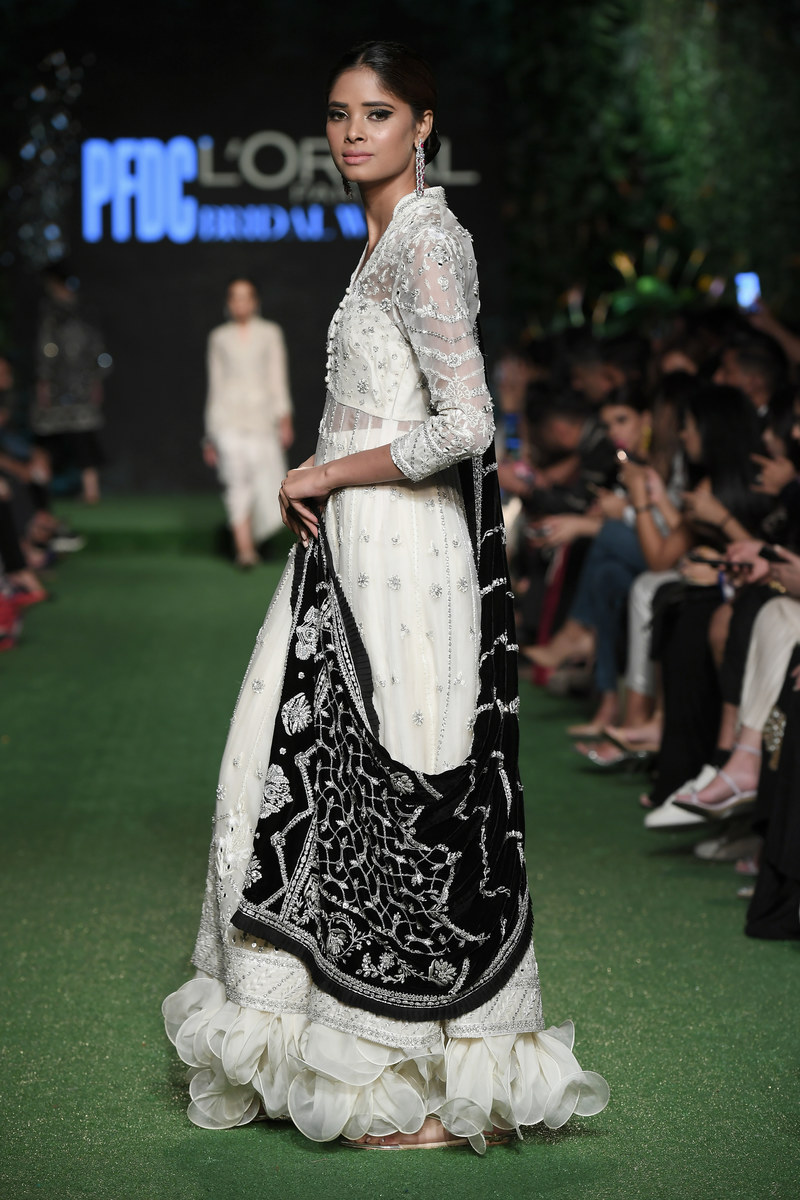
Misha Lakhani's collection employs velvet against lighter weight fabrics. (Photo courtesy: Faisal Farooqui, Dragonfly)
When designing collections that have to withstand Pakistan's shaadi season, one has to keep the weather in mind too. A number of designers paired contrasting fabrics, such as velvet and brocade, with silks and chiffons to create pieces that were fluid, versatile and eye-catching.


