Saudi Arabia faces obstacles in combating ‘criminal use of ICT’

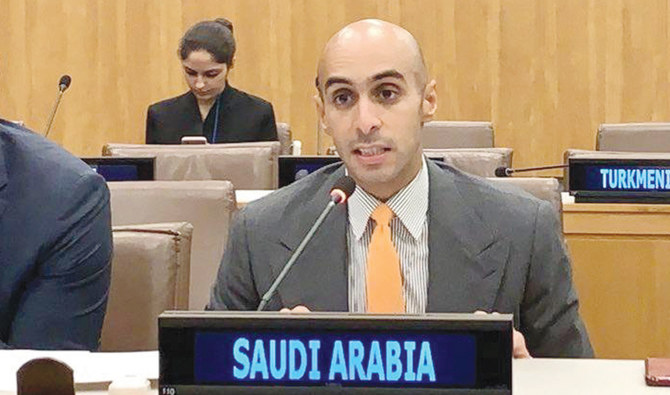
Mohammed bin Essam Khashan, third secretary of the Kingdom’s permanent delegation to the UN, speaks during the general debate on combating the use of information and communication technology (ICT) for criminal purposes, in New York. (SPA)
Updated 05 October 2019
Follow

Saudi Arabia faces obstacles in combating ‘criminal use of ICT’

  • Importance of international legislation in fight against cybercrime stressed

NEW YORK: Saudi Arabia has said it is important to consider ways to adopt international legislation to combat cybercrime. The Kingdom’s delegate made this point during a speech at the general debate on combating the use of information and communication technology (ICT) for criminal purposes, which was held at the UN headquarters in New York.
Mohammed bin Essam Khashan, third secretary of the Kingdom’s permanent delegation to the UN, said that the Kingdom passed a law against cybercrimes two years ago that regulates the use of technology and communication by protecting individuals from any attempt to hack into their personal identification and steal their personal information.
The law protects against crimes of extortion, defamation and racist abuse, and also protects companies from any attempt to hack into their websites or change their content, he said.
Khashan said that there are obstacles facing the Kingdom in combating the use of ICT for criminal purposes, as the weak cooperation of digital platform companies with legal and law enforcement authorities around the world has led to a lack of preventive and proactive policies.
He also noted that the absence of digital identity in the virtual world, the use of identifiers, fictitious data and the impersonation of other persons on the internet, as well as the multiplicity and diversity of legislation and laws adopted by various countries have made it harder to reach and enforce legal action.
“All of the above made it easier for the perpetrators of these crimes to exploit the legal gaps between regions and states, and made it difficult for governments and security agencies to track and arrest them,” he added.
“My country believes that it is necessary to urge countries to establish internal laws that take into account privacy and national sovereignty, on one hand, and contribute to the fight against cybercrime and the tracking of criminals at the regional and international level, on the other hand,” he said.
He said: “My country greatly supports the transition to digitization in various fields, where it does so by eliminating paperwork in government departments, and by establishing effective electronic platforms to provide services to individuals and companies. The Kingdom believes that the exchange of conventional currencies with digital currencies makes it easier for criminal and terrorist groups to hide many of their financial transactions on the internet, as there is no current legal framework that regulates these financial transactions and ensures that their movements are monitored.
“For any laws that are legislated or applied in the real world, it is necessary to create the equivalent in the virtual world. We, the international community, through the relevant agencies should increase cooperation and support all efforts to do so, by raising awareness of communities regarding the safe use of technology, highlighting the methods used by criminal and terrorist groups active on the internet, and working hard to develop the competencies and qualifications of information security workers through dedicated training programs,” he said.


Sha’abanah festival brings Hijazi heritage to life ahead of Ramadan 

Updated 6 sec ago
Follow

Sha’abanah festival brings Hijazi heritage to life ahead of Ramadan 

Jeddah: The Sha’abanah festival celebrating Hijazi heritage drew more than 18,000 visitors to the Abadi Al-Johar Arena in Jeddah as part of the city’s pre-Ramadan festivities. 

Organized by Vertex 33, the three-day event from Jan. 22-24 offered an immersive celebration of local culture, crafts, and cuisine. 

The festival featured local boutiques offering oud incense and perfumes, artisanal shoes and a variety of handcrafted products from local entrepreneurs. 

Visitors also enjoyed a range of artistic workshops, such as pottery and mosaic, while children engaged in scented candle-making, art activities by Global Art, and thread kneading to create keychains and home wall hangings with Ramadan themes. 

A dining area served traditional Saudi cuisine, coffee, and festive Ramadan treats. 

Guests were entertained with live traditional Yanbu’awi performances, Al-Ajal dance displays, and a contemporary Saudi-style DJ, bringing together the energy of modern entertainment with the rich cultural heritage of Hijaz. 

The project was led by four young cultural enthusiasts, Abdulaziz Al-Jehani, Abdulmajeed Abualkheer, Ghoroub Al-Barakati and Shahad Abualkheer. 

Al-Jehani, CEO of Vertex 33, said Sha’abanah was inspired by a desire to revive the social traditions that once brought Hijazi communities together ahead of Ramadan. 

“At Vertex 33, we believe events should feel meaningful, not just entertaining, and Sha’abanah was our way of creating a space where people could reconnect with heritage in a lively, modern setting,” he told Arab News. 

“Bringing the festival together took just three months of planning, from concept development and cultural research to vendor selection, design, and on-ground coordination. 

“The positive response from attendees has reinforced Vertex 33’s commitment to supporting local artists and making Hijazi heritage central to future events,” he added. 

Entrepreneurs taking part in Sha’abanah praised the festival for providing exposure and opportunities to engage directly with customers. 

Afraa Damanhouri, founder of RuaqAfraa, said: “We are participating to make scented cake candles for both adults and children. Workshops like these promote business and help people understand the process behind different types of candles.” 

Reem Awad, founder and CEO of Black Mus, said: “Through Sha’abanah, we were able to meet our customers face to face, share the story behind our products, and help them understand the range of services and items we offer.” 

Chef Fayzah Al-Sulami, who took part in the event preparing and selling her homemade spices and traditional white sweet Saudi coffee, said: “I started teaching cooking on YouTube, and when people asked about the ingredients I use, I began selling my products. 

“It was amazing to see so many people take an interest, and sales were strong throughout all three days of the festival.” 

With Ramadan approaching, many local entrepreneurs offered gift packages, prayer baskets, homemade traditional coffee, and spices. 

Duaa Shukri, founder of Printful, said: “Ramadan is a time for giving. We created unique gift packages for children, teenagers and adults, with thoughtful items.”