

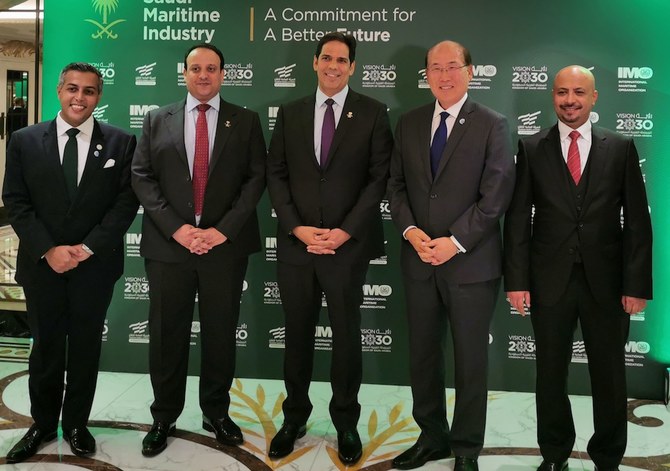
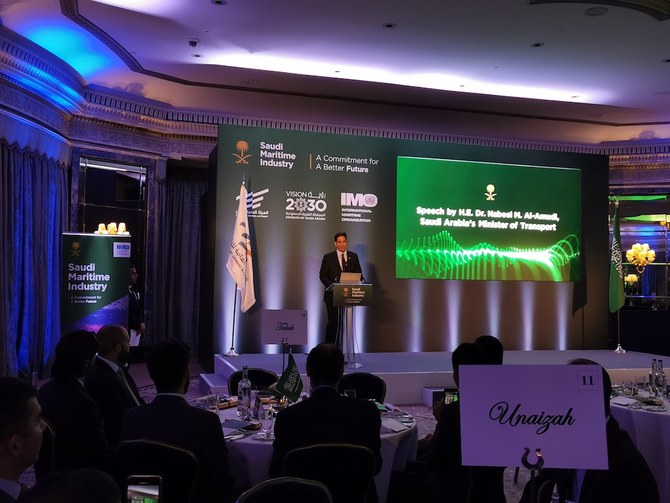

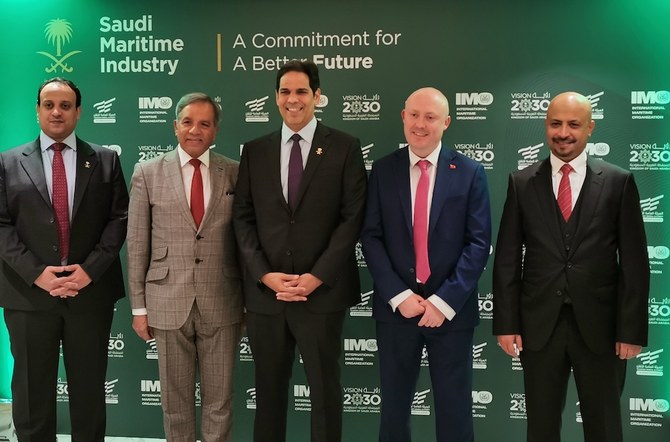
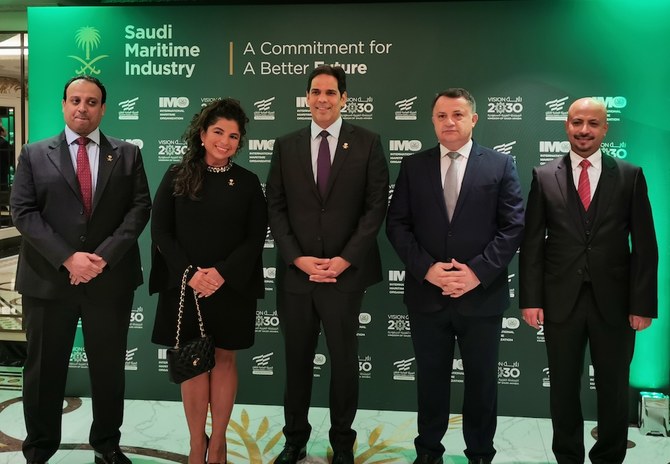

LONDON: Protecting global shipping and developing international maritime trade growth was a key priority for Saudi Arabia, the Kingdom’s transport minister has pledged.
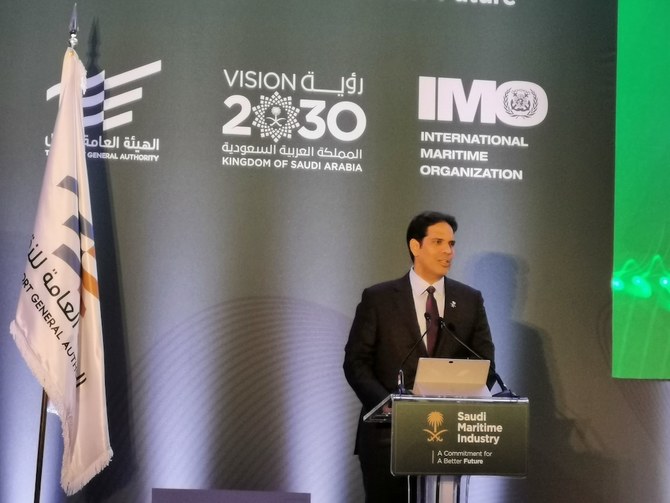
Speaking in London to promote Saudi membership of the International Maritime Organization’s (IMO) Council at upcoming annual elections, Dr. Nabeel Al-Amoudi said: “The Kingdom is strategically located between the east and west, overlooking two of the world’s most important marine waters.”
The minister added that since the Kingdom’s accession to the UN agency in 1969, it had “consistently played a vital and effective role in the growth and development of the international maritime transport sector by preserving the marine environment and promoting the safety and security of the maritime transport industry.
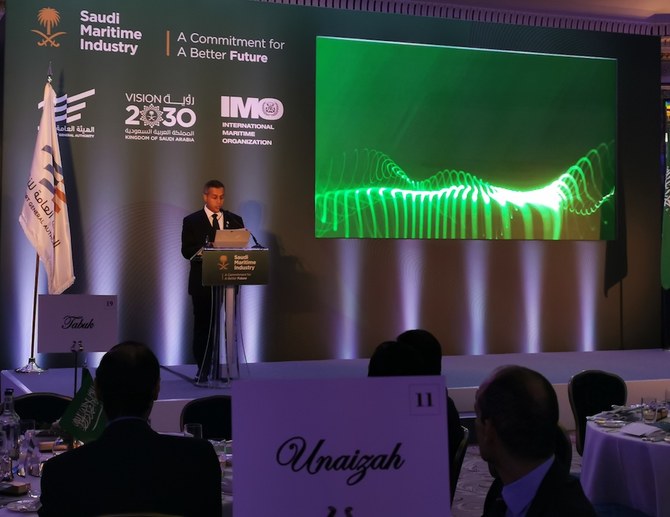
“The Kingdom views that we have under-represented our achievements in the maritime sector and we hope, through our election, that we can reassert our presence to the IMO Council,” Al-Amoudi told delegates to the event, hosted by the Transport General Authority.
Saudi Arabia's Ministry of Transport hosted a reception in London to promote the Kingdom's membership of the International Maritime Organization’s (@IMOHQ) Council at the upcoming annual electionshttps://t.co/GJAH7G9HOR pic.twitter.com/hW8aHXQ0Qd
— Arab News (@arabnews) October 4, 2019
The IMO Council election comes at a time when freedom of navigation for international shipping in the waters in and around the Arabian Gulf has been the focus of heightened tensions with Iran.
Saudi Arabia, the US and other nations have accused Tehran of attacking shipping in the Gulf and the Strait of Hormuz while supporting Yemeni militias in disrupting navigation in the Red Sea and Bab Al-Mandab Strait.
Al-Amoudi said maritime security was a key issue for many countries, especially Saudi Arabia.
The gathering heard how Saudi Arabia held a leading global maritime role, with nine commercial and industrial ports along its 2,500-kilometer coastline linking Asia, Africa and Europe. The Red Sea to the west was a vital passage for about 13 percent of world trade, and the Arabian Gulf to the east, accounted for about 30 percent of international energy flow.
IMO Secretary-General Kitack Lim told Arab News: “Saudi Arabia is one of the most important member states and has been working very hard and actively participating in all IMO meetings, so we are very satisfied. Also, the Kingdom is an important maritime shipping nation, both importing and exporting.
“There’s a lot of potential to develop collaboration between the IMO and Saudi Arabia, so we are working to enhance and collaborate more than before.”
Saudi Arabia is taking the necessary steps to ensure the foundation is in place for the Kingdom to become a leading and trusted partner in a thriving maritime industry and develop into a leading global logistics hub (@IMOHQ) #Vision2030https://t.co/9xO9xu0eaa pic.twitter.com/FcpO3x80Zp
— Arab News (@arabnews) October 4, 2019
On the Kingdom’s maritime role amid the current tensions with Iran, the newly-appointed Saudi permanent representative to the IMO, Essam Al-Ammari, told Arab News that the UN-based organization did not “deal with politics” and “these issues are discussed at a higher level in the UN or Security Council.”
However, Kitack said: “We are expecting that tensions should be eased as soon as possible, based on collaboration and dialogue among the stakeholders.”
Al-Ammari added that winning a seat on the IMO Council would be “something special; to have decisions and to work with other countries in developing the (maritime) laws for a safe and clean environment.”
In recent years, Saudi Arabia has significantly developed its maritime regulatory framework as part of its sweeping Vision 2030 reform program.
Saudi Arabia is the largest flagship country in the region and the Kingdom’s fleet has increased to 368 ships. Its tonnage had more than doubled to 7.9 million tons by 2018, ranking it 23rd globally, the transport minister told a London gatheringhttps://t.co/9xO9xu0eaa pic.twitter.com/SDIciykYWb
— Arab News (@arabnews) October 4, 2019
The Kingdom established the King Abdullah Port in King Abdullah Economic City and the King Salman International Complex for Maritime Industries and Services in Ras Al-Khair port that includes shipbuilding yards and a maritime academy. It has also built two maritime radio navigation satellite service stations to enhance nautical communication.
The country’s fleet has increased from 284 to 368 ships that carry the Saudi flag and its tonnage had more than doubled from 3.2 to 7.9 million tons by 2018, ranking it 23rd globally.
“Our capacity is over 600 million tons per annum,” Al-Amoudi said. “We look to increase that through private-sector investment in the coming years and you’ll hear some announcements soon. We are also looking to expand into the maritime building and shipbuilding sectors.”
The IMO has 172 member states, 40 of which serve in the council.


