MIRPUR, Azad Kashmir: Pakistan has launched rehabilitation activities in the quake-affected areas of Azad Kashmir and northern Punjab following Tuesday’s devastating seismic activity that claimed more than three dozen lives and left several hundred injured.
39 people were killed and over 700 injured in the 5.8-magnitude earthquake which struck Azad Kashmir and other parts of Pakistan on September 24, 2019.
Chairman National Disaster Management Authority (NDMA) Lt. Gen. Muhammad Afzal on Friday briefed Prime Minister Imran Khan about the situation over the phone since Khan is currently visiting New York.
The prime minister was given the details of loss of lives, injuries and damages to properties in the quake-affected region, including districts Mirpur and Bhimber in Azad Kashmir and Jhelum in Punjab, the NDMA said in a statement.
Khan directed that financial assistance must be provided on an urgent basis to those in need, particularly to the families of those who lost their lives in the devastating earthquake.
“He further directed that the assessment of losses must be carried out as early as possible to provide assistance to people and restore communication links and other services in the areas,” the NDMA statement added.


Rehabilitation phase kicks off in quake-affected areas
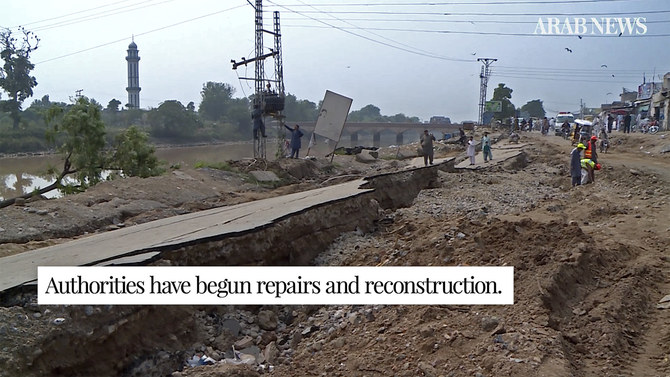
Rehabilitation phase kicks off in quake-affected areas

- Pakistan’s disaster management body apprised PM Khan about the situation
- The prime minister asked the authority undertake damage assessment and provide financial support to those in need

Pakistan urges pilgrims to complete Saudi biometrics as Hajj preparations gain pace
- Government warns pilgrims biometric verification is required for Hajj visas
- Step follows tighter oversight after last year’s Hajj travel disruptions
ISLAMABAD: Pakistan’s government on Friday urged aspiring pilgrims to complete mandatory Saudi biometric verification for Hajj visas, as preparations for the 2026 pilgrimage gather pace following stricter oversight of the Hajj process.
The announcement comes only a day after Pakistan’s Religious Affairs Minister Sardar Muhammad Yousuf said regulations for private Hajj operators had been tightened, reducing their quota following widespread complaints last year, when tens of thousands of pilgrims were unable to travel under the private Hajj scheme.
“Saudi biometric verification is mandatory for the issuance of Hajj visas,” the Ministry of Religious Affairs said in a statement, urging pilgrims to complete the process promptly to avoid delays.
“Hajj pilgrims should complete their biometric verification at home using the ‘Saudi Visa Bio’ app as soon as possible,” it added.
The statement said the pilgrims who were unable to complete biometric verification through the mobile application should visit designated Saudi Tasheer centers before Feb. 8, adding that details of the centers were available on Pakistan’s official Hajj mobile application.
Pakistan has been steadily implementing digital and procedural requirements for pilgrims ahead of Hajj 2026, including mandatory training sessions, biometric checks and greater use of mobile applications, as part of efforts to reduce mismanagement.
Saudi Arabia has allocated Pakistan a quota of 179,210 pilgrims for Hajj 2026, with the majority of seats reserved under the government scheme and the remainder allocated to private tour operators.


