

Dior goes green as style stars touch down in Paris

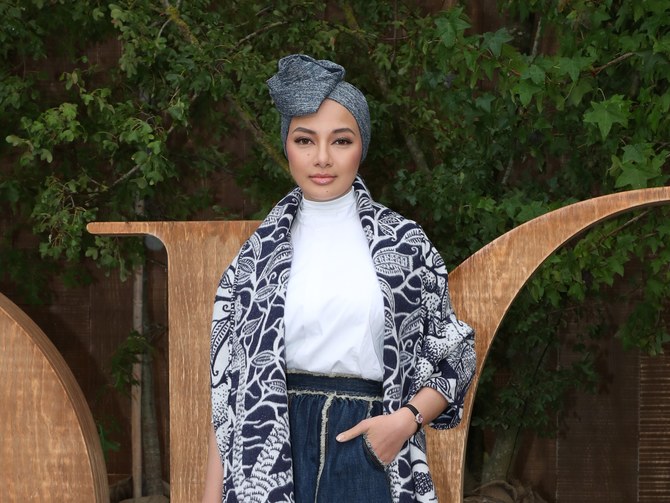
Actress Neelofa Mohd Noor was spotted at Dior’s Paris Fashion Week show. (Getty)
Updated 25 September 2019
Follow

Dior goes green as style stars touch down in Paris

DUBAI: The drizzly weather in the French capital didn’t rain on Dior’s parade as the powerhouse staged the first major show of Paris Fashion Week on Tuesday.

On the contrary, rain was a fitting accessory for a forest-themed show at the Longchamp Racecourse that celebrated nature and ecology. The earthy scent of wet soil from a forest nearby wafted around fashion editors and celebrities who included Julianne Moore and Jennifer Lawrence, The Associated Press reported.

Guests jetted in from around the world, including influencer and beauty entrepreneur Negin Mirsalehi, Malaysian actress Neelofa Mohd Noor and Lebanese influencer Karen Wazen.
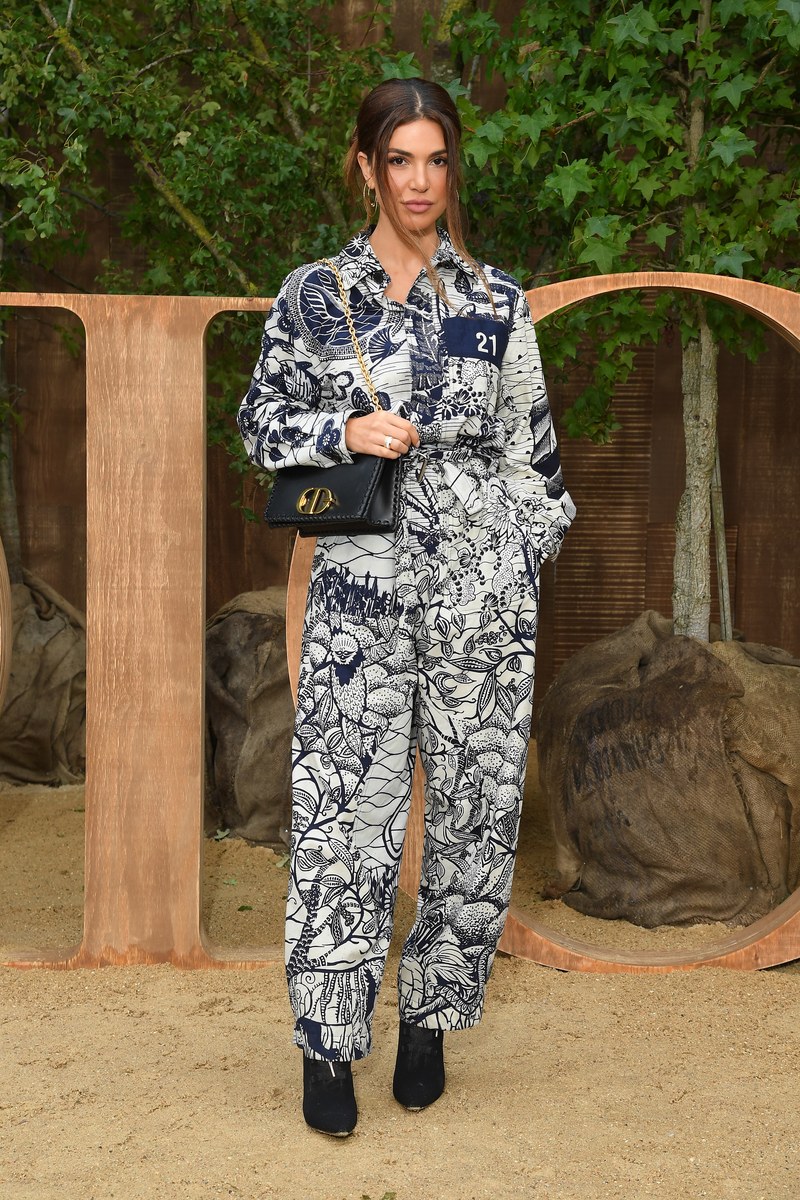


Influencer Negin Mirsalehi attended the Dior show in Paris. (Getty)

Mirsalehi and Noor were both photographed wearing similar looks — blue-and-white, nature themed outfits. For her part, Mirsalehi showed off a printed jumpsuit with leaves and flowers trailing over the length of the belted outfit. She paired the look with black boots, a classic navy handbag and a messy bun.

Noor showed off the same print, but in the form of a fringed jacket, which she paired with wide-cut jeans and a white shirt.

Wazen stood out in a plaid dress with a matching, oversized coat and fishnet tights. She finished off the outfit with a string of pearls and a sleek teal handbag.

Dior’s first female designer, Maria Grazia Chiuri, pulled off a clever twist for the season, when the House of Dior’s legendary founder wasn’t the usual inspiration for the designs.

In Christian Dior’s place was his colorful and rebellious sister, Catherine Dior, known simply as Miss Dior.

Chiuri delved into the house archives and came back channeling a photo of Catherine, who was a gardener and born in 1917, surrounded by flowers.

The result was a decorative and quirky collection. It riffed on gardening and on the buttoned-up collar styles Miss Dior wore. Straw hats in natural hues or dyed black, some with contrasting trim, defined the tone of the 67-look show with a central eco-theme, The Associated Press noted.

The program notes said the hats were fashioned in raffia, a natural fiber made from palm leaves. Against the forest backdrop, it made quite the fashion statement.

A loose striped mini-dress in the style of a gardener’s apron opened the show alongside a beautiful A-line full skirt that teemed with intricate organic embroidery.

Later, the collection loosened up with as an open coat-collar silhouette and a series of fluid silk gowns in pastel shades and floral prints.

But despite the fresh quirks, the collection had many designs that left an impression they have been seen before.


Mini op-ed: Why emotional wellbeing is not only an individual concern in Arab societies

Updated 11 sec ago
Follow

Mini op-ed: Why emotional wellbeing is not only an individual concern in Arab societies

ABU DHABI: Across much of the world, emotional wellbeing is now being discussed in similar ways with familiar language: self-care, boundaries, resilience.

These terms have helped people speak more openly about stress and mental health, often for the first time. That matters. But the language also carries an assumption, one that is not always questioned. It suggests that healing begins, and largely takes place, within the individual.

In many Arab societies, that idea does not fully apply. The self is rarely experienced in isolation. Identity forms early through family life, shared responsibility, and social roles that extend beyond personal choice.

Sophie Gregoire Trudeau and Nancy Zabaneh. (Supplied) 

Emotions are often managed in relation to others, not apart from them. This difference has practical consequences, particularly as pressure and uncertainty.

Wellbeing is not just something that happens on a mat or during a six-day retreat, it shows itself in daily life, in our relationships, in how we respond under pressure, and in the choices we make when no one is watching.

That observation runs counter to a global trend that treats emotional health as a private task.

Western approaches have introduced useful tools, including emotional vocabulary, self-reflection, and psychological insight. But when these ideas travel without adaptation, they can overlook the social structures that shape behavior in societies where family and community play a central role.

Healing often begins with the individual in the West. In the East, the sense of self is more closely tied to family, community, and spirituality. Both are powerful — wellbeing lives where self-awareness meets belonging.

In the Gulf, fast economic growth, changing work patterns, and constant digital connection have altered how people live and relate to one another. Traditional support systems still play an important role, but they are under pressure.

At the same time, imported wellness language can feel out of place when it prioritizes inward focus over shared responsibility.

In this region, community and compassion belong together and remain a source of balance and meaning. Emotional awareness, in this setting, is less about self-improvement and more about how people treat one another, whether at home, at work, or during moments of stress.

The UAE has begun to reflect this broader view at a policy level. The National Strategy for Wellbeing 2031 frames emotional and mental health as a part of social wellbeing, not simply personal coping.

That emphasis is reinforced by the government’s designation of 2026 as the Year of Family, which places family relationships at the center of social stability and long-term wellbeing.

Together, these initiatives point to the vital role of families, schools, and workplaces, while leaving open the question of how collective responsibility and individual needs should be balanced in practice.

If there is one message, it is that wellbeing begins with connection to ourselves, to each other, and to what we value most.

As emotional awareness becomes a global language, its meaning will continue to shift. The task ahead may not be choosing between individual insight and collective care, but recognizing where each works, where it falls short, and how the two can exist alongside one another.

Nancy Zabaneh is a Dubai-based wellbeing educator and trauma-informed facilitator of Palestinian origin who has lived and worked in the UAE for more than 25 years. Sophie Gregoire Trudeau is a Canadian author and mental health advocate and has a decade of experience in the public eye as Canada’s former first lady. They are writing ahead of the Kayan Wellness Festival in Abu Dhabi.