

Dior goes green as style stars touch down in Paris

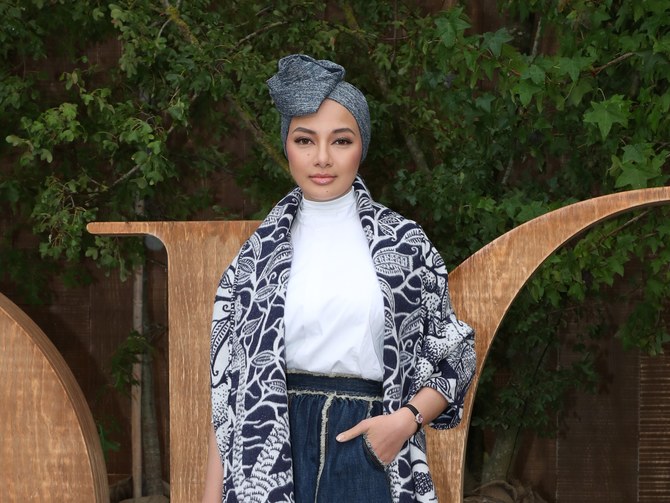
Actress Neelofa Mohd Noor was spotted at Dior’s Paris Fashion Week show. (Getty)
Updated 25 September 2019
Follow

Dior goes green as style stars touch down in Paris

DUBAI: The drizzly weather in the French capital didn’t rain on Dior’s parade as the powerhouse staged the first major show of Paris Fashion Week on Tuesday.

On the contrary, rain was a fitting accessory for a forest-themed show at the Longchamp Racecourse that celebrated nature and ecology. The earthy scent of wet soil from a forest nearby wafted around fashion editors and celebrities who included Julianne Moore and Jennifer Lawrence, The Associated Press reported.

Guests jetted in from around the world, including influencer and beauty entrepreneur Negin Mirsalehi, Malaysian actress Neelofa Mohd Noor and Lebanese influencer Karen Wazen.
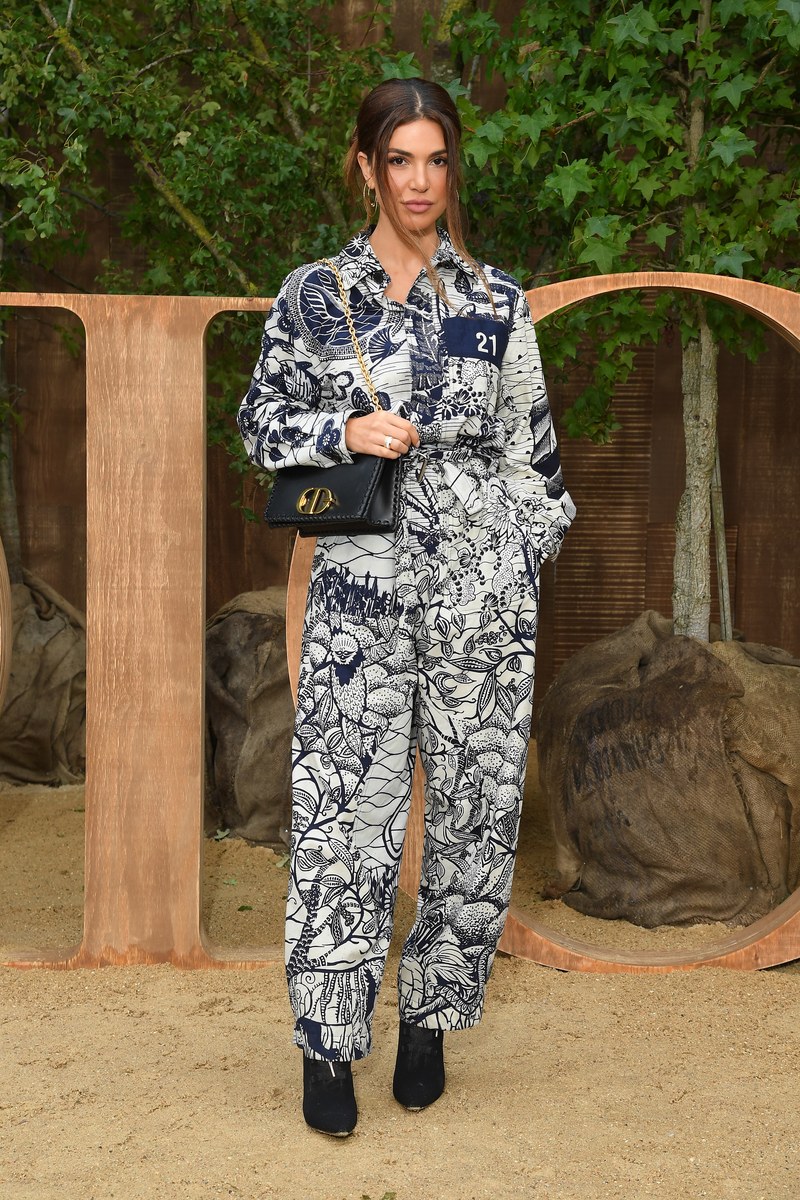


Influencer Negin Mirsalehi attended the Dior show in Paris. (Getty)

Mirsalehi and Noor were both photographed wearing similar looks — blue-and-white, nature themed outfits. For her part, Mirsalehi showed off a printed jumpsuit with leaves and flowers trailing over the length of the belted outfit. She paired the look with black boots, a classic navy handbag and a messy bun.

Noor showed off the same print, but in the form of a fringed jacket, which she paired with wide-cut jeans and a white shirt.

Wazen stood out in a plaid dress with a matching, oversized coat and fishnet tights. She finished off the outfit with a string of pearls and a sleek teal handbag.

Dior’s first female designer, Maria Grazia Chiuri, pulled off a clever twist for the season, when the House of Dior’s legendary founder wasn’t the usual inspiration for the designs.

In Christian Dior’s place was his colorful and rebellious sister, Catherine Dior, known simply as Miss Dior.

Chiuri delved into the house archives and came back channeling a photo of Catherine, who was a gardener and born in 1917, surrounded by flowers.

The result was a decorative and quirky collection. It riffed on gardening and on the buttoned-up collar styles Miss Dior wore. Straw hats in natural hues or dyed black, some with contrasting trim, defined the tone of the 67-look show with a central eco-theme, The Associated Press noted.

The program notes said the hats were fashioned in raffia, a natural fiber made from palm leaves. Against the forest backdrop, it made quite the fashion statement.

A loose striped mini-dress in the style of a gardener’s apron opened the show alongside a beautiful A-line full skirt that teemed with intricate organic embroidery.

Later, the collection loosened up with as an open coat-collar silhouette and a series of fluid silk gowns in pastel shades and floral prints.

But despite the fresh quirks, the collection had many designs that left an impression they have been seen before.


Decoding villains at an Emirates LitFest panel in Dubai

Updated 25 January 2026
Follow

Decoding villains at an Emirates LitFest panel in Dubai

DUBAI: At this year’s Emirates Airline Festival of Literature in Dubai, a panel on Saturday titled “The Monster Next Door,” moderated by Shane McGinley, posed a question for the ages: Are villains born or made?

Novelists Annabel Kantaria, Louise Candlish and Ruth Ware, joined by a packed audience, dissected the craft of creating morally ambiguous characters alongside the social science that informs them. “A pure villain,” said Ware, “is chilling to construct … The remorselessness unsettles you — How do you build someone who cannot imagine another’s pain?”

Candlish described character-building as a gradual process of “layering over several edits” until a figure feels human. “You have to build the flesh on the bone or they will remain caricatures,” she added.

The debate moved quickly to the nature-versus-nurture debate. “Do you believe that people are born evil?” asked McGinley, prompting both laughter and loud sighs.

Candlish confessed a failed attempt to write a Tom Ripley–style antihero: “I spent the whole time coming up with reasons why my characters do this … It wasn’t really their fault,” she said, explaining that even when she tried to excise conscience, her character kept expressing “moral scruples” and second thoughts.

“You inevitably fold parts of yourself into your creations,” said Ware. “The spark that makes it come alive is often the little bit of you in there.”

Panelists likened character creation to Frankenstein work. “You take the irritating habit of that co‑worker, the weird couple you saw in a restaurant, bits of friends and enemies, and stitch them together,” said Ware.

But real-world perspective reframed the literary exercise in stark terms. Kantaria recounted teaching a prison writing class and quoting the facility director, who told her, “It’s not full of monsters. It’s normal people who made a bad decision.” She recalled being struck that many inmates were “one silly decision” away from the crimes that put them behind bars. “Any one of us could be one decision away from jail time,” she said.

The panelists also turned to scientific findings through the discussion. Ware cited infant studies showing babies prefer helpers to hinderers in puppet shows, suggesting “we are born with a natural propensity to be attracted to good.”

Candlish referenced twin studies and research on narrative: People who can form a coherent story about trauma often “have much better outcomes,” she explained.

“Both things will end up being super, super neat,” she said of genes and upbringing, before turning to the redemptive power of storytelling: “When we can make sense of what happened to us, we cope better.”

As the session closed, McGinley steered the panel away from tidy answers. Villainy, the authors agreed, is rarely the product of an immutable core; more often, it is assembled from ordinary impulses, missteps and circumstances. For writers like Kantaria, Candlish and Ware, the task is not to excuse cruelty but “to understand the fragile architecture that holds it together,” and to ask readers to inhabit uncomfortable but necessary perspectives.