Saudi National Day celebrated in Karachi

1 / 3
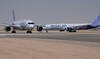
Sindh Chief Minister Syed Murad Ali Shah, Consul General of Saudi Arabia Bandar Fahad A. Al Dayel, Corps Commander Karachi Lt. Gen. Humayun Aziz and other dignitaries cut a cake to celebrate the Saudi National Day in Karachi on Sept .23, 2019. (AN photo)
2 / 3
Children of Saudi citizens working in Karachi also attended the National Day celebrations on Sept. 23, 2019. (AN Photo)
3 / 3
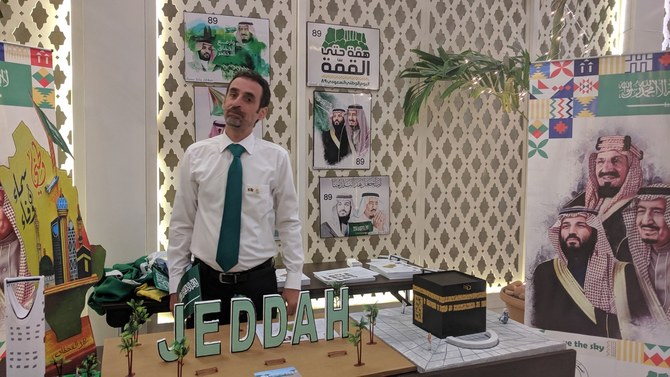
A stall with different souvenirs was set up at a local hotel in Karachi where high-profile dignitaries arrived to celebrate the Saudi National Day on Sept. 23, 2019. (AN Photo)
Updated 23 September 2019
Follow

Saudi National Day celebrated in Karachi

  • Chief Minister Sindh Syed Murad Ali Shah was the guest of honor
  • A large number of people from different walks of life attended the ceremony

KARACHI: A large number of high-profile individuals, including senior civil and military officials, diplomats, businessmen and people belonging to other walks of life, gather at a local hotel in this seaside metropolis on Monday to celebrate the Saudi National Day.
The event began with the recitation of holy Qur’an, followed by the national songs of the Kingdom and Pakistan.
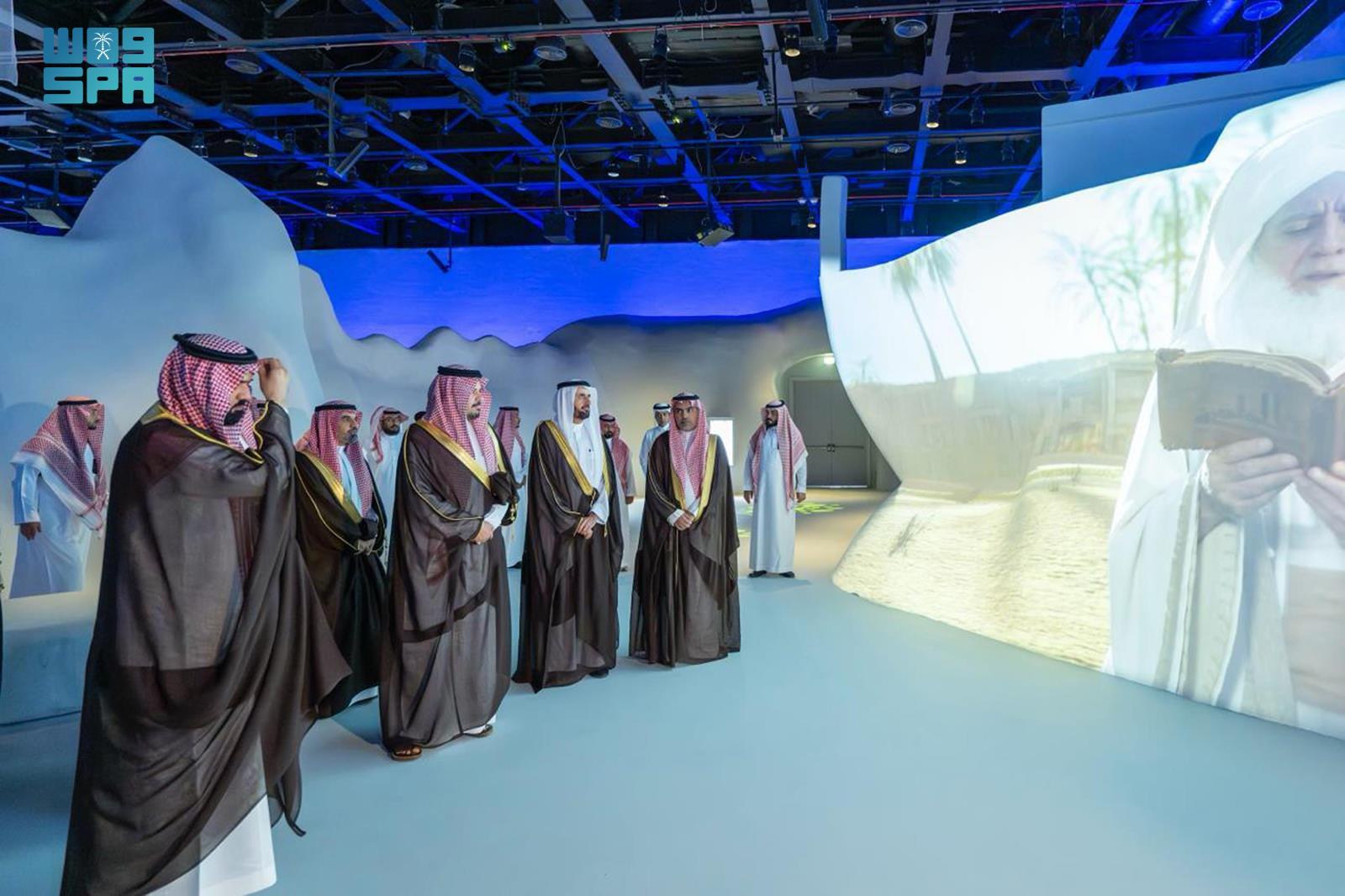


People participating in the Saudi National Day celebrations are writing down their expressions on a board in Karachi on Sept. 23, 2019. (AN photo)

Chief Minister of Pakistan’s southern Sindh province Syed Murad Ali Shah attended the ceremony as the guest of honor.
He was also joined by Consul General of Saudi Arabia Bandar Fahad A. Al Dayel, Corps Commander Karachi Lt. Gen. Humayun Aziz and other dignitaries while cutting the cake.
Speaking to Arab News on the occasion, the chief minister said Pakistan had special relations with Saudi Arabia.
“Saudi Arabia is a brotherly country that has stood by Pakistan in difficult times. Similarly, Pakistan has never hesitated to stand with Saudi Arabia,” Shah said, adding that it felt like he was celebrating the national day of its own country.
“We have shared values and opinions on many issues,” he continued while thanking the Kingdom for carrying out social welfare activities in Sindh.
The Saudi National Day, locally called Youm Al-Watani, is celebrated on September 23 to commemorate the moment King Abdulaziz bin Saud announced the Kingdom’s unification.


Pakistan finance chief, Saudi minister discuss economic cooperation in Riyadh meeting

Updated 5 sec ago
Follow

Pakistan finance chief, Saudi minister discuss economic cooperation in Riyadh meeting

  • Pakistan seeks deeper investment, financial cooperation as Saudi support remains central to economic stabilization plans
  • At Riyadh climate forum, Pakistan warns disasters will cut 0.5 percentage points from GDP growth this year

ISLAMABAD: Pakistan’s Finance Minister Muhammad Aurangzeb on Thursday held talks with Saudi Arabia’s Vice Minister of Finance Abdulmuhsen Al-Khalaf in Riyadh, with both sides discussing macroeconomic trends and plans to deepen cooperation as Islamabad works to stabilize its economy.

Saudi Arabia is one of Pakistan’s largest economic partners, providing billions of dollars in loans, oil financing and balance-of-payments support during recurring financial crises. The Kingdom is also the single biggest source of remittances for Pakistan and has pledged multibillion-dollar investments in mining, energy and agriculture in recent years. The two nations also this year announced the Saudi-Pakistan Economic Framework, making Riyadh central to Islamabad’s economic stabilization plans.

During Thursday’s meeting, “the Ministers exchanged views on the positive macroeconomic trends of Pakistan’s economy and joint resolve to further enhance the economy,” the finance ministry said in a statement.

“Aurangzeb appreciated Kingdom’s bilateral support and multilateral support for strengthening Pakistan’s economy. Both sides agreed to continue close cooperation on tactical and strategic level to fulfil the aspirations of the leadership and the people of the two brotherly countries.”

Earlier, speaking at the Global Development Finance Conference – Momentum 2025 in Riyadh, Aurangzeb said Pakistan is facing a new economic normal in which climate shocks impose annual losses, strain fiscal resources and undermine its recovery from past balance-of-payments crises.

Pakistan is among the countries most exposed to climate-driven extremes, with the 2022 super-floods causing an estimated $30 billion in losses and renewed flooding this year again overwhelming provincial and federal budgets. Islamabad has created early-warning systems and emergency buffers, but Aurangzeb said adaptation costs far exceed domestic capacity and require faster external support.

“Our recent experience shows that climate change is an increasingly tangible and costly reality for Pakistan,” the Pakistani finance minister told the Riyadh forum. “Pakistan expects to lose roughly half a percentage point of GDP growth this year, placing additional strain on an already challenged emerging economy.”

He said Pakistan’s commitment to macroeconomic stability, including building fiscal and external buffers, had allowed it to manage immediate rescue and relief operations from domestic resources. But long-term rehabilitation, he added, can only advance if global climate financing flows more quickly.

Aurangzeb criticized mechanisms such as the Green Climate Fund and Loss and Damage Fund for slow and bureaucratic disbursement processes that make it difficult for vulnerable countries to access urgently needed support. Pakistan, he said, has made more progress through multilaterals, including receiving the first $200 million tranche from the IMF’s Climate Resilience Fund.

The minister highlighted Pakistan’s new 10-year Country Partnership Framework with the World Bank announced this year, which allocates about $20 billion, with one-third earmarked for climate resilience and decarbonization.

Unlocking those funds, he stressed, now depends on Pakistan rapidly preparing “high-quality, bankable projects.”

REKO DIQ

The Riyadh panel, which included ministers from Jordan and Tajikistan and the head of the West African Development Bank, underscored that emerging economies face converging pressures from climate risk, tight fiscal positions and sluggish global growth. Speakers said unlocking blended finance, streamlining multilateral processes and mobilizing private capital will be essential for adaptation in the coming decade.

Aurangzeb also linked climate adaptation to broader economic strategy, describing the near-finalization of financing for Pakistan’s flagship $7 billion Reko Diq copper and gold mining project, where the International Finance Corporation is leading a syndicate and the US Export-Import Bank has joined as a major participant.

He said the mine is expected to generate export revenues equivalent to 10 percent of Pakistan’s current export base in its first year of commercial production in 2028, helping diversify a stagnant economy.

Responding to questions on geopolitical balancing, Aurangzeb said Pakistan would continue an “and-and” approach, maintaining ties with both the United States and China. He noted that China remains Pakistan’s largest development partner through the China-Pakistan Economic Corridor (CPEC), a flagship Belt and Road Initiative program that has financed power plants, highways and ports since 2013. He said CPEC Phase 2.0, launched this year, seeks to move beyond government-to-government infrastructure by attracting private investment and export-oriented industrial projects.

At the same time, he said Pakistan’s relationship with the United States had “significantly strengthened,” particularly in sectors such as critical minerals, advanced technologies and digital infrastructure.

His remarks came a day after Washington said the US Export-Import Bank had approved $1.25 billion in financing to support mining at the Reko Diq copper-and-gold project, with the package expected to enable up to $2 billion in US equipment and service exports.

Aurangzeb said Pakistan expected strong interest from US, Chinese, Gulf and other global investors as the project scales.