


Book Review: ‘All-American Muslim Girl’ is a timely take on what it means to be a young Muslim

Author Nadine Jolie Courtney’s second Young Adult novel sheds light on harsh realities that young Muslims face today in the West. (Supplied)
Updated 23 September 2019
Follow

Book Review: ‘All-American Muslim Girl’ is a timely take on what it means to be a young Muslim

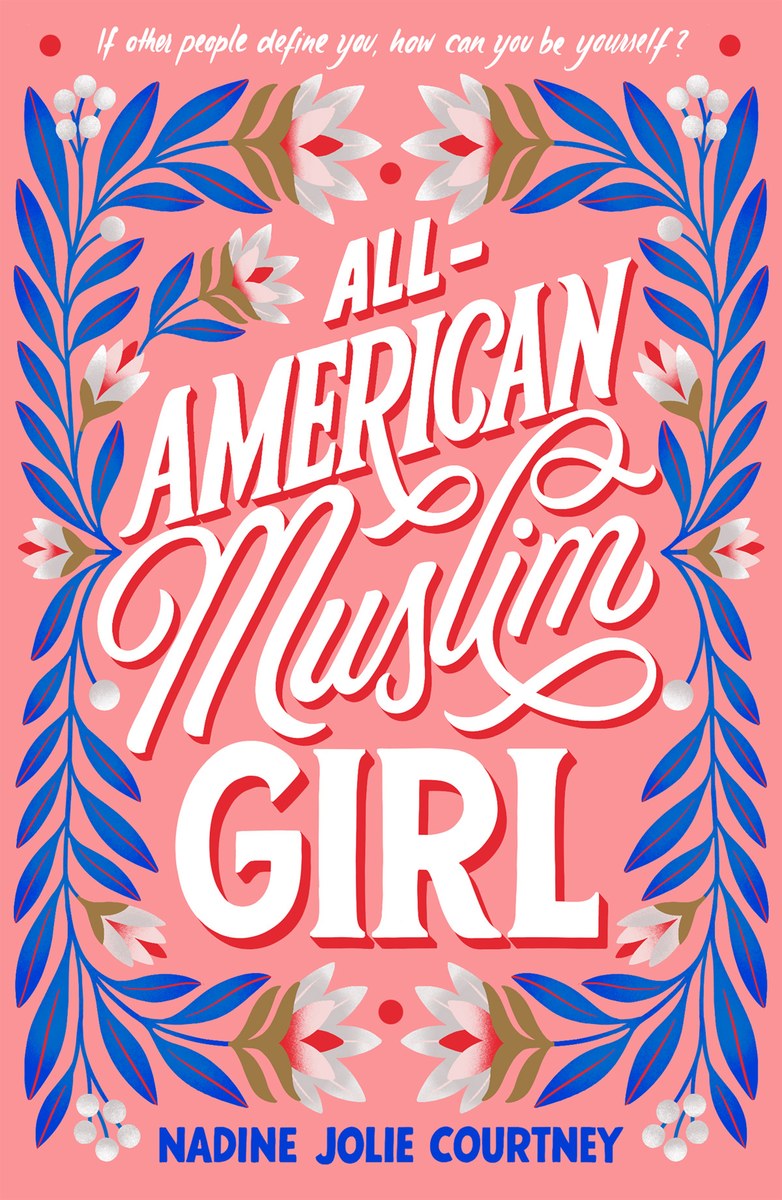
DHAHRAN: “All-American Muslim Girl” opens with the news of a shooting in the United States. The protagonist, 16-year old Alia (Allie) Abraham is boarding a flight when the news breaks and she is immediately plagued with sadness, frustration, and a series of anxious thoughts: “Please God, don’t let there have been a Muslim involved” and “Not that facts matter. Chances are good we’ll bear the blame one way or another.”

Author Nadine Jolie Courtney’s second Young Adult novel sheds light on harsh realities that young Muslims face today in the West — the ever-growing Islamophobia, hate rhetoric, and amidst it all, the struggles of finding their identity and fitting in.

In such tumultuous times, her family discourages her from drawing any unwanted attention to their Syrian-Circassian and Muslim identity. With her blue eyes, blonde hair, and sweet disposition, Allie never had any problems fitting in as a second-generation, all-American teenager. On the other hand, she is tired of “fitting in” and being accepted as a white girl. She feels a deep desire to bond with her teita (grandmother), but has never learned enough Arabic to converse with her properly. She is curious to learn about fasting during Ramadan, but doesn’t ask too many questions, afraid that it might upset her atheist father.
When the Abraham family settles into a small town north of Atlanta, Allie befriends the cool crowd at school and starts dating popular Wells Henderson. Soon, she finds out that Wells is the son of Jack Henderson, host of America’s most popular television show, “The Jack Attack” — a show that propagates hate rhetoric against minorities.

As her relationship with Wells deepens, Allie finds herself living a dual life. In the privacy of her bedroom, she learns how to pray and read the Qur’an. She joins the school’s Muslim Student Association (MSA) and, in discourse with other young Muslim women, tries to reconcile Islamic beliefs with her Western upbringing. Through this journey of self-discovery, Allie learns to embrace her identity.

Inspired by the author’s life, “All-American Muslim Girl” is a timely and relevant read on what it means to be a young Muslim in today’s world — you don’t have to be defined by other people’s expectations. Stay true to yourself, even if that means making some people uncomfortable.


Art Cairo spotlights pioneering artist Inji Efflatoun

Updated 23 January 2026
Follow

Art Cairo spotlights pioneering artist Inji Efflatoun

CAIRO: Art Cairo 2026 returned to Egypt’s bustling capital from Jan. 23-26, with visitors treated to gallery offerings from across the Middle East as well as a solo museum exhibition dedicated to pioneering Egyptian artist Inji Efflatoun.

While gallery booths hailed from across the Arab world, guests also had the chance to explore the oeuvre of the politically charged artist, who died in 1989.

Many of the pieces in the 14-work exhibition were drawn from the collection of the Egyptian Museum of Modern Art and cover four main periods of the artist’s work, including her Harvest, Motherhood, Prison and Knoll series.

While gallery booths hailed from across the Arab world, guests also had the chance to explore the oeuvre of the politically charged artist, who died in 1989. (Supplied)

Efflatoun was a pivotal figure in modern Egyptian art and is as well known for her work as her Marxist and feminist activism.

“This is the third year there is this collaboration between Art Cairo and the Ministry of Culture,” Noor Al-Askar, director of Art Cairo, told Arab News.

“This year we said Inji because (she) has a lot of work.”

Born in 1924 to an affluent, Ottoman-descended family in Cairo, Efflatoun rebelled against her background and took part heavily in communist organizations, with her artwork reflecting her abhorrence of social inequalities and her anti-colonial sentiments.

Many of the pieces in the 14-work exhibition were drawn from the collection of the Egyptian Museum of Modern Art and cover four main periods of the artist’s work, including her Harvest, Motherhood, Prison and Knoll series. (Supplied)

One untitled work on show is a barbed statement on social inequalities and motherhood, featuring a shrouded mother crouched low on the ground, working as she hugs and seemingly protects two infants between her legs.

The artist was a member of the influential Art et Liberte movement, a group of staunchly anti-imperialist artists and thinkers.

In 1959, Efflatoun was imprisoned under Gamal Abdel Nasser, the second president of Egypt. The artist served her sentence for four years across a number of women’s prisons in the deserts near Cairo — it was a period that heavily impacted her art, leading to her post-release “White Light” period, marked dynamic compositions and vibrant tones.

Grouped together, four of the exhibited works take inspiration from her time in prison, with powerful images of women stacked above each other in cell bunkbeds, with feminine bare legs at sharp odds with their surroundings.

Art Cairo 2026 returned to Egypt’s bustling capital from Jan. 23-26. (Supplied)

The bars of the prison cells obstruct the onlooker’s view, with harsh vertical bars juxtaposed against the monochrome stripes of the prison garb in some of her works on show.

“Modern art, Egyptian modern art, most people, they really don’t know it very well,” Al-Askar said, adding that there has been a recent uptick in interest across the Middle East, in the wake of a book on the artist by UAE art patron Sultan Sooud Al-Qassemi.

“So, without any reason, all the lights are now on Inji,” Al-Askar added.

Although it was not all-encompassing, Art Cairo’s spotlight on Efflatoun served as a powerful starting point for guests wishing to explore her artistic journey.